20.4
PDI
8 mi
DISTANCE
3,052 ft
GAINED
7.1 %
AVG. GRADE
FULL CLIMB STATS
INTRO
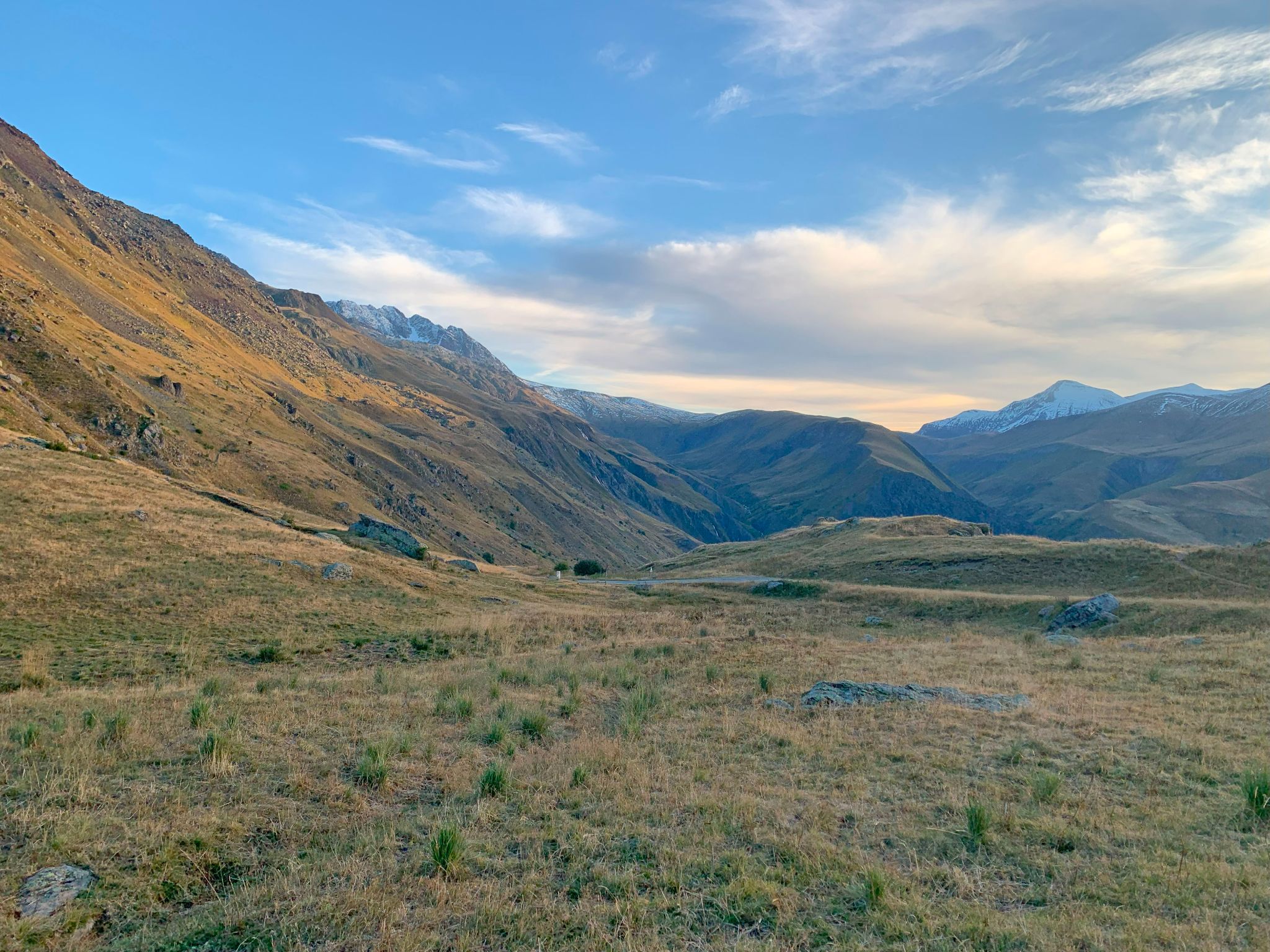
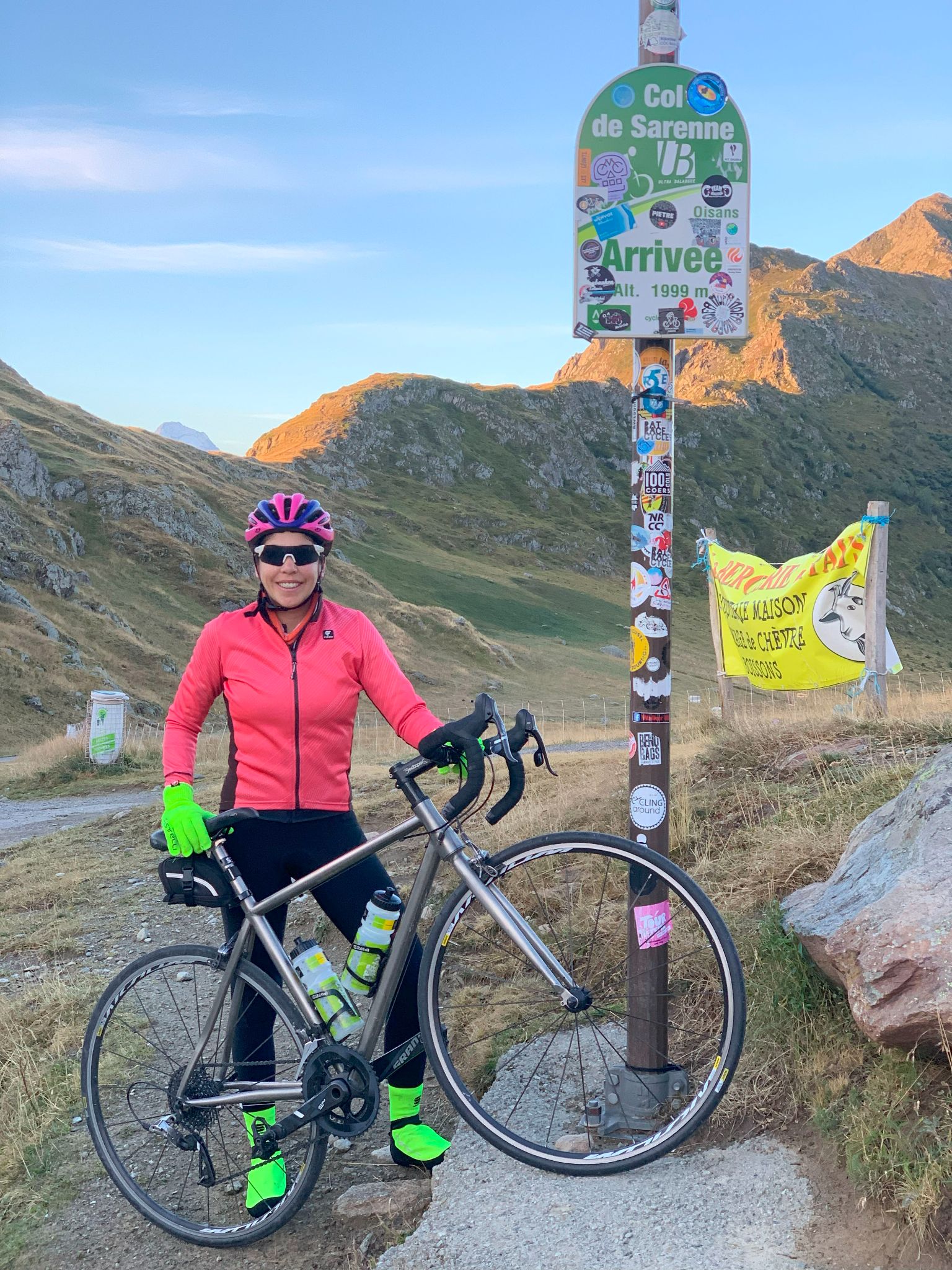
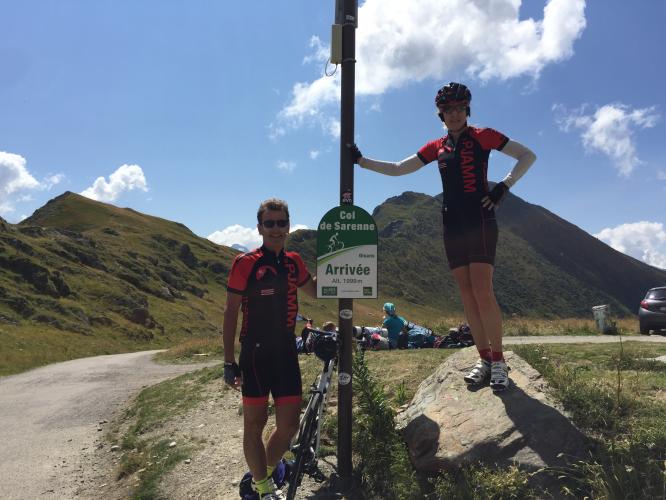
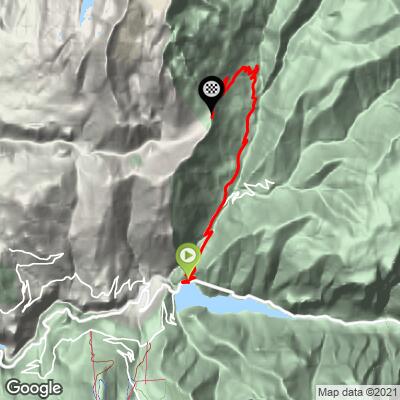
Col de Sarenne from Mizoën climbs 12.8 km (8.0 mi) from the Barrage du Chambon on the Lautaret road, gaining 930 m (3,052 ft) at a 7.1% average to the 1999 m (6,558 ft) pass in the Grandes Rousses massif. The road passes through Mizoën and the hamlets of Clavans before opening onto the high pastures of the Ferrand valley, and finishes on a grassy saddle between the Emparis plateau and the Alpe d'Huez side.
The effort is lopsided rather than steady. The first kilometer up to Mizoën averages about 11%, the middle of the climb eases to long stretches under 5%, and the final 3 km settle at close to 9%. Traffic is light, the road is narrow, and sheep share the upper section in summer.
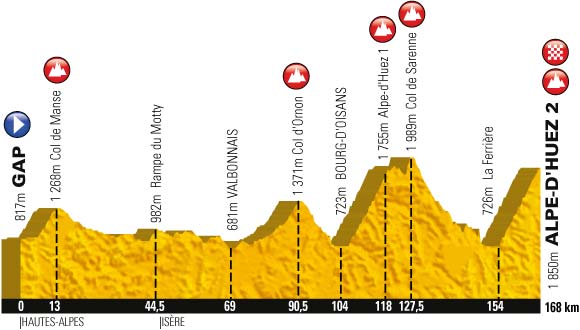
This is the side the Tour de France climbed in stage 20 of the 2026 Tour on Saturday, 25 July, as the last big climb before the finish on Alpe d'Huez. For the opposite approach, up the 21 bends of Alpe d'Huez, see our Col de Sarenne (Le Bourg-d'Oisans) page.
PLAN YOUR ROUTE
 We've partnered with Sherpa-Map.com to bring you the best route planning tool. With a PRO Membership you can use this climb as a reference when creating your route.
 Col de Sarenne from Mizoën averages 7.1% over 12.8 km (8.0 mi), but the average hides a very uneven profile. The steepest kilometer averages 11.4% and comes right at the start, as the road leaves the Chambon dam and climbs to Mizoën. The steepest quarter mile (0.4 km) is 11.7%, the steepest mile (1.6 km) is 9.4%, and the steepest 5 km (3.1 mi) average 8.7%.
From about km 1 to km 6 (mile 0.6 to 3.7) the grade mostly eases to 2-5%, with one stiffer kilometer near km 3 at about 9%, so you can recover before the hard part. The final 3 km (1.9 mi) hold close to 9% all the way to the pass. Pace the opening ramp and save something for the top.
Roadway: The D25 and the col road above it are paved the whole way, but narrow, and the surface is variable. Riders report patched asphalt, rough edges and loose gravel in places, especially higher up, and race coverage of the 2026 Tour still described scarred road surfaces. The tourist office lists the route as open from 1 May to 31 October; outside that window snow can close it, so check conditions before an early- or late-season ride.
Traffic: Very light. Expect local vehicles, farm traffic and hikers heading for the Emparis plateau, with the first kilometers near the Lautaret road a little busier. Sheep graze beside the upper road in summer, and the marsh near the col is a protected area, so ride slowly there.
Parking: The tourist office recommends parking where the D25 leaves the Lautaret road (D1091) at the Barrage du Chambon, which is the start of the climb. Bus line T73 from Grenoble also runs to the Barrage du Chambon and its buses carry bikes, though it is worth confirming with the operator in advance.
Provisions: There is no shop on the climb itself, so fill your bottles and stock up in the valley before the dam. Mizoën, about a kilometer up, has a village fountain and a chalet-hotel with a restaurant, and the Bergerie du Col de Sarenne near the top serves small snacks, including homemade goat cheese and charcuterie, in the high season.
Gear: With an opening kilometer near 11% and a final 3 km near 9%, a compact crankset and a wide-range cassette are worth having. At 1999 m (6,558 ft) the pass is much cooler and windier than the valley, so pack a shell for the descent. If you continue toward Alpe d'Huez, the road is patchy and has paved drainage channels, so keep your speed in check.
Before heading out on any cycling adventure check out our Things to Bring on a Cycling Trip and use our interactive check list to ensure you don't forget anything.
Mizoën sits at about 1200 m (3,937 ft) on the climb itself, so staying here puts the start about a kilometer below your door. The chalet-hotel Le Panoramique has nine rooms, a restaurant, a bike shelter and the Accueil Cyclo Oisans label, and looks out over Les Deux Alpes and the Ferrand valley; confirm opening dates before booking. The village is also the trailhead for walks onto the Emparis plateau.
On the way up you pass the Cascade du Ferrand waterfalls and views of La Meije, and at the pass an interpretive panel from the commune of Clavans and the Ecrins National Park explains the landscape, with views over Emparis and the Ecrins peaks. In 2026 the Isère department closed the climb to motor traffic on a July morning for a free, no-registration cycling event, so watch for similar dates. The Lautaret road at the dam also leads to the Col du Lautaret and Col du Galibier, and Alpe d'Huez is covered on its own page. Use our Routes in the Area tool to see the other climbs nearby.
ROUTE MAP
MEMBER RATING
CURRENT WEATHER
PJAMM TRIPS ADVENTURE STARTER BUNDLES
Check out PJAMM Adventure's prepackaged (self-guided) cycling trips. They will help you plan, document and conquer your next adventure.
NEARBY CLIMBS (0) RADIAL PROXIMITY
FROM No Climbs Found
MEMBER REVIEWS & COMMENTS
Let us know what you thought of this climb. Signup for our FREE membership to write a review or post a comment.
Already have an account?
LOG IN HERE
golmstead
This was the first ride I did in the Alps and wish I did a different ride. I had three days to ride out of Les Deux Alps and my guides suggested this one. Didn't care for the scenery too much, it was very hot during the climb, and we managed to ride it on the same day that an amateur race chose the same route. After we summited we continued to Alpe d'Huez for lunch then descended part of the way down then worked our way over a balcony road back to Mizoën. Just not a great day.