20.4
PDI
7.7 mi
DISTANCE
3,163 ft
GAINED
7 %
AVG. GRADE
FULL CLIMB STATS
Page Contributor(s): Stephen Rochford, Longwood Co., Meath
INTRO
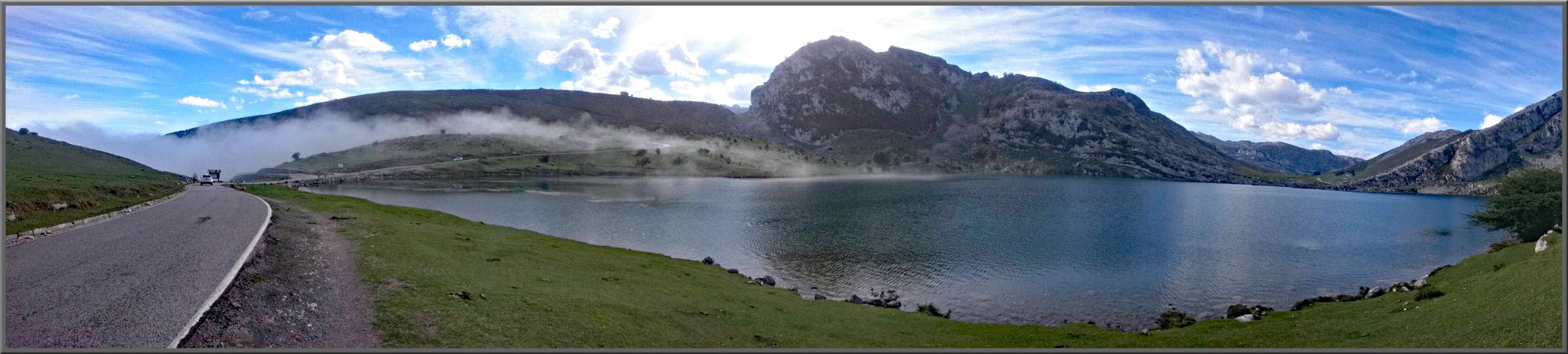
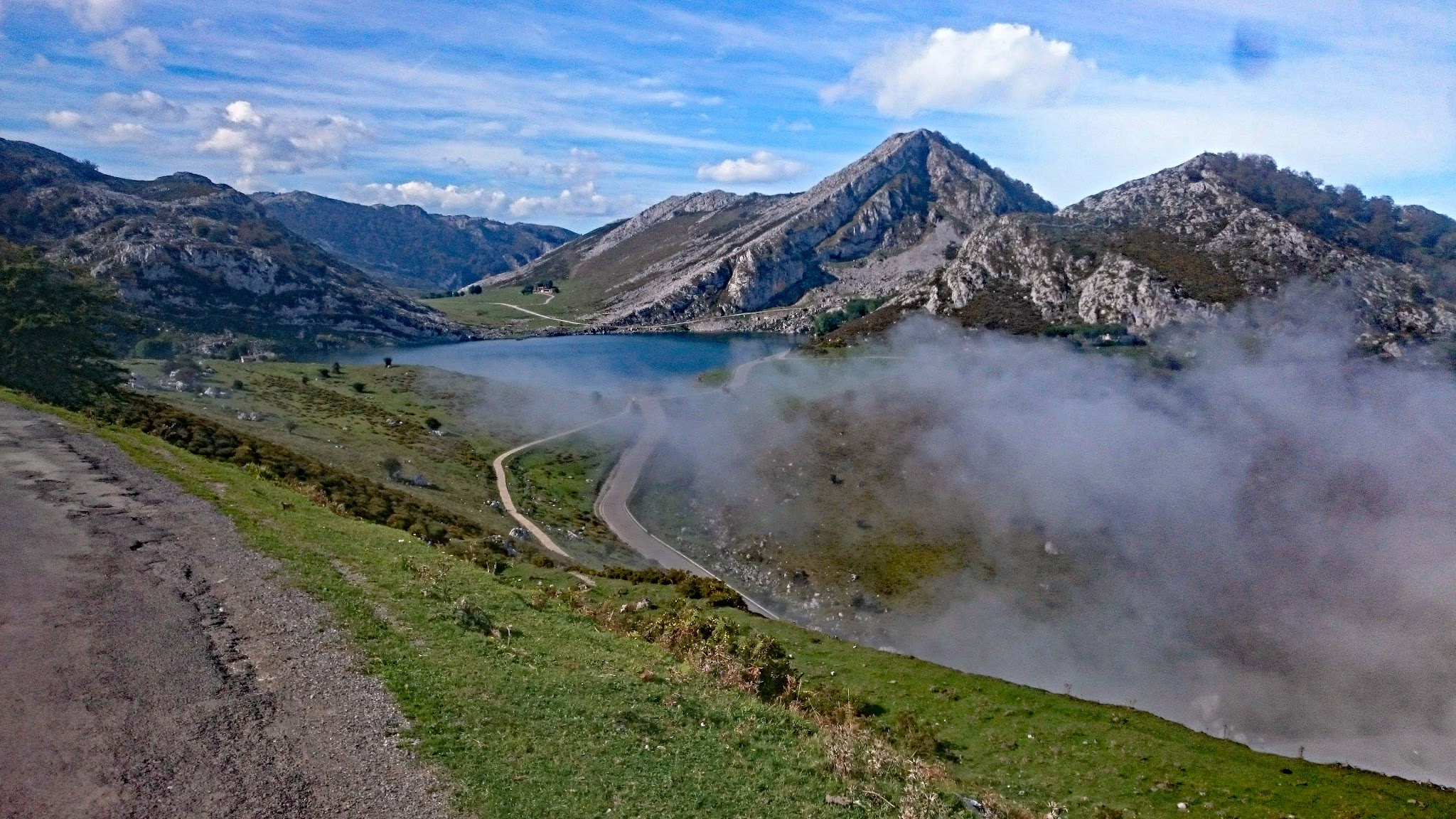
Lagos de Covadonga climbs 12.4 km (7.7 mi) from the Sanctuary of Covadonga to the mountain lakes of Enol and Ercina in the Picos de Europa, gaining 964 m (3,163 ft) at a 7.0% average grade. The road crests at 1,124 m (3,687 ft) and then dips to the lakeshore at 1,090 m (3,577 ft). It ranks #950 on our list of the world's hardest climbs.
The Vuelta a España first came here in 1983, when Marino Lejarreta won, and has returned more than twenty times since. Winners include Pedro Delgado, Robert Millar, Laurent Jalabert, Nairo Quintana, Thibaut Pinot, Primož Roglič and, in 2024, Marc Soler. The women's Vuelta visited in 2023, with Demi Vollering winning the stage.
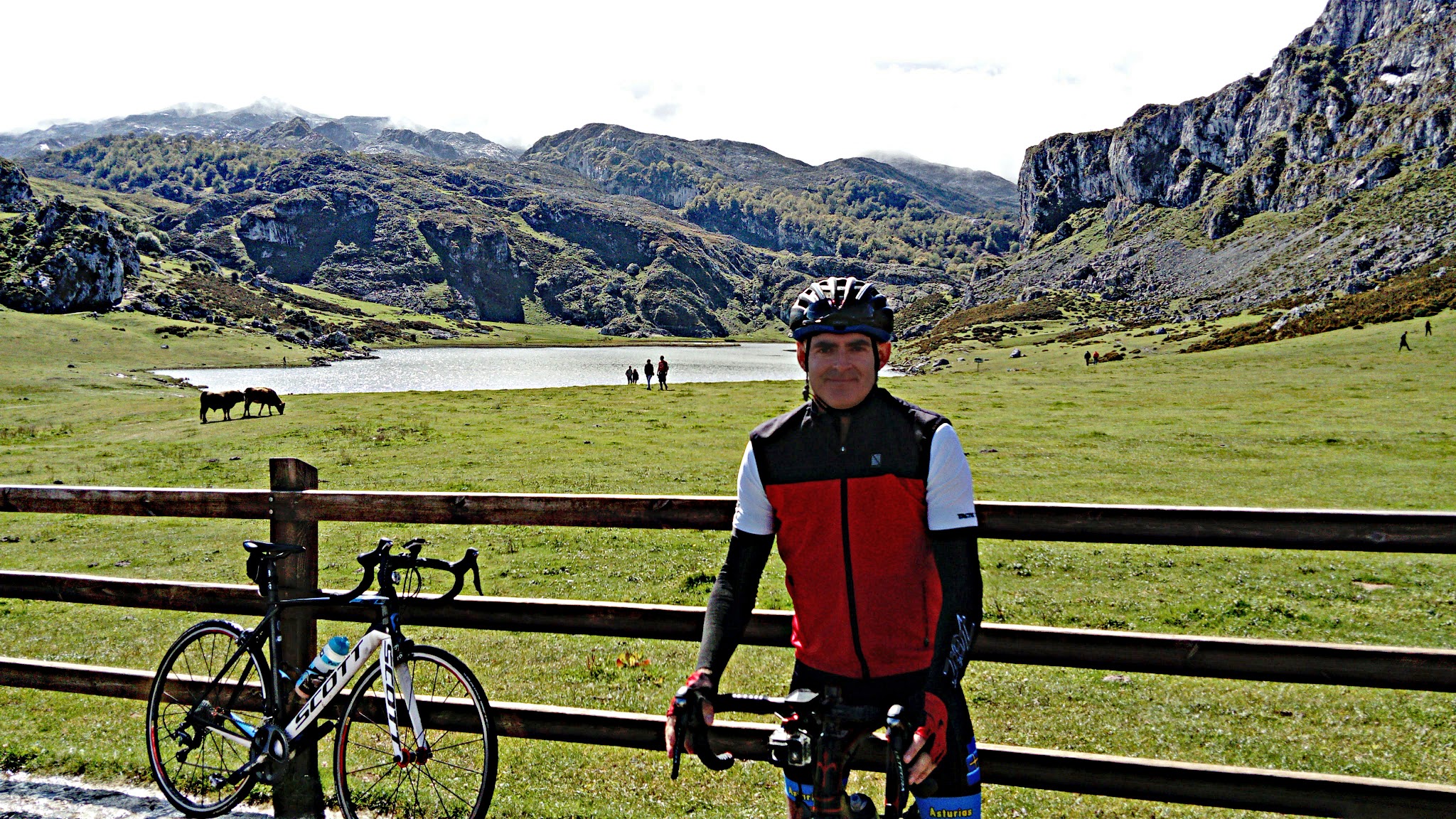
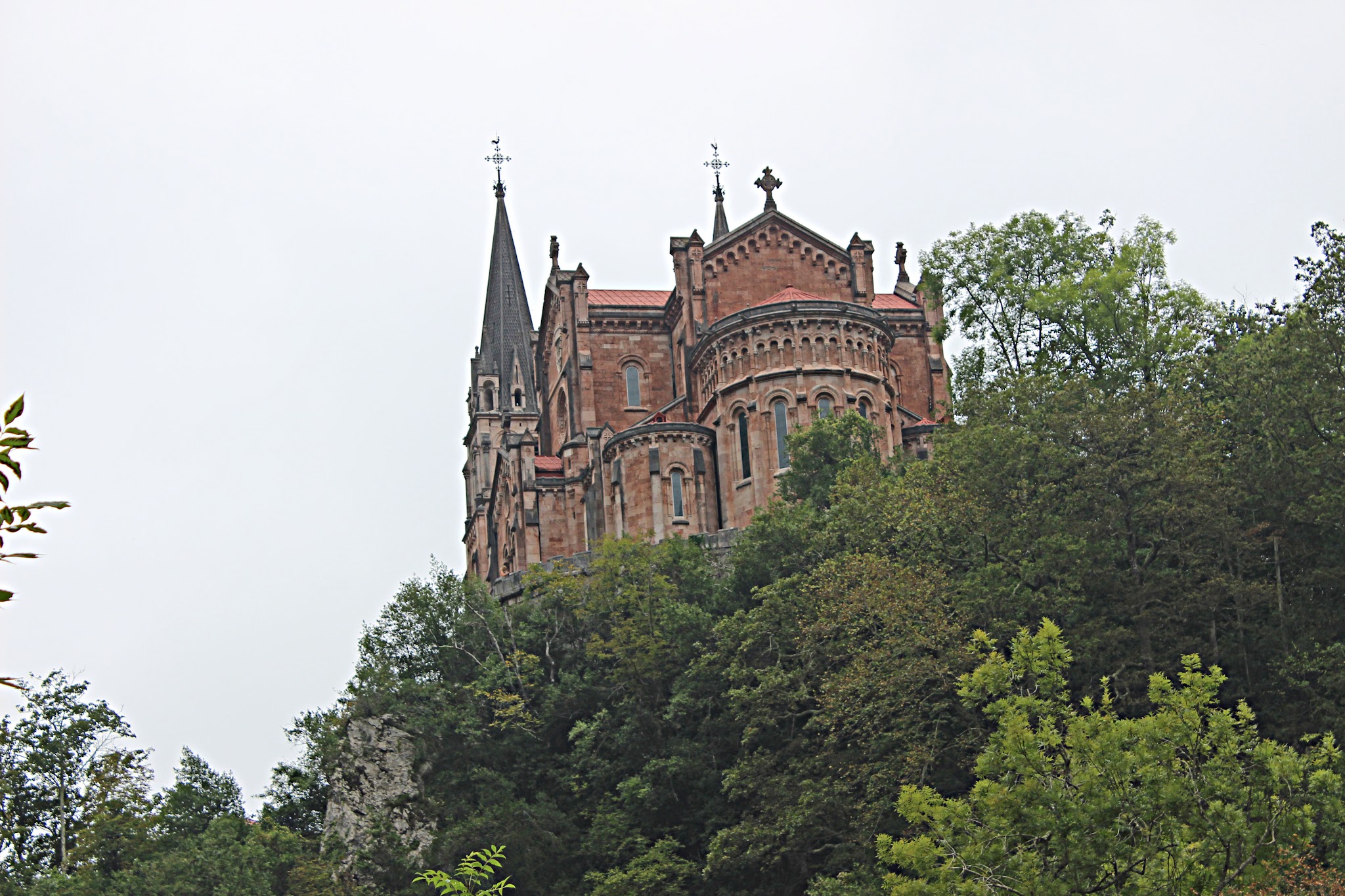
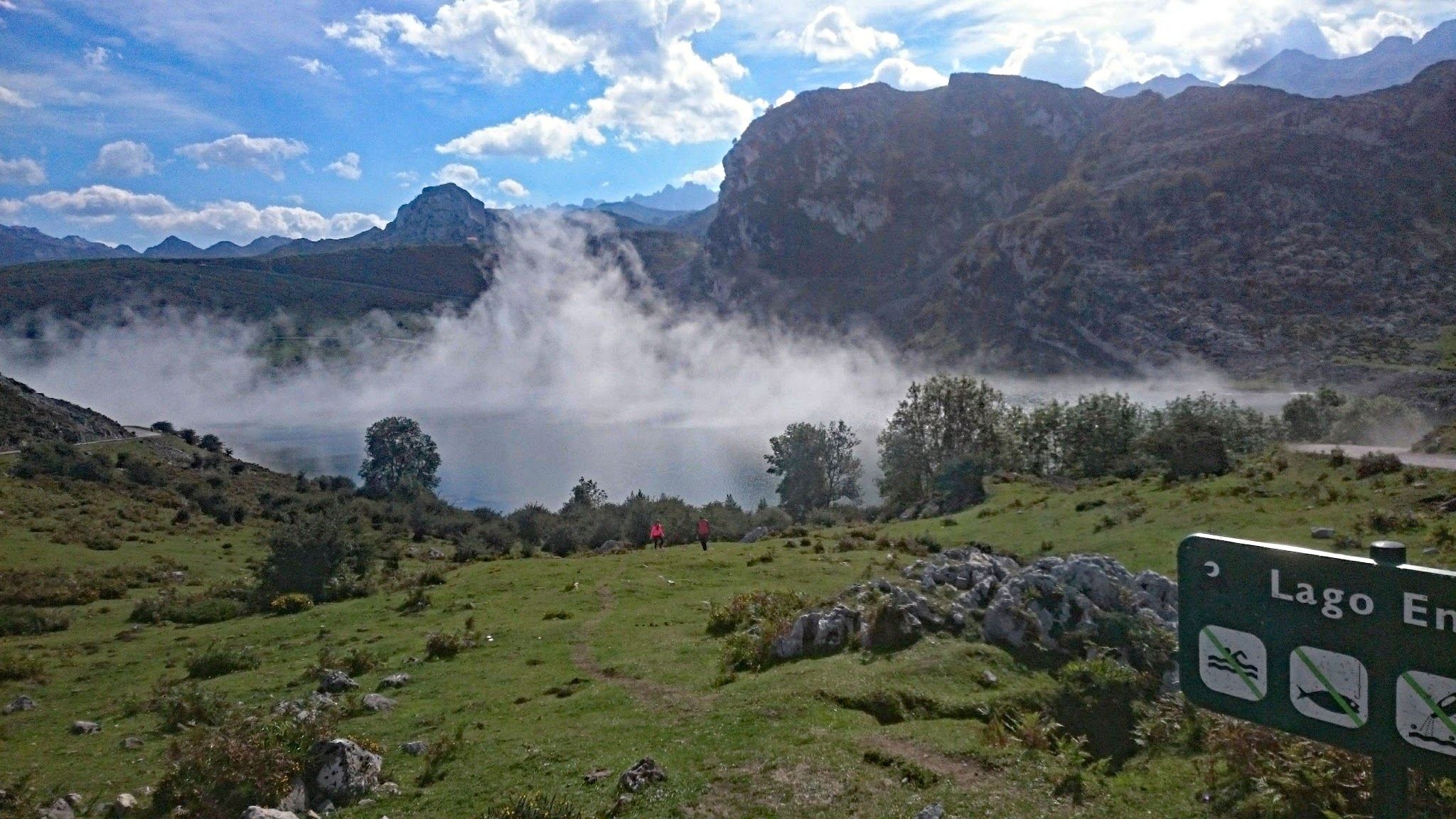
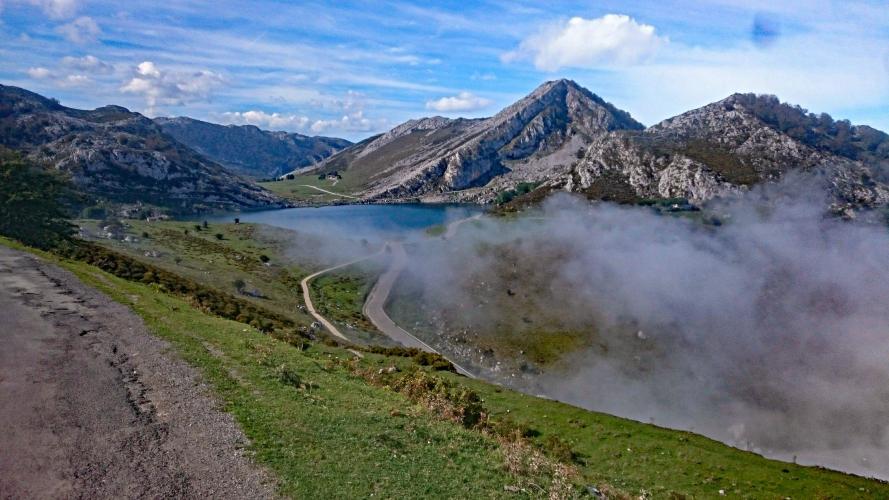
The ride starts beside the Basílica de Covadonga, where tradition places King Pelayo's victory over Moorish forces. The road is narrow but well kept. It climbs at around 10% through beech forest before opening up into rocky, sparse pasture where cows and goats wander onto the tarmac. As our ambassador Stephen Rochford puts it, this is the most iconic climb in Spain.
PLAN YOUR ROUTE
 We've partnered with Sherpa-Map.com to bring you the best route planning tool. With a PRO Membership you can use this climb as a reference when creating your route.
 Lagos de Covadonga covers 12.4 km (7.7 mi) and 964 m (3,163 ft) of climbing at a 7.0% average, from 219 m (717 ft) at Covadonga to a high point of 1,124 m (3,687 ft). The average hides how uneven it is: the steepest 1 km (0.6 mi) averages 12.8%, the steepest 2 km (1.2 mi) 11.6%, the steepest 5 km (3.1 mi) 10.0% and the steepest 10 km (6.2 mi) 8.5%. The steepest half kilometer (0.3 mi) reaches 13.7%.
The first kilometer is a gentler 7%, then the road jumps to 10% and holds 8% to 10% through the forest. Between roughly 5 and 7 km (3.1 and 4.3 mi) you ride La Huesera, "the Boneyard", where the kilometers average 11% to 12% and the tree cover disappears. After that the road eases to about 7%, flattens briefly, and crests near 10.7 km (6.6 mi). The final stretch drops about 92 m (303 ft) to Lago Enol, so you finish with a short descent rather than a last ramp. Ride the forest at an honest pace so you have something left for La Huesera.
Roadway: The CO-4 is paved the whole way. It is narrow in places, but the surface is well maintained because it carries the Vuelta and a steady flow of buses to the lakes. Expect cattle and sheep on the road in the upper meadows, so keep your speed in check on the way back down.
Traffic: Access to the lakes is regulated in busy periods. In 2026 the CO-4 is closed to private cars during Easter week, many May weekends, from 1 June to 15 October, and on a few late-autumn and early-December holidays, with ALSA buses running from Cangas de Onís instead. The restrictions apply to motor vehicles only, so cyclists can still ride up, and on those days you share the road mostly with buses. Outside the regulated dates cars can drive up. The approach through Covadonga itself is also busier on summer weekends.
Parking: Most riders start in Cangas de Onís, which has large car parks, including the one at the bus station used for the lake shuttle (2 € per car per day in 2026). From there it is about 7 km (4.3 mi) of gentle 1% to 2% road to the basilica where the climb begins.
Gear: A compact crankset with a 30 to 34 tooth rear cog makes La Huesera far more comfortable. Bring a windproof layer for the lakes and the descent, because the weather in the Picos de Europa changes quickly and it is noticeably cooler at 1,100 m (3,600 ft) than in Cangas de Onís.
Provisions: There is nothing on the climb itself, so fill your bottles in Cangas de Onís or Covadonga. A small cafe sits by Lago Ercina, about a kilometer beyond the end of the Vuelta stage, which makes a good reward before turning around.
Before heading out on any cycling adventure check out our Things to Bring on a Cycling Trip and use our interactive check list to ensure you don't forget anything.
Cangas de Onís is the natural base. It has the hotels and cafes you need and the bus station for the lake shuttle. Turismo Asturias also publishes a 116 km (72.1 mi) loop from the town, called La Reconquista, that passes through Covadonga after the climbs of Alto del Fito and Alto del Torno.
Covadonga is worth a slow look before you start. The Santa Cueva, the cave sanctuary beside the basilica, is the heart of the site, and the lakes were the original core of the Picos de Europa National Park, created in 1918. Two dates change the lakes completely: the Fiesta del Pastor at Lago Enol on 25 July and the procession of the Virgin from the water on 8 September. The lake bus does not run on either day and the area is packed, so pick another day for your ride.
Mountain weather is the main thing to plan around, and our Weather tool is a useful check before you commit to the climb.
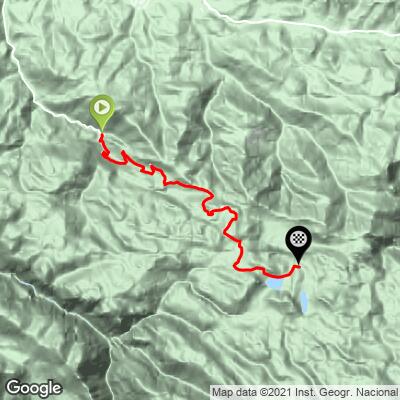
ROUTE MAP
MEMBER RATING
CURRENT WEATHER
PJAMM TRIPS ADVENTURE STARTER BUNDLES
Check out PJAMM Adventure's prepackaged (self-guided) cycling trips. They will help you plan, document and conquer your next adventure.
NEARBY CLIMBS (0) RADIAL PROXIMITY
FROM No Climbs Found
MEMBER REVIEWS & COMMENTS
Let us know what you thought of this climb. Signup for our FREE membership to write a review or post a comment.
Already have an account?
LOG IN HERE