Sveti Jure - Podgora Bike Climb - PJAMM Cycling

34.1
PDI
17.9 mi
DISTANCE
5,877 ft
GAINED
6 %
AVG. GRADE

FULL CLIMB STATS

Page Contributor(s): Ard Oostra, Switzerland

INTRO

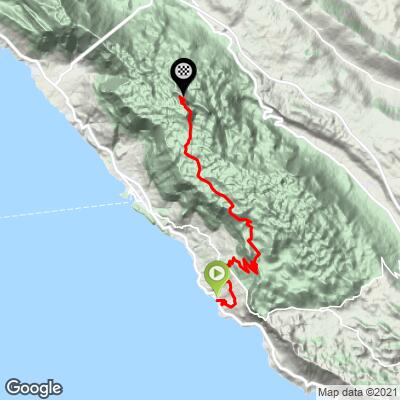
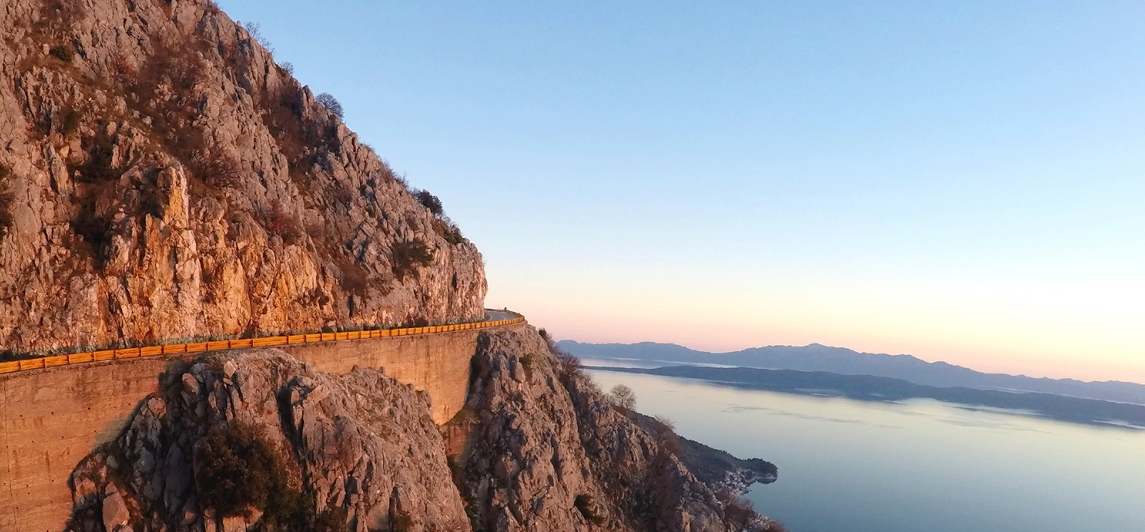
Sveti Jure - Podgora is one of the most difficult and scenic climbs in Croatia, starting in the seaside town of Podgora on the eastern Adriatic coast and finishing at 1,729 m (5,672 ft) on the summit of Sveti Jure, the highest point in the Biokovo range and the highest paved road in Croatia. The route is 28.7 km (17.9 mi) with 1,791 m (5,877 ft) of gain at a 6.0% average grade, and it's a PJAMM World Most Scenic Bike Climb - the coast, islands and open Adriatic stay in view for most of the ascent.

The lower slopes are the steepest part of the ride; the grade eases considerably in the upper two-thirds, inside Biokovo Nature Park, where the road also passes the Biokovo Skywalk, a glass-floored viewing platform around 1,200 m up (cycling shoes aren't allowed on the glass itself). From there the road narrows into a quieter, lonelier stretch of hairpins leading to the summit transmitter mast and the small chapel of Sveti Jure.

It remains one of the toughest-ranked climbs in PJAMM's world database (currently #205), and it's tolled inside the national park - a rare case of a bike climb charging an entry fee (see Roadway & Parking for current pricing) - but the near-continuous sea views justify it for most riders.

PLAN YOUR ROUTE

We've partnered with Sherpa-Map.com to bring you the best route planning tool. With a PRO Membership you can use this climb as a reference when creating your route.
Ride 28.7 km (17.9 mi) gaining 1,791 m (5,877 ft) at a 6.0% average grade, starting near sea level (7 m / 24 ft) and finishing at 1,729 m (5,672 ft). The lower slopes are the steepest - the first kilometer averages 11.9% and the steepest 500 meters hits 17.2%, with ramps up to 20.0% (100 yards) - before the grade settles down considerably; the final 10 km average just 7.0%.
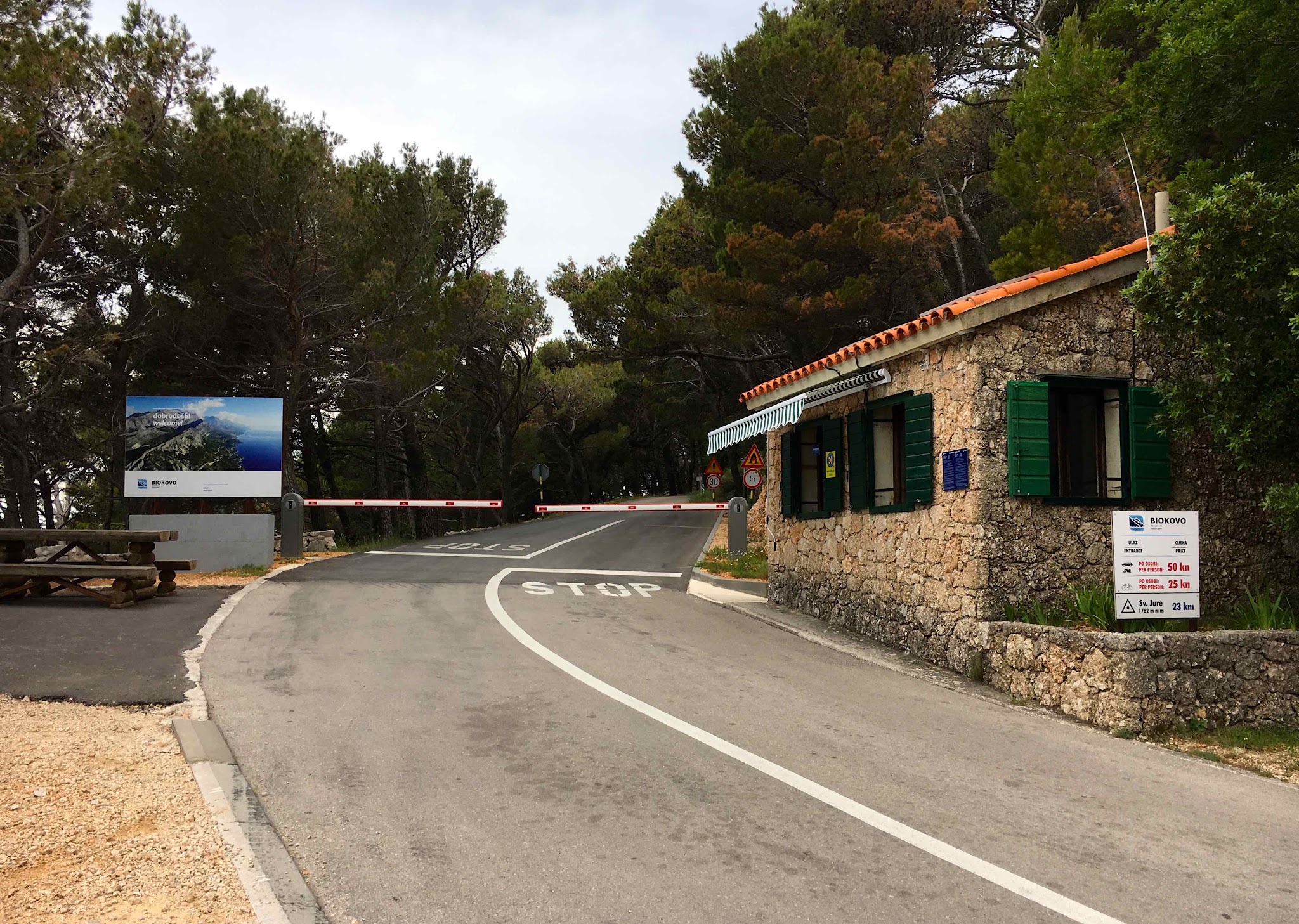
Roadway: Narrow two-lane road for roughly the first two-thirds of the climb, narrowing to a single lane for the final third. The lower three-quarters are in good condition; the surface gets rougher, though still fully rideable on a road bike, higher up inside the national park - a pattern confirmed by multiple recent rider accounts. Traffic: Minimal above the Biokovo Nature Park entrance - it's a dead-end toll road, which keeps casual traffic away. Below the entrance, expect ordinary Adriatic coast-road traffic through Podgora. Parking: Ideally start from your hotel in Podgora, or use the public parking at the beach - Map. The road through Biokovo Nature Park is a toll road; per the Park's 2026 price list, cyclists pay a daily entry ticket of 7 Euro (Apr-May and Oct) or 10 Euro (Jun-Sep) at the park entrance.
Provisions: There are two cafes directly on the route - Vrata Biokova at km 13.4 (map), and Pod Javorom at km 20.7 (map). Nothing beyond that until the summit, so top off water at one of these before pushing on. Gear: Standard road gearing is fine for the lower two-thirds; save some reserve for the steep opening kilometers out of Podgora, where the grade is steepest. The summit sits at 1,729 m and can be windy even when it's hot on the coast, so a light layer is worth carrying.
Before heading out on any cycling adventure check out our Things to Bring on a Cycling Trip and use our interactive check list to ensure you don't forget anything.
This is a must-do PJAMM World Most Scenic Bike Climb. Also consider nearby Sveti Jure - Makarska, a slightly easier and less-traveled way up the same mountain from the next town north.

Conditions can differ sharply between the coast and the 1,729 m summit - check current conditions before you go with our Weather tool.

ROUTE MAP
MEMBER RATING

Difficulty: Strenuous
3/5
Road
3/5
Traffic
5/5
Scenery

CURRENT WEATHER

PJAMM TRIPS ADVENTURE STARTER BUNDLES

Check out PJAMM Adventure's prepackaged (self-guided) cycling trips. They will help you plan, document and conquer your next adventure.
ALL TRIPS
Browse all of our prepackaged trips and find your next adventure!

NEARBY CLIMBS (0) RADIAL PROXIMITY

FROM
No Climbs Found

MEMBER REVIEWS & COMMENTS

Let us know what you thought of this climb. Signup for our FREE membership to write a review or post a comment.
Already have an account?

Aug 9, 2023
difficulty: Strenuous
scenery: 5
traffic: 3
road: 3
Aug 9, 2023
scenery: 5
traffic: 3
road: 3
Legendary Climb! This climb has it all, breathtaking scenery- one of the best globally. The sea is always near, surrounding of Dalmatian mountains is unique. Combined with toughness (don't underestimate length and steep sections), serpentines, in and above tree-line makes this climb an epic one. An experience you won't forget. Be patient and carefully going down. Road is narrow and in medium condition. Can be busy after 11.00hours with tourists.
ROUTE MAP
PROFILE TOOL
Route Data
S.G. (%)
hide
Segment Data
hide
CLIMB SUMMARY

Cycling Sveti Jure

Ride 28.7 kilometers gaining 1,759 meters at 6.1% average grade

World Top 10 Most Scenic Bike Climb.

Photo:  feeds.croatia.hr

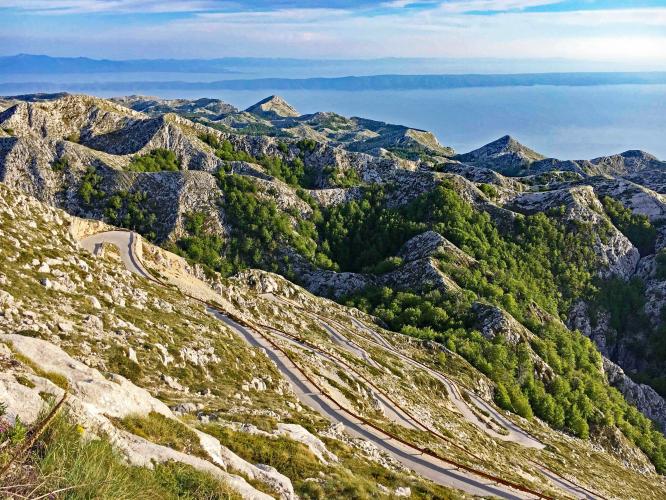
Sveti Jure is the highest peak, in the second highest mountain in Biokovo, which is the second highest mountain range in Croatia.  Sveti Jure is also the highest road in Croatia.  This bicycle climb is exceptional, along a narrow winding road with many giant hairpin curves, some with blind corners -- riders, beware.  

Thank you to world cycling adventurer Ard Oostra for his photos of Sveti Jure.

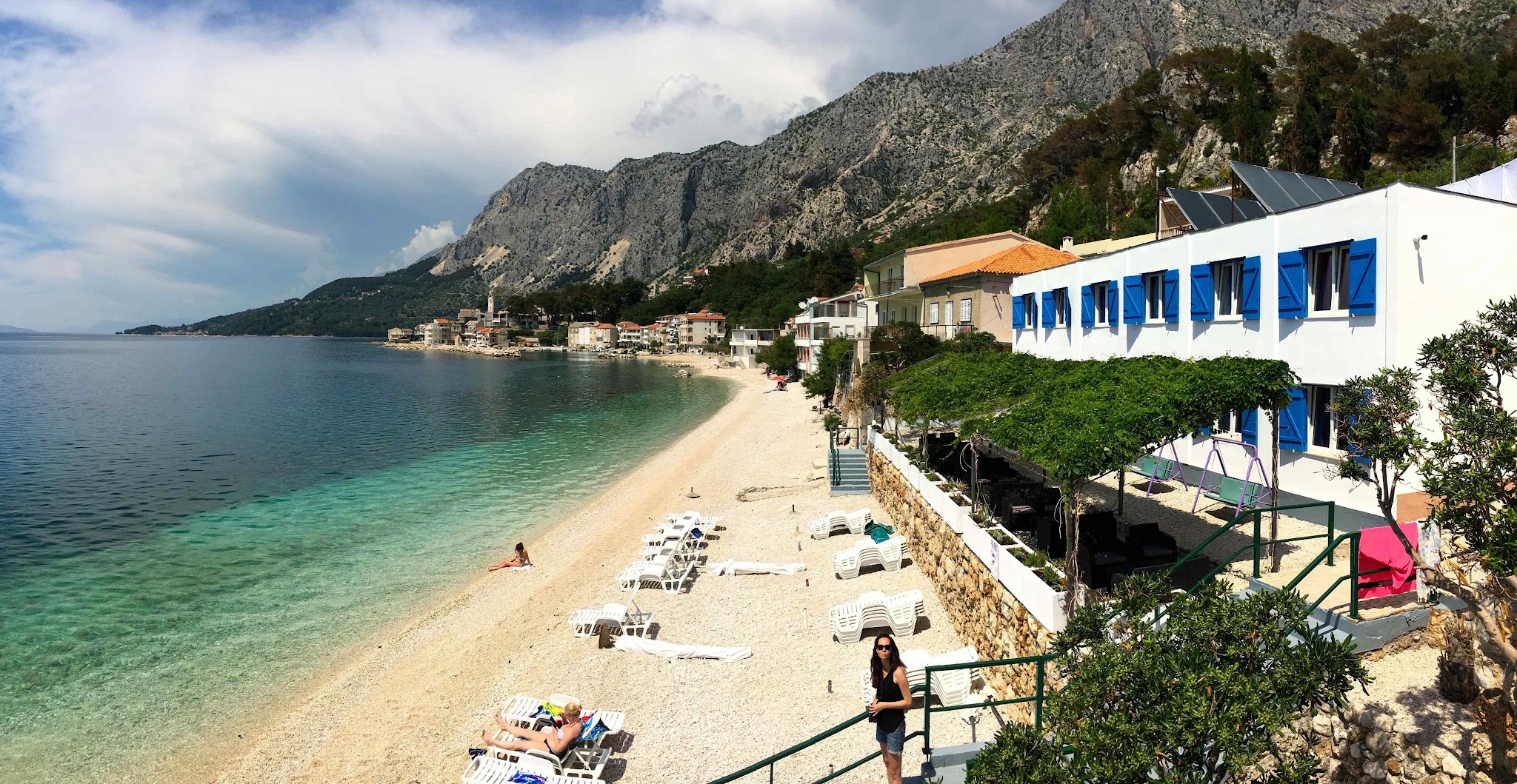
The climb begins in the small Adriatic fishing town of Podgora (population ~1,500; 2001). 

Just getting started.

The toll was 3 Euro for cyclists when Ard Oostra rode through in 2017.

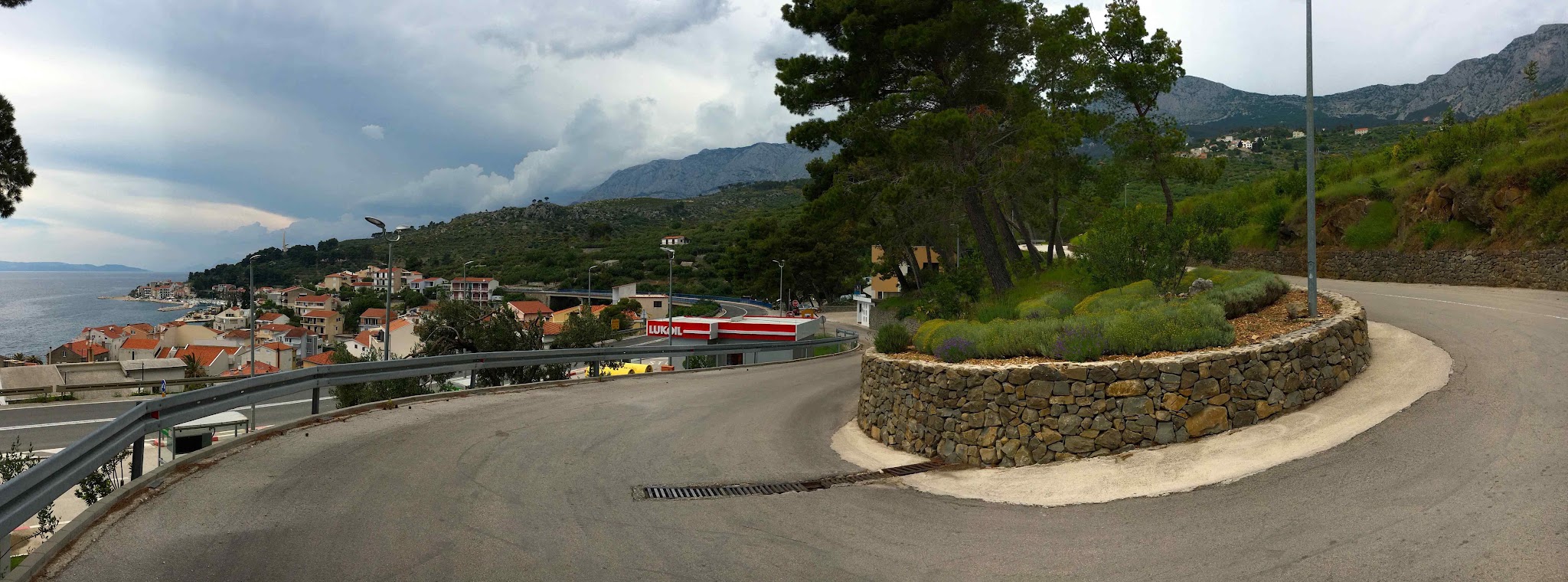
An early hairpin.

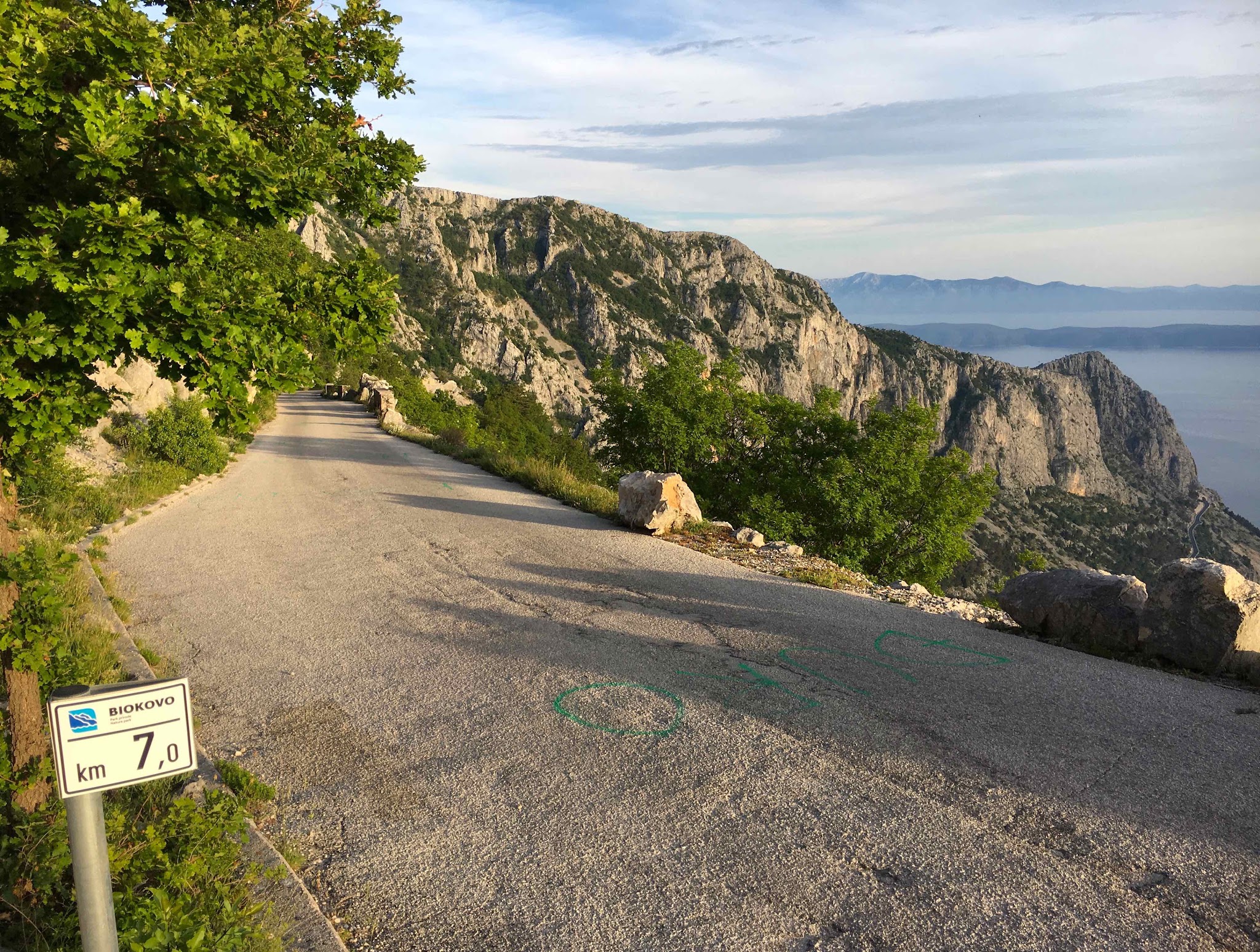
Seven km mark.

Road is narrow and rough in places.

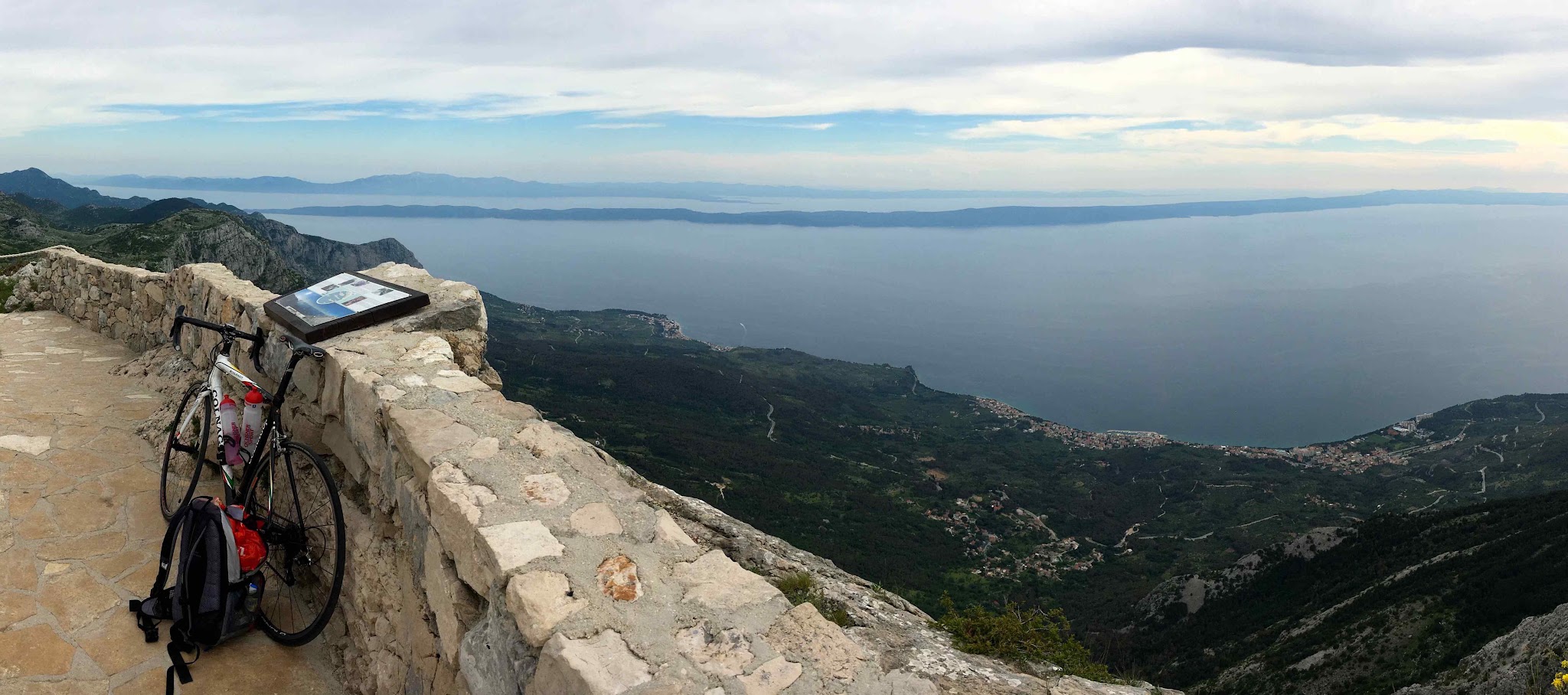
Many fine viewpoints along this long climb.

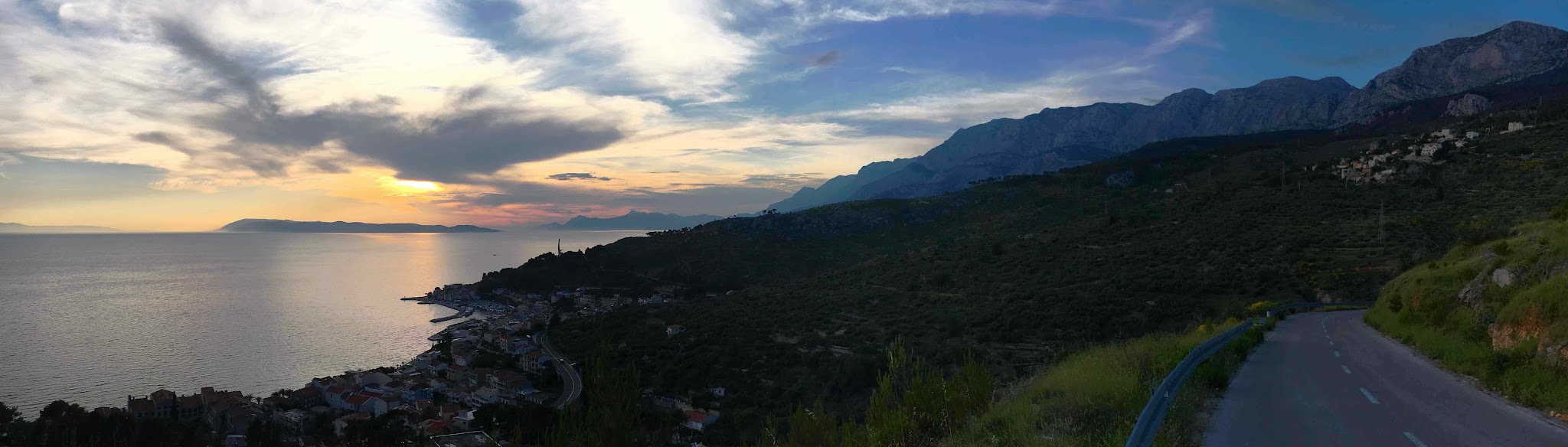
Looking down on Podgora and the Adriatic Sea.


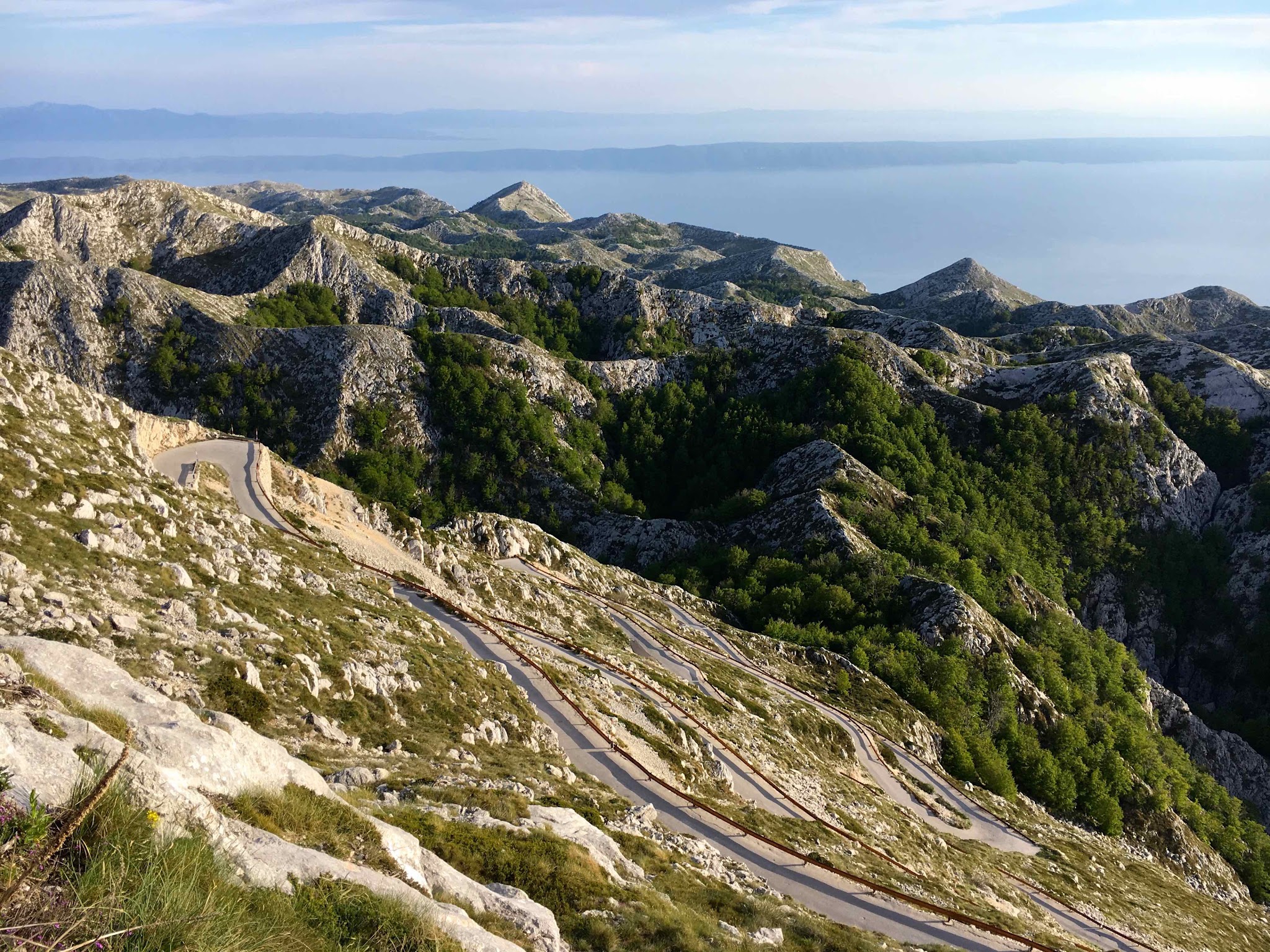
Last set of hairpins just below the finish of the climb.

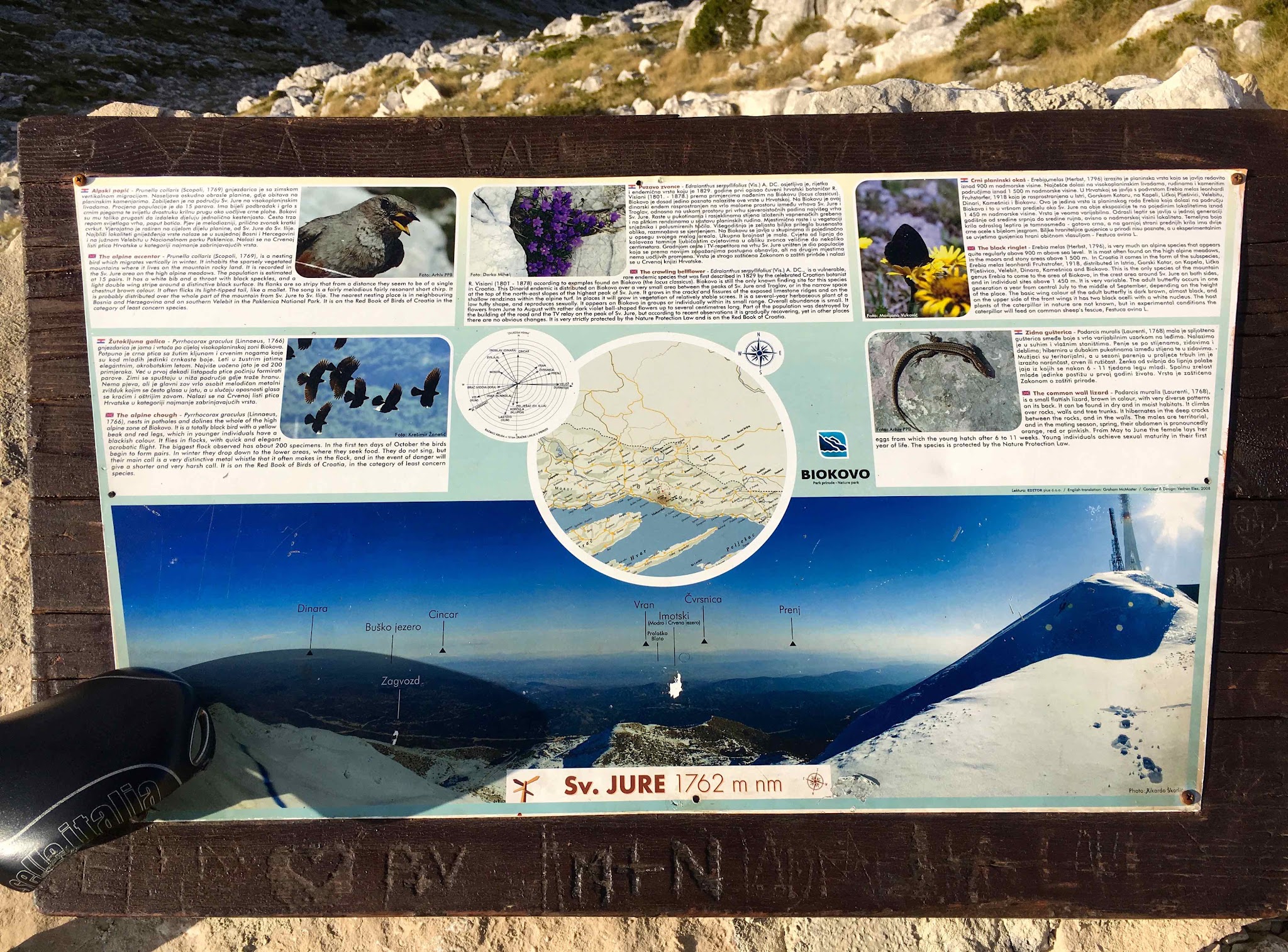
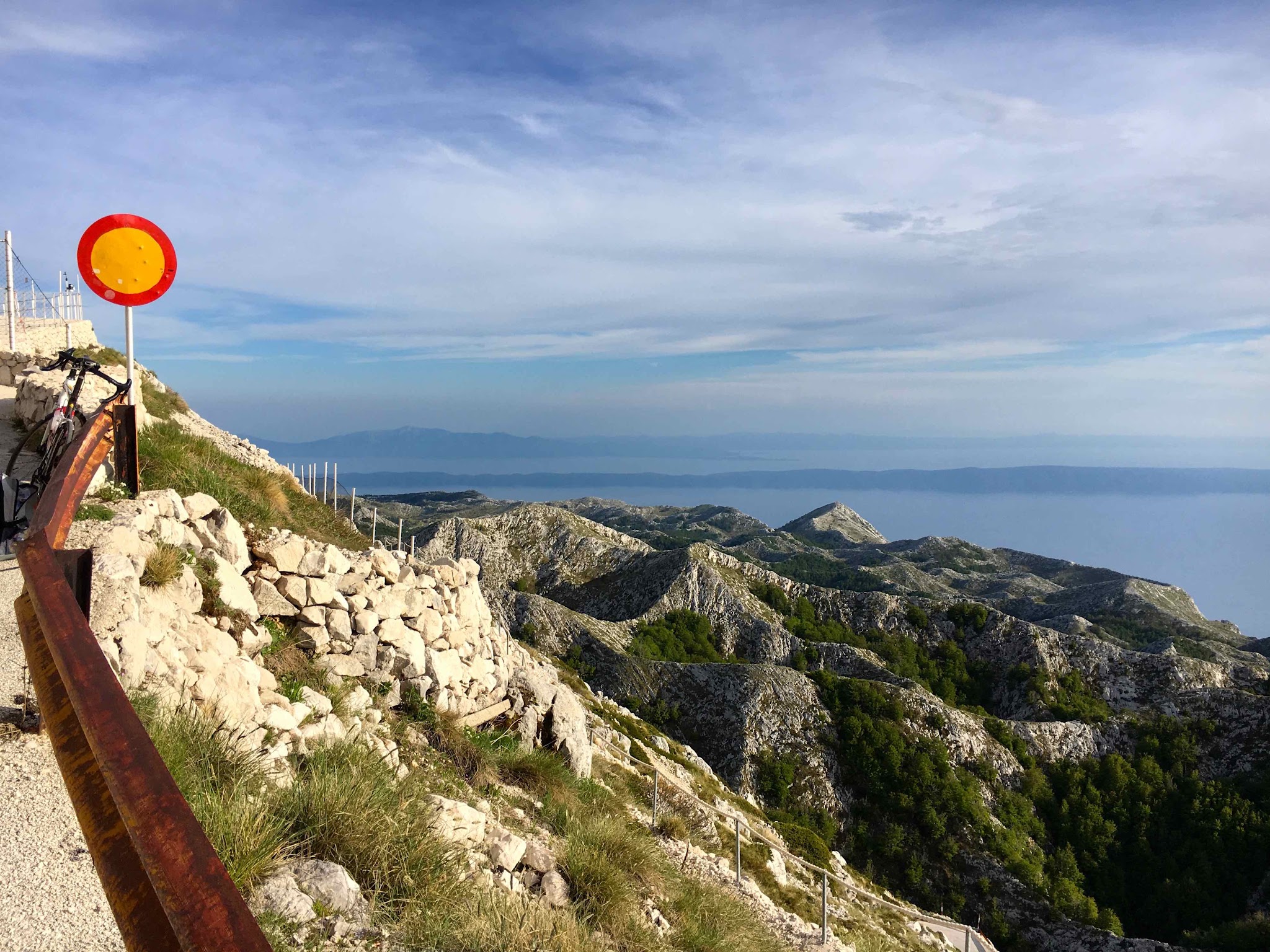
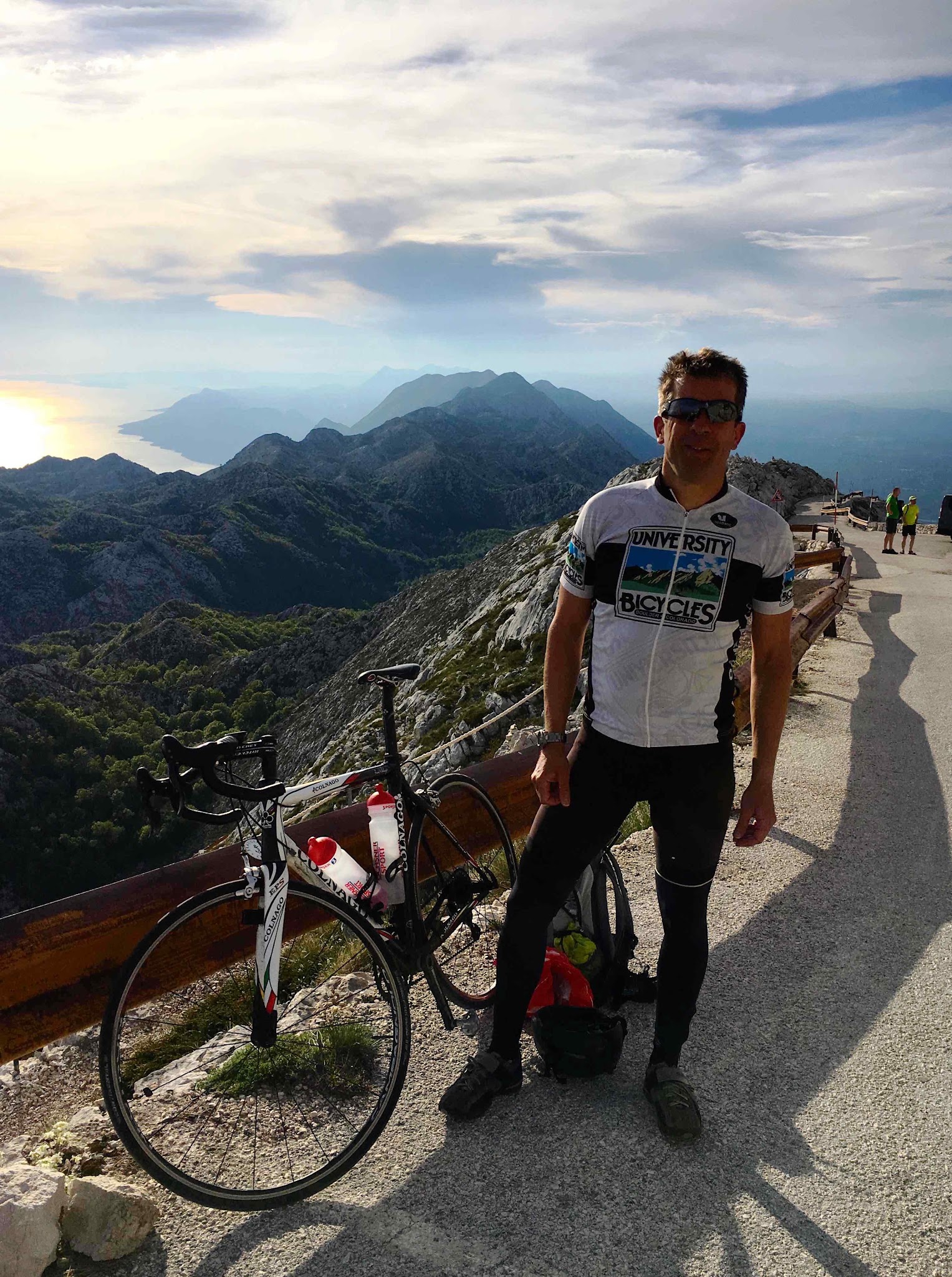
View from the top.

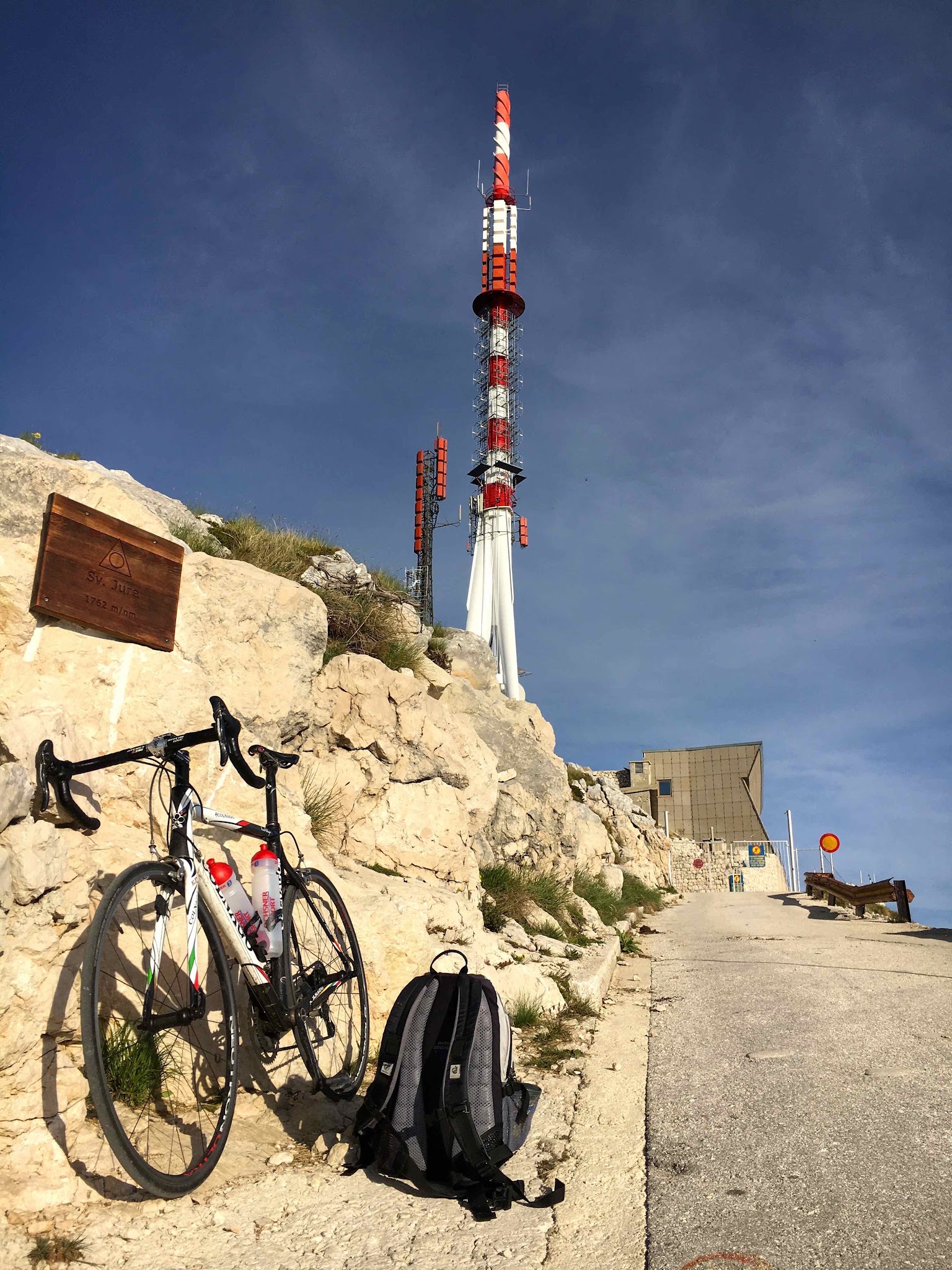
Radio tower at the finish -- a good reason to build the road.  👍

Ard Oostra got a late start back down the mountain, and . . .

. . . we are . . .

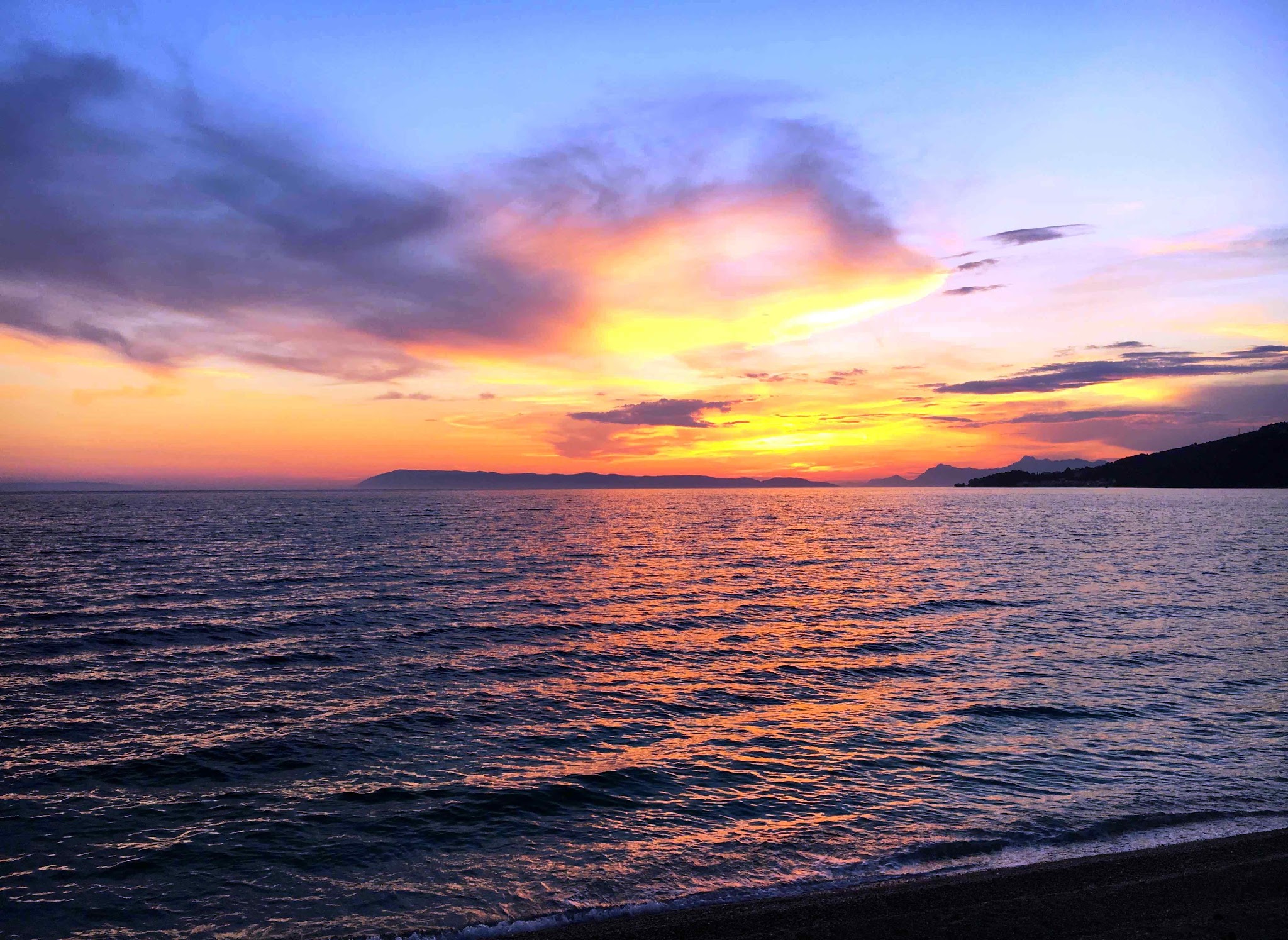
. . . VERY GLAD he did!

Thank you Ard Oostra, Switzerland.  

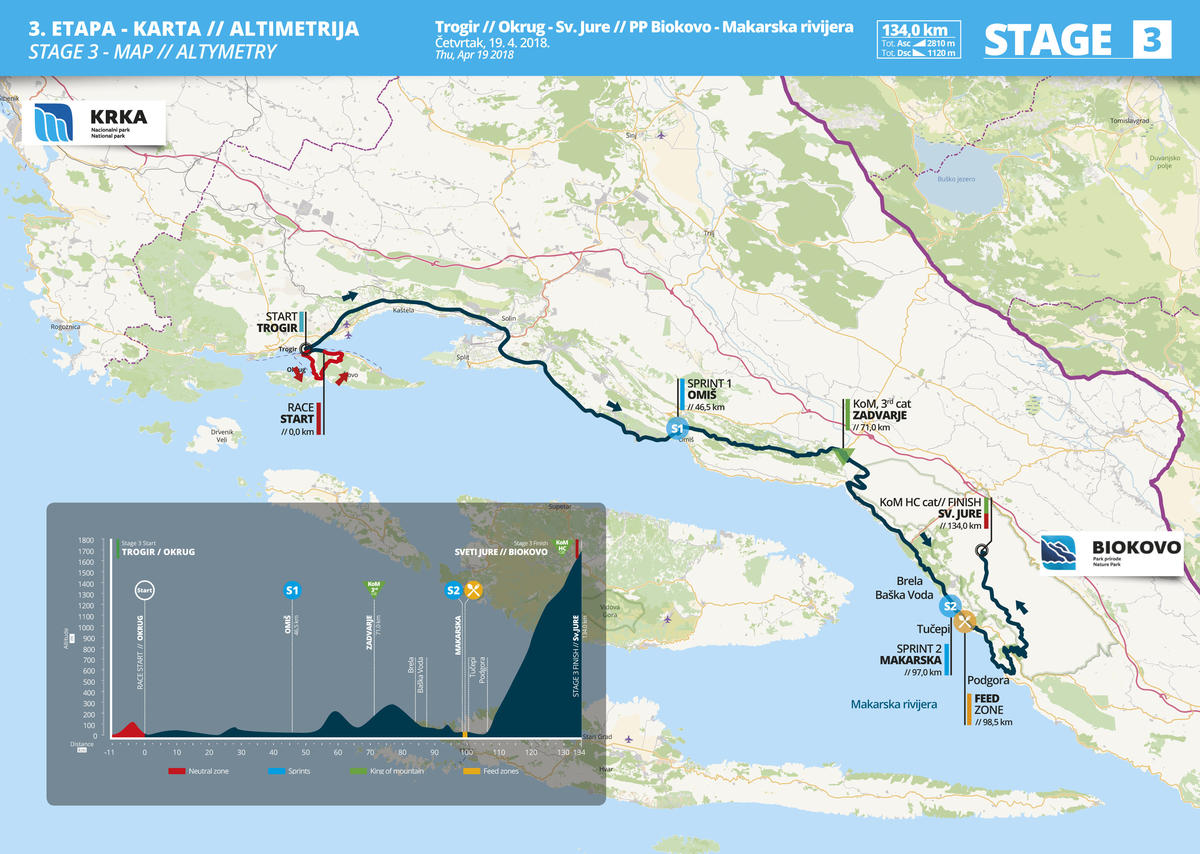
Sveti Jure was the finish for Stage 3 of the 2018 Tour of Croatia.

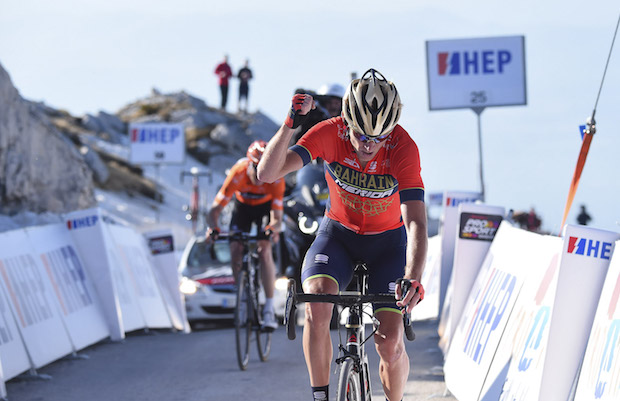
Winner of the stage and the tour was Kanstantsin Siutsou (BY).

The views on this climb are stunning, including the Adriatic Sea to the west.


The slightly more difficult route up this beautiful mountain is from Podgora, a quaint town in the Split-Dalmatia County of Croatia with a population of about 3,000.  Seven kilometers north is the beginning of Sveti Jure from Makarska (pop. 13,834, 2011), a very popular tourist destination and historical city.  Tripadvisor has a great list of the Top 10 things to do in Makarska, here. Read more about Makarsa from Wikipedia, below:  

Makarska (pronounced [mâkarskaː]) is a small city on the Adriatic coastline of Croatia, about 60 km (37 mi) southeast of Split and 140 km (87 mi) northwest of Dubrovnik. It has a population of 13,834 residents.[1] Administratively Makarska has the status of a city and it is part of the Split-Dalmatia County.

Makarska is a tourist centre, located on a horseshoe shaped bay between the Biokovo mountains and the Adriatic Sea. The city is noted for its palm-fringed promenade, where cafes, bars and boutiques overlook the harbour. Adjacent to the beach are several large capacity hotels as well as a camping ground.

The center of Makarska is an old town with narrow stone-paved streets, a main church square where there is a flower and fruit market, and a Franciscan monastery that houses a sea shell collection featuring a giant clam shell.

Makarska is the center of the Makarska Riviera, a popular tourist destination under the Biokovo mountain. It stretches for 60 km (37 mi) between the towns of Brela and Gradac.

Its former cathedral of Saint Mark was the see of the former Roman Catholic Diocese of Makarska which was merged in 1828 into the Diocese of Split-Makarska.

Pre-history
Near present-day Makarska, there was a settlement as early as the middle of the 2nd millennium BC. It is thought that it was a point used by the Cretans on their way up to the Adriatic (the so-called "amber road"). However it was only one of the ports with links with the wider Mediterranean, as shown by a copper tablet with Cretan and Egyptian systems of measurement.

A similar tablet was found in the Egyptian pyramids. In the Illyrian era this region was part of the broader alliance of tribes, led by the Ardaeans, founded in the third century BC in the Cetina area (Omiš) down to the River Vjosë in present-day Albania.[2]

The Roman era
Although the Romans became rulers of the Adriatic by defeating the Ardiaei in 228, it took them two centuries to confirm their rule. The Romans sent their veteran soldiers to settle in Makarska. After the division of the Empire in 395, this part of the Adriatic became part of the Eastern Roman Empire and many people fled to Muccurum from the new wave of invaders. The city appears in the Tabula Peutingeriana as the port of Inaronia, but is mentioned as Muccurum, a larger settlement that grew up in the most inaccessible part of Biokovo mountain, probably at the very edge of the Roman civilisation. It appears on the acts of the Salonan Synod of 4 May 533 AD held in Salona (533),[2] when also the town's diocese was created.

Early Middle Ages
During the Migration Period, in 548, Muccurum was destroyed by the army of the Ostrogoth king Totila. The byzantine Emperor expelled the Eastern Goths (Ostrogoths).

In the 7th century the region between the Cetina and Neretva was occupied by the Narentines, with Mokro, located in today's Makarska, as its administrative centre. The doge of Venice Pietro I Candiano, whose Venetian fleet aimed to punish the piratesque activities of the city's vessels, was defeated here on September 18, 877[2] and had to pay tribute to the Narentines for the free passage of its ships on the Adriatic.

Late Middle Ages

The principality was annexed to the Kingdom of Croatia in the 12th century, and was conquered by the Republic of Venice a century later. Making use of the rivalry between the Croatian leaders and their power struggles (1324–1326), the Bosnian Ban Stjepan II Kotromanić annexed the Makarska coastal area. There were many changes of rulers here: from the Croatian and Bosnian feudal lords, to those from Zahumlje (later Herzegovina).

In the eventful 15th century the Ottomans conquered the Balkans. In order to protect his territory from the Turks, Duke Stjepan Vukčić Kosača handed the region to the Venetians in 1452. The Makarska coastal area fell to the Turks in 1499  (
Wikipedia - Makarska).