
24.7
PDI
9 mi
DISTANCE
3,626 ft
GAINED
7.6 %
AVG. GRADE
FULL CLIMB STATS
INTRO
Luz Ardiden is one of the most storied summit finishes in the Pyrenees, and this Viscos approach is its lesser-known back door. Starting from the valley floor near the village of Saligos on the D921, just short of Luz-Saint-Sauveur, the climb runs 14.5 km (9.0 mi) to the old ski station at 1735 m (5,691 ft), gaining 1105 m (3,626 ft) at an average grade of 7.6%.
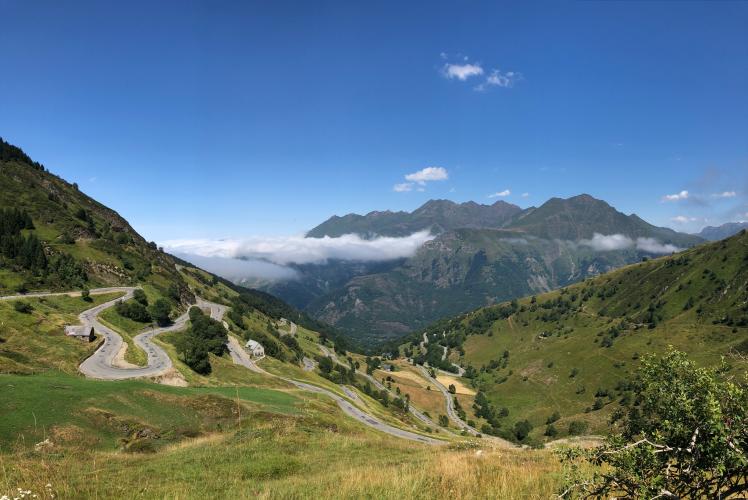
Unlike the main road out of Luz-Saint-Sauveur, which has hosted the Tour de France nine times, the Viscos side has never seen the professional peloton in the Tour itself - though it has featured in the Route du Sud. The first 3 km out of the valley are the steepest of the whole climb, kicking up through Viscos village before a long string of hairpins carries the road through forest on a narrow ribbon of tarmac with almost no traffic. Around 3-4 km from the top, the route merges with the classic Luz-Saint-Sauveur road for the final push to the summit, so riders finish on the same switchbacks and open mountainside that have decided Tour stages.
That shared finish has seen some of the sport's defining moments - Tadej Pogačar's 2021 stage win, Lance Armstrong's crash with Iban Mayo in 2003, and Greg LeMond's title-clinching ride behind Miguel Induráin in 1990. Riding up via Viscos is a way to reach that same legendary ground while spending most of the climb in near-total solitude.
PLAN YOUR ROUTE
 We've partnered with Sherpa-Map.com to bring you the best route planning tool. With a PRO Membership you can use this climb as a reference when creating your route.
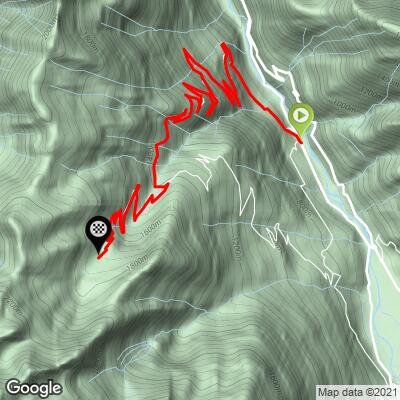
 From the D921 near Saligos to the old Luz Ardiden ski station, this route covers 14.5 km (9.0 mi) and climbs 1,105 m (3,626 ft) at an average grade of 7.6%.
The climb front-loads its hardest work: the opening kilometer out of the valley and through Viscos village averages close to 10.0%, with the steepest 100 yards spiking to roughly 15.3%. After the village the gradient eases only slightly into a long series of forested switchbacks, holding around 8-10% through the middle kilometers before settling toward 7.7-8.2% once the road merges with the classic route for the final approach to the ski station. There's no flat or downhill relief anywhere on the way up.
Roadway: The road is paved the entire way, but it's narrower and rougher than the classic route out of Luz-Saint-Sauveur - expect patchy tarmac and occasional loose gravel in the switchbacks, especially through the forested middle section. The climbing direction is fine, but the same rough patches make for a cautious descent; most riders instead head back down via the classic, wider road out of Luz-Saint-Sauveur. Once this route merges with that classic road for the final 3-4 km to the ski station, the pavement is in excellent shape the rest of the way.
Traffic: The D921 valley road you leave to start the climb carries steady tourist traffic in season, but that disappears almost entirely once you turn off onto Route de Viscos - riders rate traffic on this side as light nearly unanimously. That solitude lasts until the final few kilometers, where the route rejoins the classic Luz-Saint-Sauveur road and traffic picks back up with cars headed to and from the ski station.
Parking: There's no formal lot at the base - most riders leave a car along the shoulder of the D921 near the signed turnoff for Viscos, just outside Saligos, or in the small village of Viscos itself a short distance up the climb. Luz-Saint-Sauveur, about a 10-minute drive down-valley, has larger parking areas and is a practical base if you're also planning to ride - or descend via - the classic route.
Viscos is a tiny hamlet with no services, and the old ski station at the top is shuttered outside winter - so there's nowhere to refill a bottle or grab food once you leave the valley. Stock up in Saligos or Luz-Saint-Sauveur before you start; both sit right on the D921 at the base of the climb.
Compact gearing is worth having - the opening kilometer through Viscos and the pitches through the forest above regularly hit double-digit grades. Summers in this part of the Pyrenees are typically warm and sunny, but cloud and damp can roll in quickly at altitude, so pack a light layer for the descent even on a clear morning.
Before heading out on any cycling adventure check out our Things to Bring on a Cycling Trip and use our interactive check list to ensure you don't forget anything.
Viscos itself is little more than a scattering of stone houses, so plan on staying and eating in Luz-Saint-Sauveur or Argelès-Gazost, both a short ride or drive down the valley. If you have time beyond the bike, Luz-Saint-Sauveur has a small thermal spa (Thermes de Luz) worth a soak for tired legs, and the Cirque de Gavarnie - one of the most dramatic natural amphitheaters in the Pyrenees and a UNESCO World Heritage Site - is about 20 km further up the valley road, an easy add-on for a rest day.
Since this side of Luz Ardiden shares its final few kilometers and its summit with the classic route from Luz-Saint-Sauveur, it pairs naturally with that climb - ride up via Viscos for the quiet, and come back down the wider, better-paved main road. Riders planning a longer Pyrenean trip can see what else is nearby with our Routes in the Area tool.
ROUTE MAP
MEMBER RATING
CURRENT WEATHER
PJAMM TRIPS ADVENTURE STARTER BUNDLES
Check out PJAMM Adventure's prepackaged (self-guided) cycling trips. They will help you plan, document and conquer your next adventure.
NEARBY CLIMBS (0) RADIAL PROXIMITY
FROM No Climbs Found
MEMBER REVIEWS & COMMENTS
Let us know what you thought of this climb. Signup for our FREE membership to write a review or post a comment.
Already have an account?
LOG IN HERE
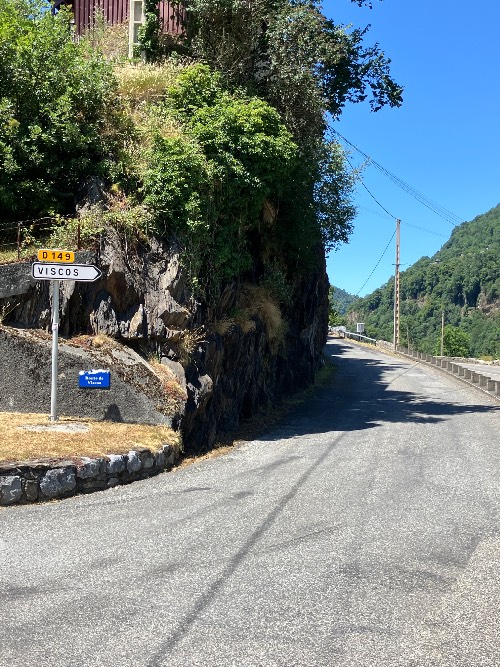
carlinguernsey
If you are looking for something different, this alternate route to Luz Ardiden takes you well off the beaten path. Look for the turn off for Viscos from the main road (D921). The first two k are hard and then the gradient settles down. Keep to the left instead of going to Viscos and suddenly you are in the forest with little signs of human life for a long period. I saw only two cars before joining the main road to Luz Ardiden with about 4k to go. I recommend descending on the main road (D12) due to the narrow road and poor condition of the roadway.
