INTRO
PLAN YOUR ROUTE
 We've partnered with Sherpa-Map.com to bring you the best route planning tool. With a PRO Membership you can use this climb as a reference when creating your route.
 The stage builds gradually before turning decisive on the Blockhaus finish. Rionero Sannitico (9.5km at a gentle 5%) and Roccaraso (7km at 6.4%) soften the legs without doing real damage, and the short, punchy Passo Forchetta (1.9km at 7.1%) and long, shallow Passo San Leonardo (8.4km at 3.1%) keep the pace honest through the middle of the stage. The real test is the Blockhaus itself: 13.6km averaging 8.4%, with nearly 10km sustained above 9% and pitches reaching 14% in the closing kilometers - a genuine summit-finish gradient that punishes anyone who arrives with tired legs.
Roadway: The route runs on well-maintained Italian state and provincial roads through Lazio and Abruzzo, with the Blockhaus finishing climb itself narrowing to a two-lane mountain road as it nears the Majella massif. Traffic: Normal Italian rural/mountain traffic on the transition; the final climb sees closures for race day but is open to cyclists outside of race events. Parking: Riders exploring the Blockhaus climb outside race day typically park in Passo Lanciano or the towns of Lettomanoppello/Roccamorice at the base of the various approaches.
A compact crankset with a wide-range cassette (11-32 or larger) is essential for the sustained 9%+ pitches on the Blockhaus finish, especially the 14% ramps near the top. At 244km, this is also a nutrition and pacing day above all else - riders should fuel steadily through the early rolling terrain to have legs left for the final 13.6km test. Water is available in the towns passed through on the transition; carry enough for the finishing climb itself since services thin out above Passo Lanciano.
Blockhaus is a legitimate cycling destination in its own right outside of race day, with three separate paved approaches (from Roccamorice, Lettomanoppello, and the longer eastern route via Fara Filiorum Petri) converging near the top. The Majella National Park surrounding the climb offers excellent hiking and wildlife viewing, including the chance to spot Marsican brown bears. Base yourself in nearby Pescara on the Adriatic coast or in one of the small Abruzzo mountain towns for an authentic, less-touristed alternative to the bigger Italian cycling destinations.
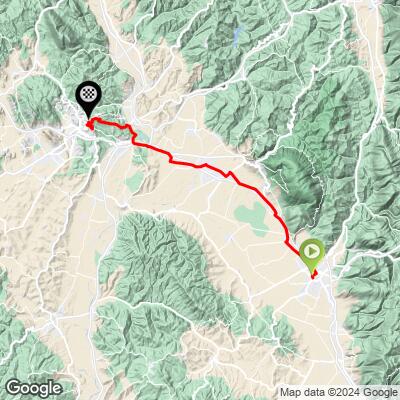
ROUTE MAP