Passo Manghen - Molina Bike Climb - PJAMM Cycling

29.1
PDI
9.7 mi
DISTANCE
4,120 ft
GAINED
7.6 %
AVG. GRADE

FULL CLIMB STATS

INTRO

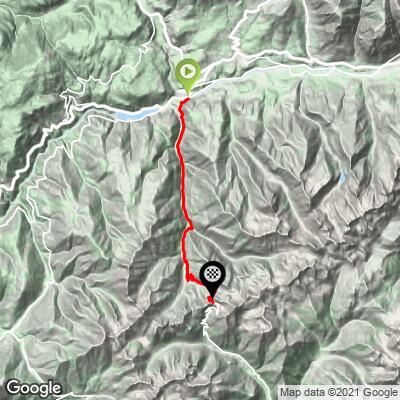
Passo Manghen - Molina is a 15.6 km (9.7 mi) climb in Italy's Trentino region, gaining 1,256 m (4,120 ft) at an average grade of 7.6% as it climbs from Molina di Fiemme, at the edge of the Val di Fiemme, up through the Lagorai mountains to the Passo Manghen. This is the shorter and quieter of the pass's two paved approaches - the longer, better-known climb starts from Telve on the Valsugana side.

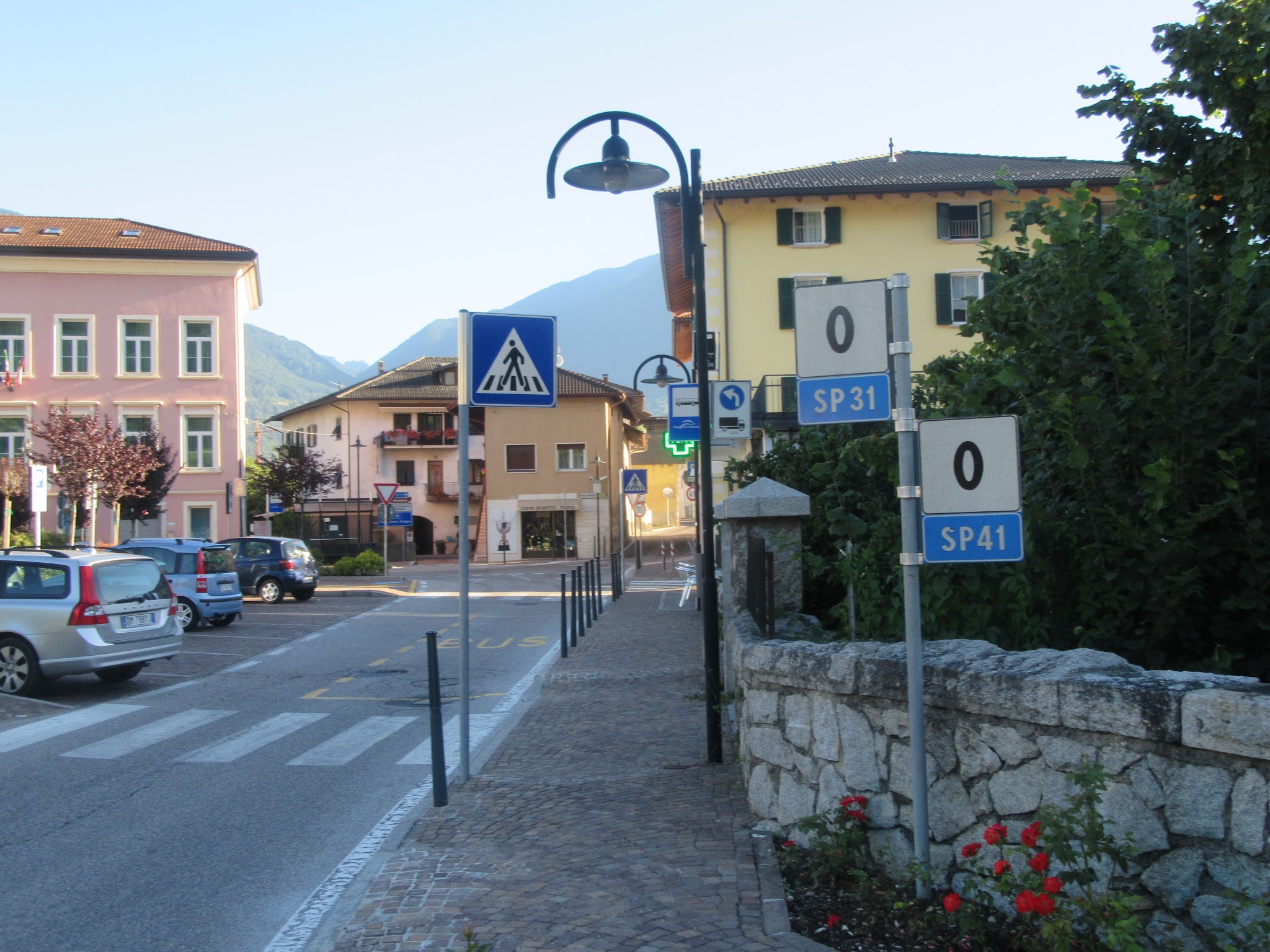
We began this side at the roundabout where SP31 crosses the Torrente Avisio just outside Molina, and the road stays manageable through the first several kilometers of forest before showing its real character: past the bridge over the Rio delle Stue around km 7.6, the grade tightens noticeably, and the steepest kilometer, starting around km 10, averages 12.6%. It's a narrow road with tight, occasionally blind switchbacks - Trentino has posted "respect the cyclist" signage along it, one of about 100 such signs the province has installed on its 23 most popular climbing roads.

Passo Manghen first appeared in the Giro d'Italia in 1976, on a stage from Vigo di Fassa to Terme di Comano that climbed this same Molina side - then still unpaved gravel - before dropping to the Valsugana side and on toward Monte Bondone. It's the stage remembered for points leader Roger De Vlaeminck's abandon partway up the climb, when he reportedly threw down his bike and ran into the woods. The pass has returned to the Giro four times since, including Marco Pantani's decisive attack en route to Alpe di Pampeago in 1999 and Emanuele Sella's breakaway stage win in 2008.

PLAN YOUR ROUTE

We've partnered with Sherpa-Map.com to bring you the best route planning tool. With a PRO Membership you can use this climb as a reference when creating your route.
This side of Passo Manghen gains 1,256 m (4,120 ft) over 15.6 km (9.7 mi) at an average grade of 7.6%, climbing from 815 m (2,674 ft) in Molina di Fiemme to roughly 2,001 m (6,566 ft) at the pass.

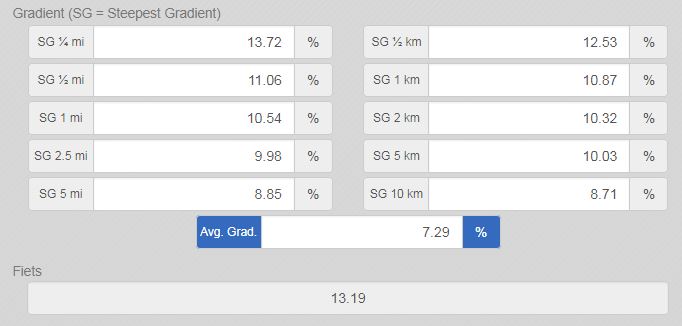
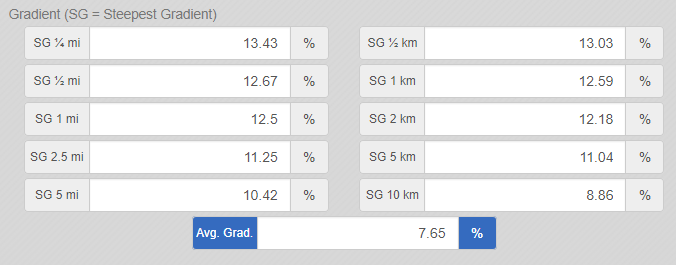
The grade builds steadily rather than staying flat: the steepest quarter-mile averages 13.4%, the steepest half-mile 12.6%, and the steepest full mile 12.5% - all in the closing kilometers above the bridge at Rio delle Stue, where the road's true difficulty shows up. Zoomed out, the steepest 2.5-mile stretch still averages 11.3% and the steepest 5-mile stretch 10.4%, reflecting how little of this climb is actually easy once you're past the lower forest section. The Fiets difficulty index rates it at 10.01, solidly into HC territory.
Roadway: Paved the entire way, but narrow with tight, occasionally blind switchbacks, especially in the steeper upper kilometers. It's popular enough with cyclists that the province of Trento has posted dedicated "respect the cyclist" road signs along it. SP31 is a seasonal mountain road, closed by snow every winter and typically only fully open from late spring into early autumn - check current status with the Provincia di Trento before planning a full crossing over the top.

Traffic: Generally light - this is a quiet secondary provincial road connecting two rural valleys, not a through-route for regional traffic. Expect a mix of local cars, motorcyclists, and cyclists rather than heavy vehicle volume, though the narrow lane width and blind curves call for caution regardless of traffic count.

Parking: Start from the roundabout at the southeast edge of Molina, where SP31 crosses the Torrente Avisio and meets SS612 - there's roadside parking near the village center here for anyone driving in to start the ride.
Molina di Fiemme has small shops and cafes for a pre-ride coffee or to top off water bottles before starting. Once you leave town there's essentially nothing until the top: the Baita/Rifugio Passo Manghen, a mountain hut-restaurant near the summit serving typical Trentino dishes like canederli and polenta, is open seasonally (roughly May through October) and is the one realistic stop on this side of the pass.

Given how much of the elevation gain is stacked into the final 8 kilometers above Rio delle Stue, it's worth carrying enough water for the whole climb rather than counting on a mid-route refill, and gearing low enough to handle sustained double-digit pitches near the top.
Before heading out on any cycling adventure check out our Things to Bring on a Cycling Trip and use our interactive check list to ensure you don't forget anything.
Molina di Fiemme, at the base of this side, sits in the Val di Fiemme, a broader valley known for its forests (the same Norway spruce that supplies tonewood for Stradivarius violins grows nearby) and as a hub for hiking and skiing in the Dolomites' Lagorai and Latemar groups. It makes a reasonable overnight base if you're combining this climb with other rides in the valley.

The pass itself has no real facilities beyond the seasonal Rifugio Passo Manghen, so this is very much a summer-into-early-fall ride - the road is closed by snow the rest of the year, and even in season it's worth checking current conditions given how often this stretch of road sees landslides and weather-related closures.

If you're building a longer route in the area, see other climbs nearby - including the steeper Telve approach up the other side of this same pass - with our Routes in the Area tool.

ROUTE MAP
MEMBER RATING

Not Yet Rated
-
Road
-
Traffic
-
Scenery

CURRENT WEATHER

PJAMM TRIPS ADVENTURE STARTER BUNDLES

Check out PJAMM Adventure's prepackaged (self-guided) cycling trips. They will help you plan, document and conquer your next adventure.
ALL TRIPS
Browse all of our prepackaged trips and find your next adventure!

NEARBY CLIMBS (0) RADIAL PROXIMITY

FROM
No Climbs Found

MEMBER REVIEWS & COMMENTS

Let us know what you thought of this climb. Signup for our FREE membership to write a review or post a comment.
Already have an account?
ROUTE MAP
PROFILE TOOL
Route Data
S.G. (%)
hide
Segment Data
hide
CLIMB SUMMARY

Climb Summary

IMG_5297.JPG

Passo Manghen from Telve (south)

This is a very popular and challenging climb about 20 miles / 32 kilometers east of Trento.  We began the climb In Castelnuovo which is where the km markers for SP 31 begin (at 0) and continue on up the mountain to the top of Passo Manghen.  

IMG_5004.JPG  IMG_5024.JPG                 

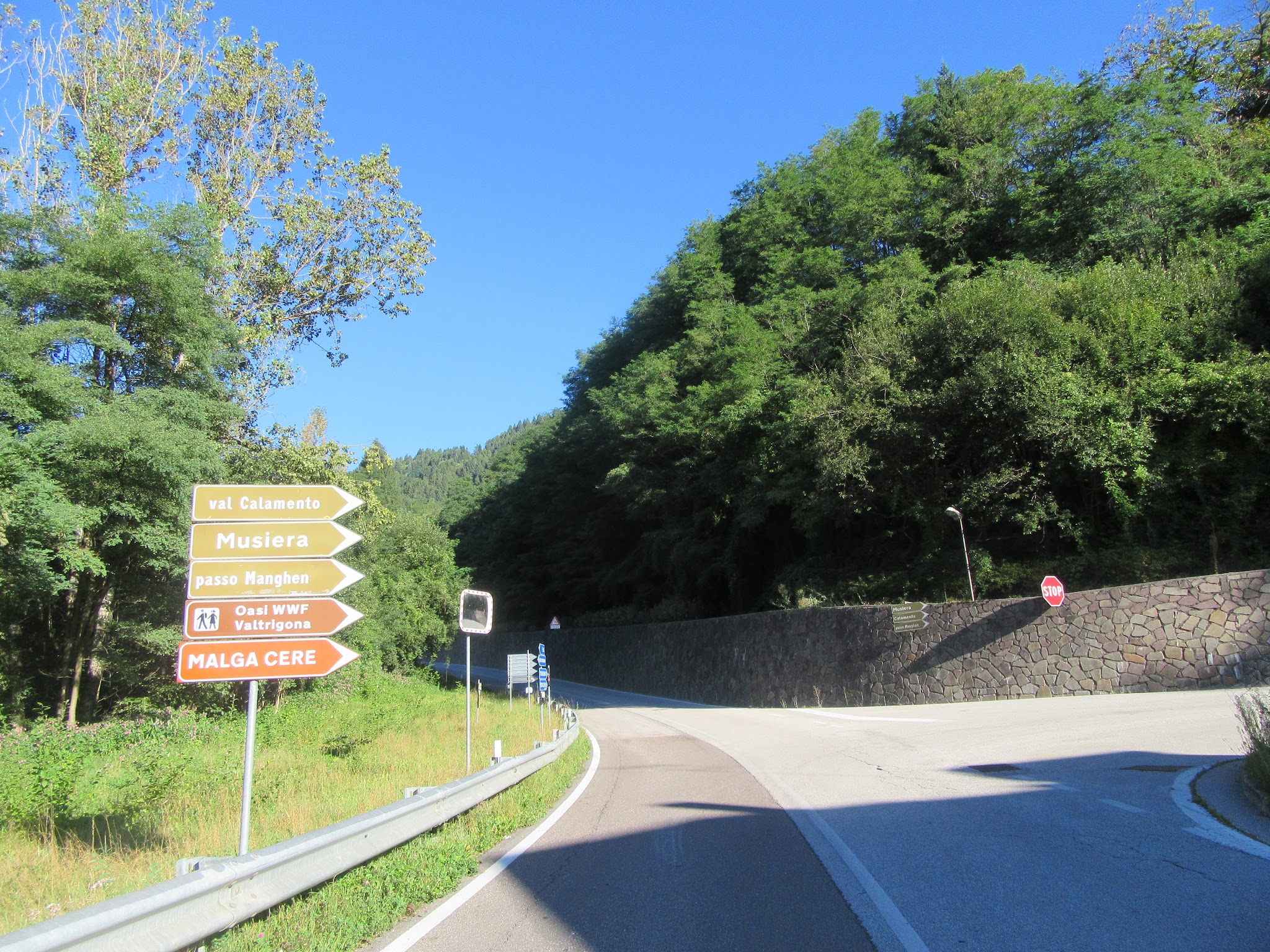
                Start of the climb - Castelnuovo roundabout                           Turn off to Passo Manghen at mile/km 2.5/4

Grades.JPG

IMG_5115.JPG

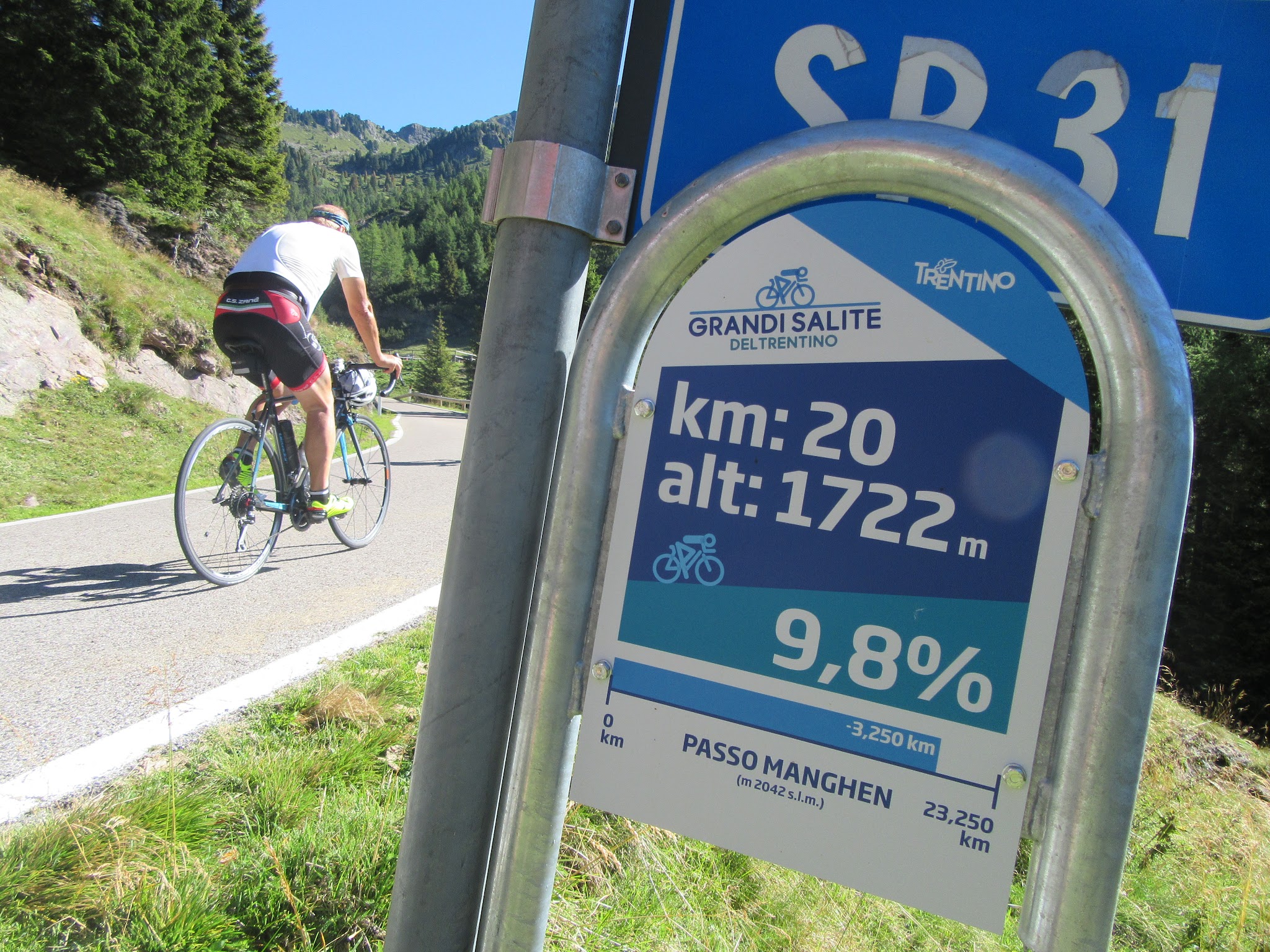
                                              Km markers go to km 22  (see KM marker slideshow on climb page).

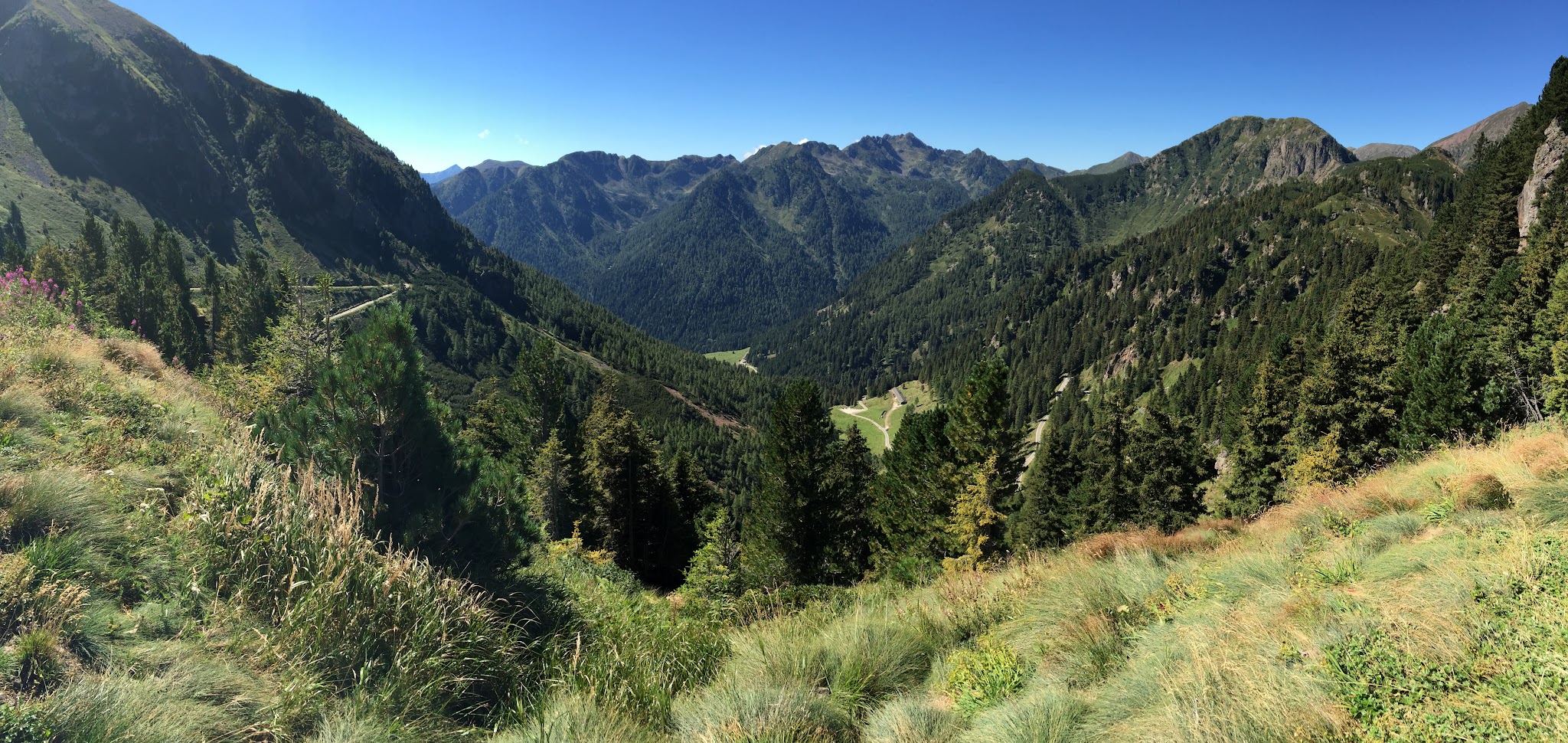
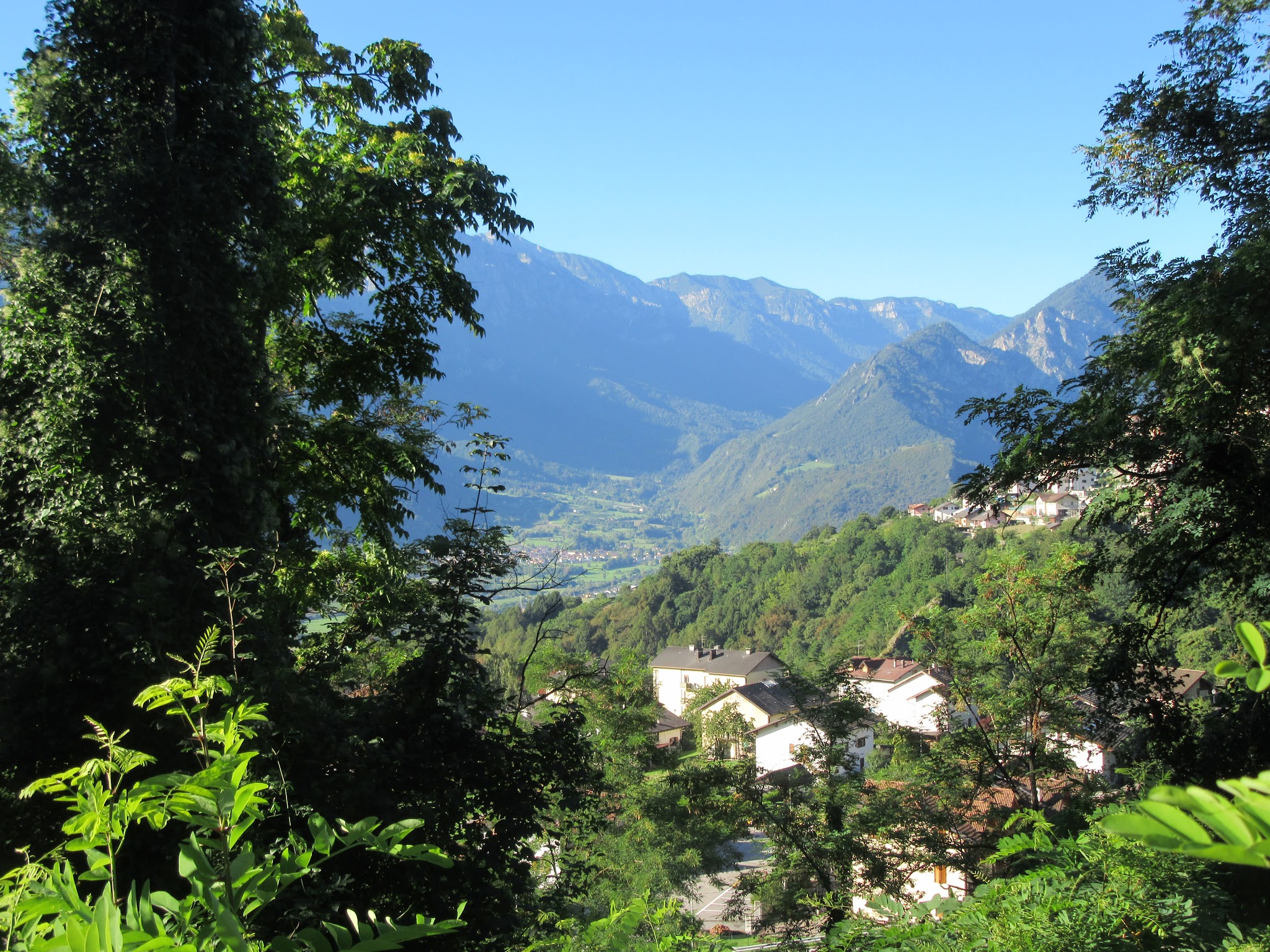
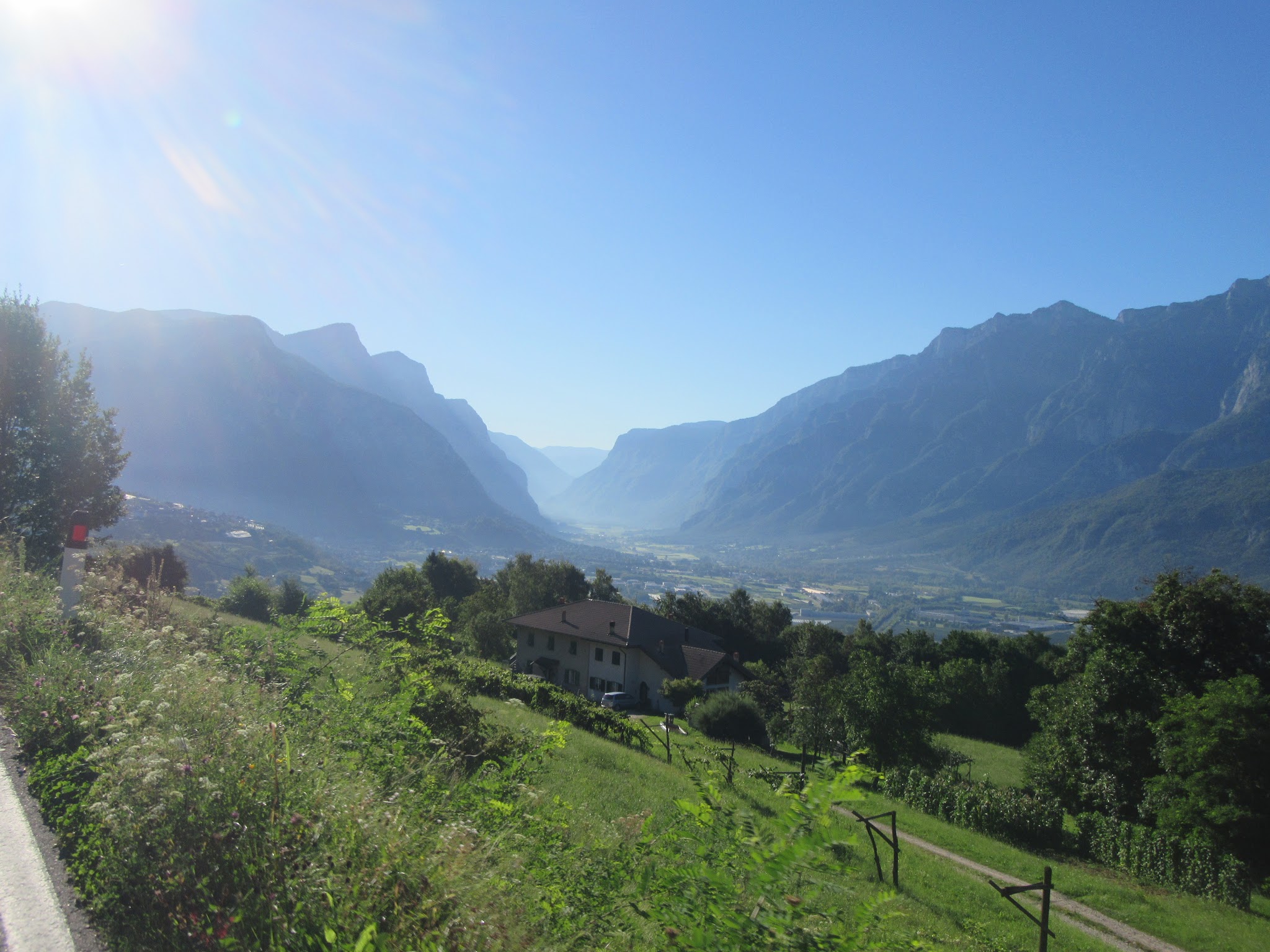
We have some exceptional views to the southwest and southeast of the glacier cut passes that form the valley which SP 228 approaches from the west and SP 60 from the east.


IMG_5032.JPG  IMG_5033.JPG

                                        Westerly view                                                                         Easterly view

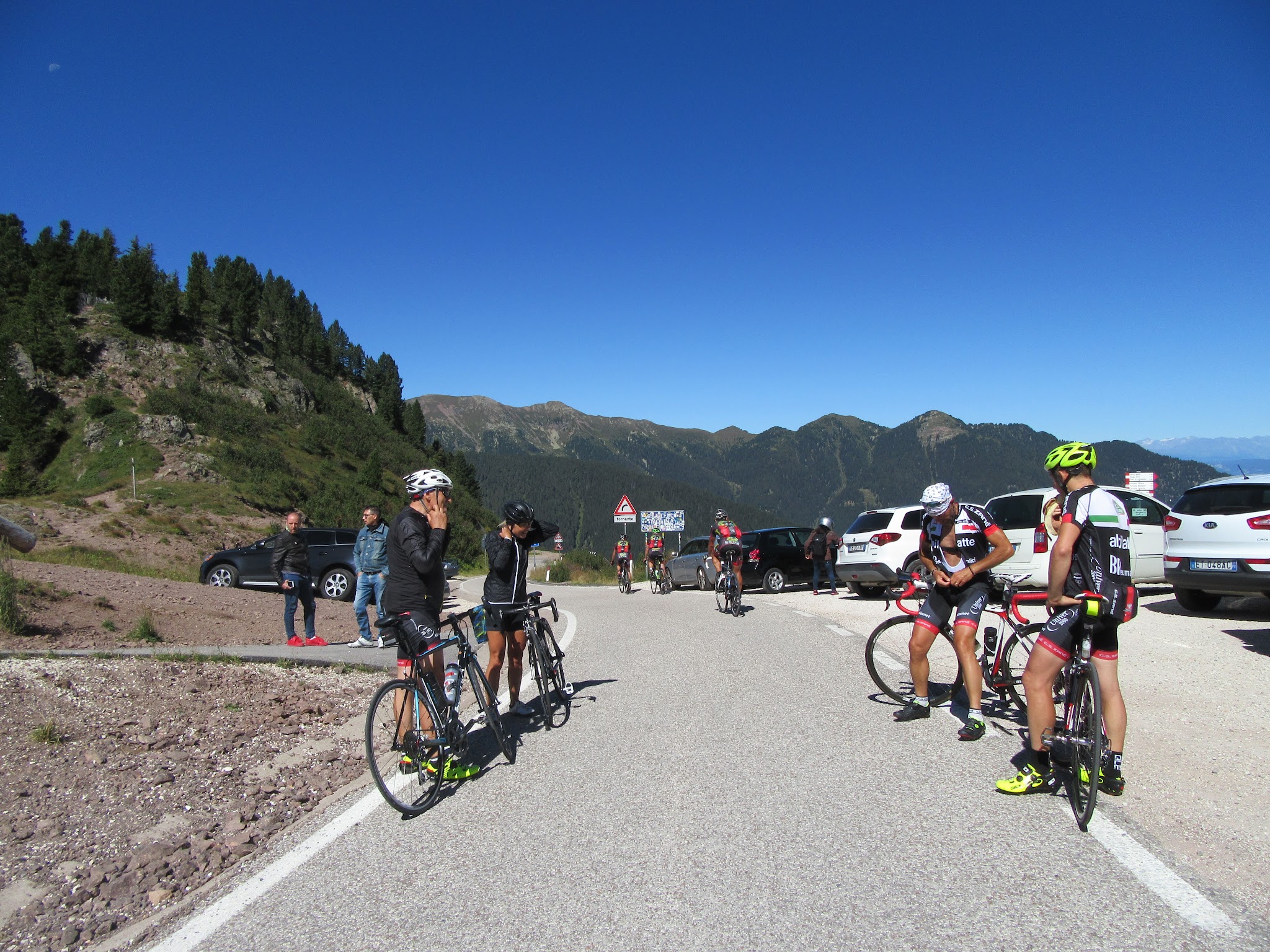
This is a very popular route for cyclists and we encounter many even on the mid-weekday morning that we climbed the mountain.

IMG_5108.JPGIMG_5140.JPG

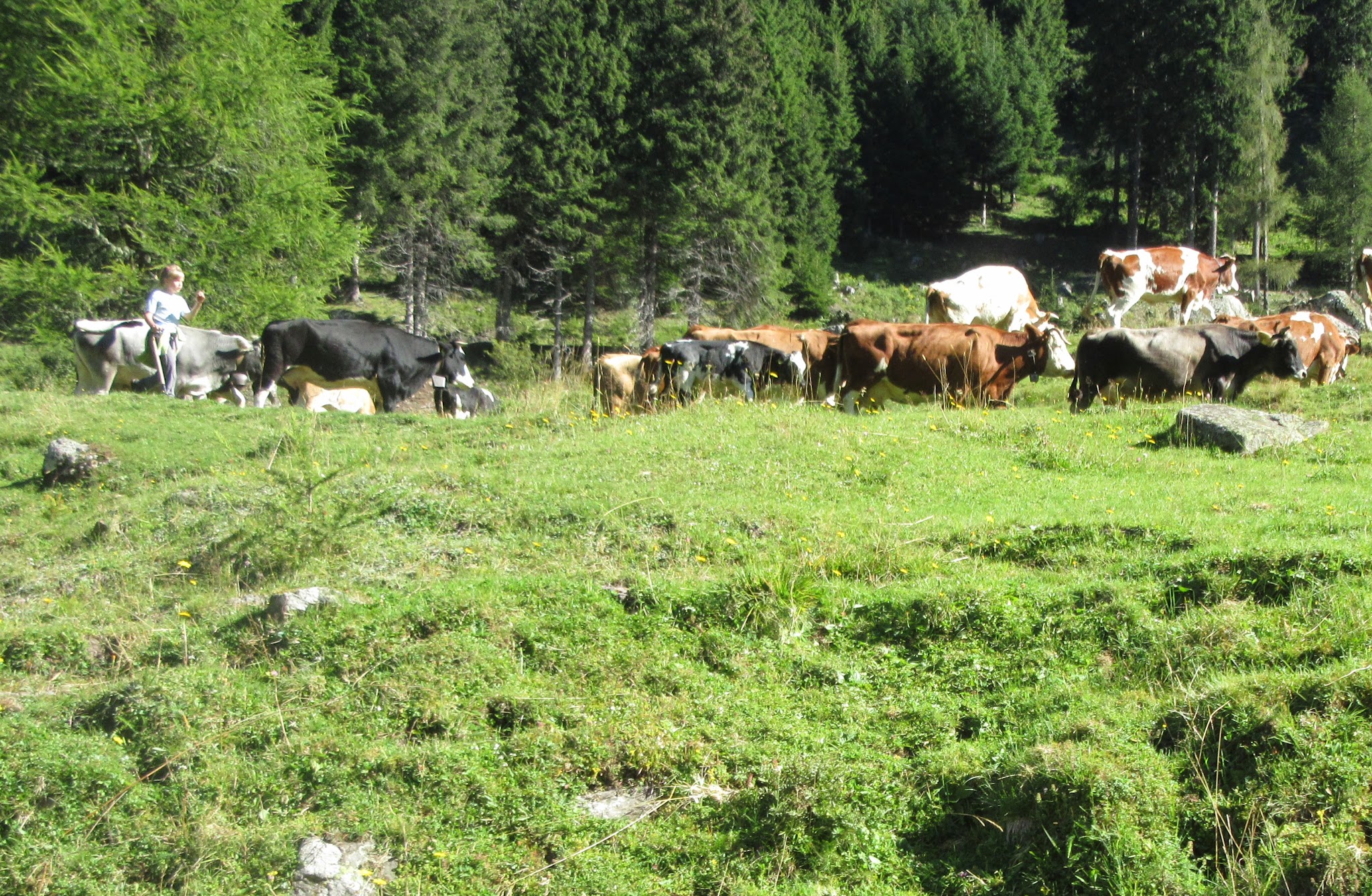
From miles/km 8/12.9 to 12/19.3 we pass through meadows with the gentle and calming sound of the cow bells of cattle grazing in the Italian Alps - we love this sound and hear it frequently on our rides into the Italian high country.

IMG_5079.JPGIMG_5113.JPG

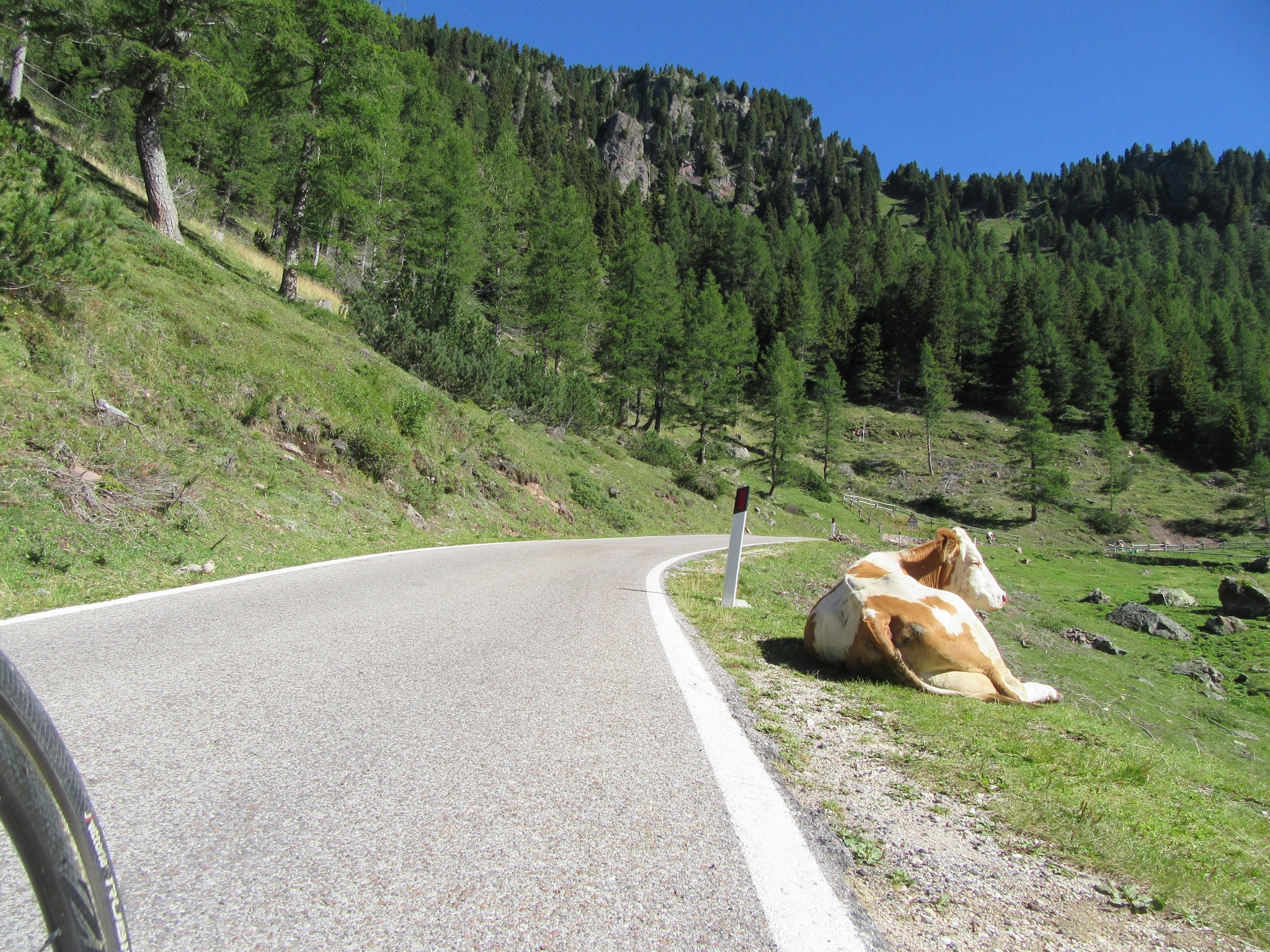
              Young girl herding cattle                          We do not blame that cow - the grade is brutal on this mountain!

IMG_5289.JPG     IMG_5138.JPG

IMG_5285.JPG     IMG_5141.JPG

The roadway is in excellent condition and the serpentine and smooth road at a fairly continuous grade of 8-9% makes this an exceptionally fun descent.

IMG_5100.JPG   IMG_5142.JPG

                               Much fun on the descent!                                                      Ristorante Malga Baessa -

          nice spot to stop on the ride down


Giro History

Year

Stage

Stage Winner

Country

1976

20

Luciano Conati

Italy

1996

20

Mariano Piccoli

Italy

1999

19

Marco Pantini

Italy

2008

14

Emanuele Sella

Italy

2012

19

Roman Kreuziger

Czechoslovakia

The Giro d’Italia included Passo Manghen for the first time in 1976.  At this time, the road to the pass was gravel and unpaved.  It is during this climb that great Roger de Vlaeminck abandoned the Giro, and his teammate, Johan de Muynck (race leader after Stage 19):

“The next day had more climbing. Stage twenty went over a climb new to the Giro, the Passo Manghen, a dirt road with a stretch of eighteen percent gradient, followed by Monte Bondone. When de Muynck asked de Vlaeminck and his sidekick de Witte for assurance of their help if he came into difficulty, de Muynck said the two just laughed. On the Manghen, de Vlaeminck, still wearing the purple of the points leader, abandoned. Actually, he threw down his bike and ran into the woods. His gregario Ercole Gualazzini said he ran after him, fruitlessly calling the fast-running cyclocross champion back to the race. Later in the stage de Witte also quit. The Classification leaders all finished the stage together.”

2008 Stage 14 Report (Wikipedia):

24 May 2008 — Verona to Alpe di Pampeago, 195 km (121 mi)


This was the Giro's first stage classified as a mountain stage, though several of those previous had contained selective
climbs. The first half of the stage contained three uncategorized rises in elevation, including one to 931 m (3,054 ft). In the stage's final 34 km (21 mi), there were two categorized climbs, the first-category Passo Manghen, featuring gradients of up to 15%, and a second-category summit stage finish at Alpe di Pampeago. The same climb featured in the 2003 Giro d'Italia, where the stage winner was eventual Giro winner Gilberto Simoni. Simoni had said before the stage that he would again try for victory on this climb.[5]

The day's breakaway was large, comprising 13 riders from 11 teams. The only team with more than one rider in the group was Caisse d'Epargne, who had three - Joaquim Rodríguez, José Rujano, and Francisco Pérez. Other notables in the group included Christian Vande Velde, Emanuele Sella, Paolo Bettini, and Jens Voigt. The group's maximum advantage, for the time when they were all together, was 7'40", after 90 km (56 mi). When Sella attacked out of this group to try for maximum mountains points on the Passo Manghen, it was totally shattered, sending some riders, including Vande Velde, back to the peloton and gapping others on the road.

At the top of the Passo Manghen, the following groups had formed: Sella alone in front, followed at 2'42" by Vasil Kiryienka and Rodríguez, then Jure Golčer at 3'00", Rujano at 3'40", Bettini, Voigt, Rinaldo Nocentini, and Charles Wegelius at 5'28", with a group of overall favorites including Alberto Contador, Riccardo Riccò, Gilberto Simoni, and Franco Pellizotti at 10'57", and race leader Giovanni Visconti and his team a further two minutes back. Simoni's Diquigiovanni–Androni team was the one pacing the group of favorites, indicating that Simoni may have been intending to make good on his pre-stage promises to try for the win again.

The groups simplified on the Pampeago climb, with Sella still well ahead out front. 5 km (3.1 mi) from the top, the first on the road 2'24" behind him were Kiryienka, Rodríguez, Rujano, and Bettini, who had consolidated into one group while Golčer, Nocentini, and Wegelius were dropped. The group of overall favorites was ten minutes back, and Visconti was eighteen minutes back, meaning his pink jersey was in jeopardy. Sella rode most of the rest of the climb out of the saddle, continuously adding to his advantage, which was four and a half minutes over Kiryienka in second on the stage. The four chasers behind him did not remain as a cohesive group; Kiryienka and Rodríguez came ahead of Rujano and Bettini, with Kiryienka attacking in the final kilometer to gain 30 seconds over Rodríguez. Bettini scarcely stayed ahead of the fast-charging group of overall favorites, finishing 49 seconds ahead of Denis Menchov, who led that group home. After the stage, Simoni criticized a perceived lack of combativeness in the riders who had been in the same group as him, calling them "a bunch of lambs."

IMG_5041.JPG 

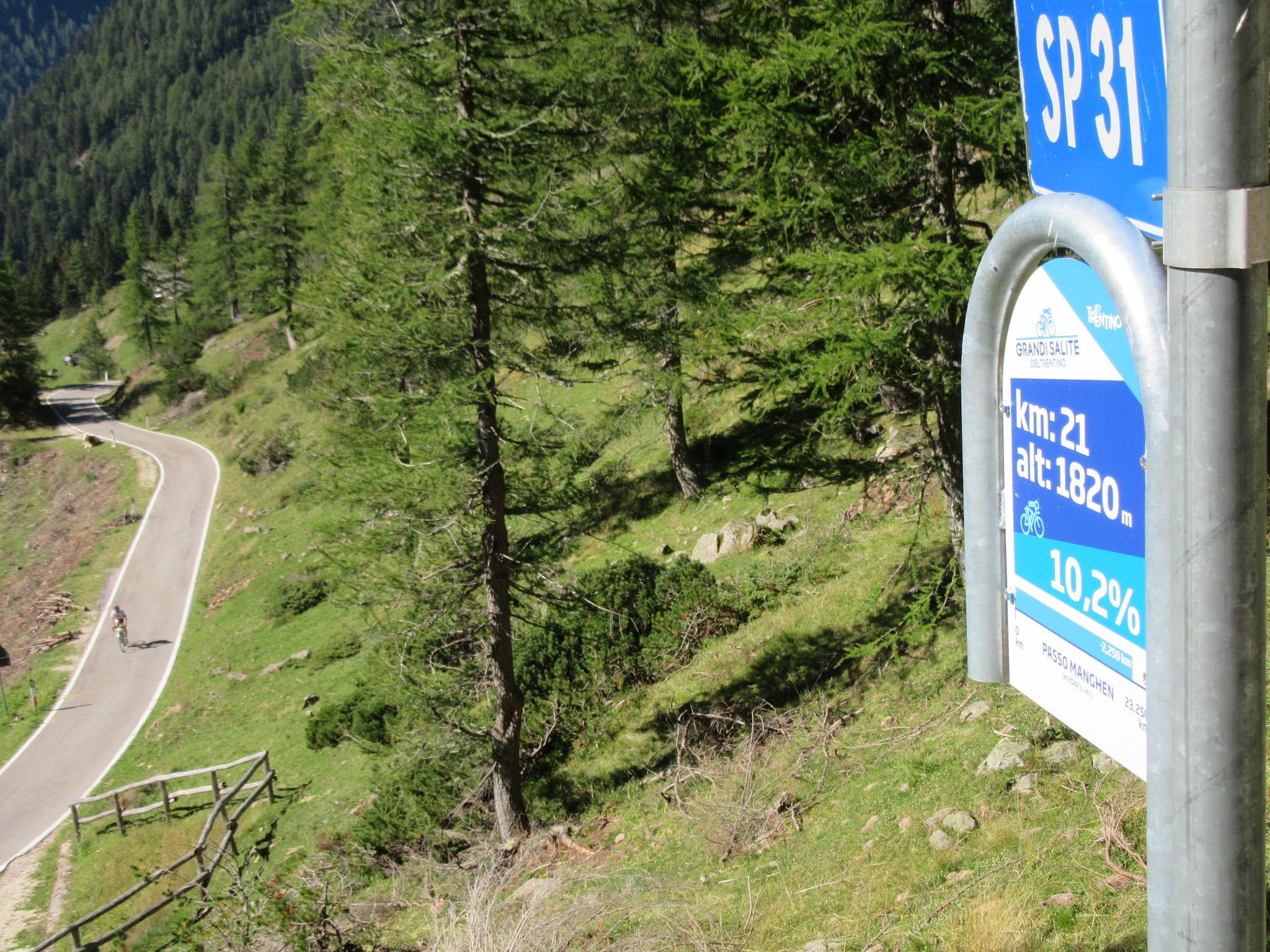
Passo Manghen from Molina (north)

The less traveled and “slightly” easier of the 2 climbs.


Steepest kilometer starts at km 10.1 (12.6%)