Col de l'Iseran (Bonneval-sur-Arc) Bike Climb - PJAMM Cycling

23.4
PDI
8.2 mi
DISTANCE
3,203 ft
GAINED
7.4 %
AVG. GRADE

FULL CLIMB STATS

INTRO

Col de l'Iseran is the highest paved pass in the Alps, and the southern approach from Bonneval-sur-Arc is its wildest and most beautiful side. From the hairpin above the village, the D902 climbs 13.2 km (8.2 mi) and 976 m (3,203 ft) at an average grade of 7.4% to the 2764 m (9,068 ft) summit - short by big-Alpine standards, but steep, high, and relentlessly scenic from the first kilometer to the last. There are two primary routes to the top, one from the south here in the Maurienne and one from the north out of Val-d'Isère.

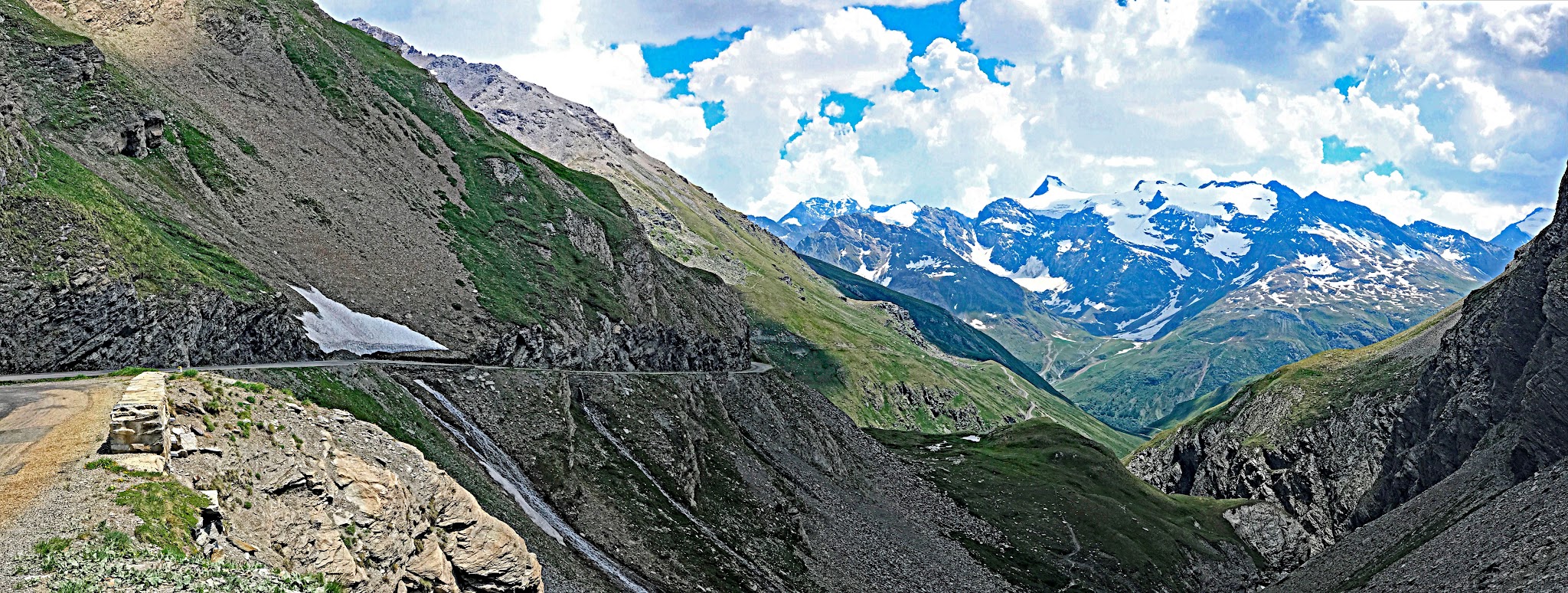
The climb opens with a giant switchback above Bonneval and four solid kilometers at around 8% before bending into a flower-filled meadow along the Ruisseau de la Lenta - a brief breather that even dips downhill for a few hundred meters. Then the road turns and climbs hard up a series of hairpins and along a sheer cliff face that is one of the most dramatic (and, for nervous drivers, most unnerving) stretches of road in the Alps. After a short tunnel the grade eases for a while before a steep final push, past glacier views, to the col and its small stone chapel, Notre-Dame-de-Toute-Prudence, completed in 1939.

The Tour de France first crossed the Iseran in 1938, and in 1939 held the race's first-ever mountain time trial from Bonneval over the pass to Bourg-Saint-Maurice, won by Sylvère Maes. As of 2023 it had been included eight times, most recently in 2019, when Egan Bernal led over the summit before hail and a landslide stopped the stage - times were taken at the top, and Bernal rode into yellow. The road is open only in summer: it reopened on June 12 for 2026 and typically closes in early November, sooner if snow comes early. At this altitude, check conditions before you go with our Weather tool.

PLAN YOUR ROUTE

We've partnered with Sherpa-Map.com to bring you the best route planning tool. With a PRO Membership you can use this climb as a reference when creating your route.
Col de l'Iseran from Bonneval-sur-Arc climbs 13.2 km (8.2 mi) from 1789 m (5,870 ft) to the 2764 m (9,068 ft) summit, gaining 976 m (3,203 ft) at an average grade of 7.4%.

The first 4 km (2.5 mi) are steady and stiff at about 8%, looping up above Bonneval before the road enters the meadow along the Ruisseau de la Lenta, where it flattens and briefly descends. From the hairpin at the end of the meadow, the next 4 km (2.5 mi) up the cliff-side hairpins average roughly 8.3%. Beyond the short tunnel, the grade drops back for a couple of kilometers before the hardest ramp of the day about 2 km (1.2 mi) from the top.

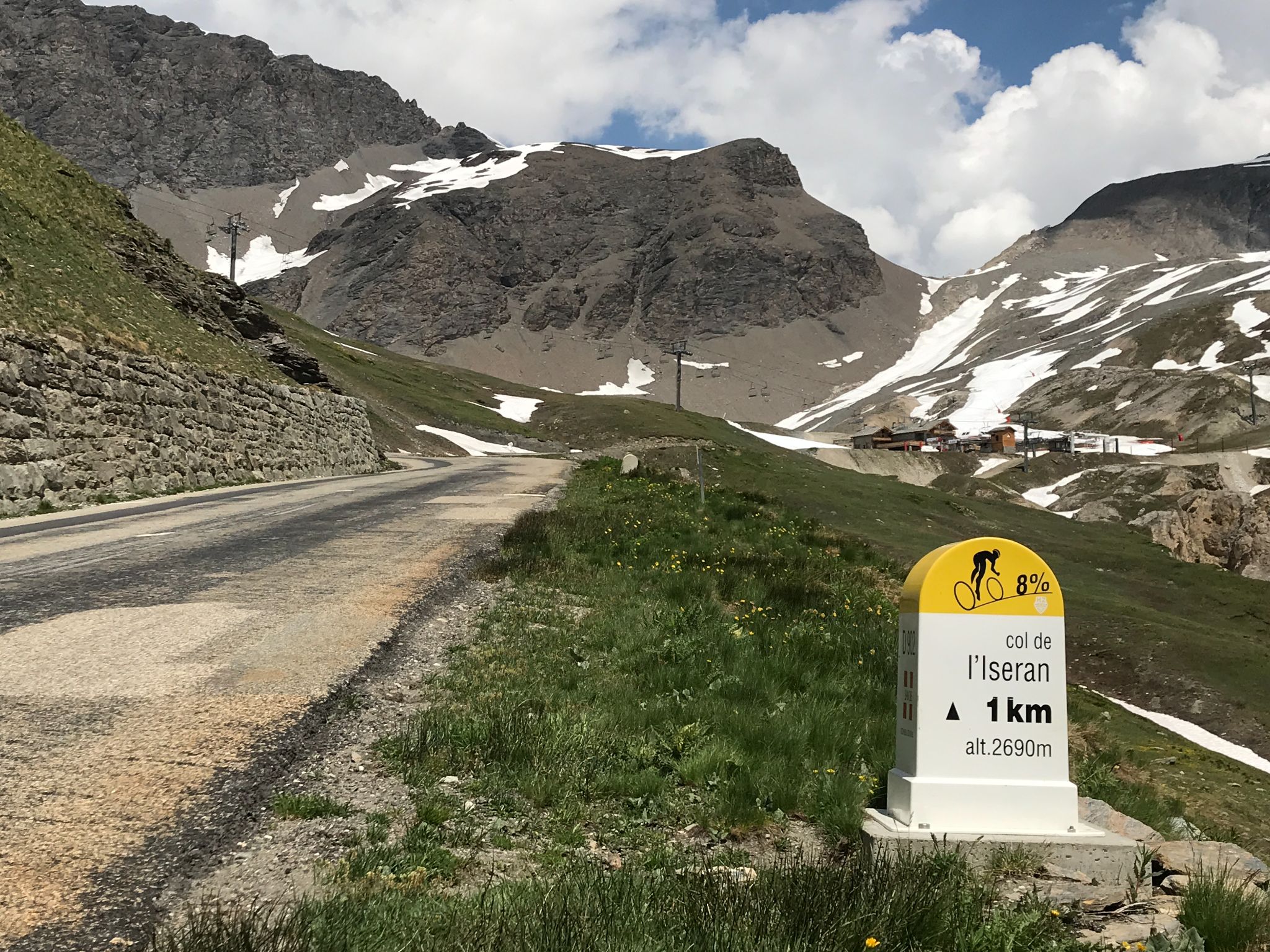
The steepest 0.5 km (0.3 mi) averages 11.5%, the steepest kilometer 11.1%, the steepest 2 km (1.2 mi) 9.9%, and the steepest 5 km (3.1 mi) 7.7%. Kilometer markers line the road the whole way, showing the distance to the summit, the current altitude, and the average grade of the next kilometer.
Roadway: The D902 is paved the entire way and generally in good summer condition, but it's a high-mountain road in every sense - narrow in places, with long exposed sections above steep drops, a short tunnel in the upper half, and the usual frost-heave patching. The pass is closed in winter; for 2026 the road reopened on June 12 and normally closes in early November, though snow or heavy rain can close it at short notice - check the Savoie department's road information before setting out.

Traffic: The Iseran is part of the Route des Grandes Alpes, so expect a steady stream of cars, camper vans, and especially motorcycles on summer days, heaviest in July and August - an early start gives you the quietest road. Each June, the Iserane event closes the road to motor vehicles for a morning so cyclists can ride it in peace.

Parking: Cars aren't driven through Bonneval-sur-Arc's old stone village - all parking sits around its edges along the D902. The Parking de Pierre Fendue is free and open year-round, and there are other free municipal lots at the village entrances, a short roll from the start of the climb.
Provisions: Stock up in Bonneval-sur-Arc before you start. The village has a few shops and restaurants, and the dairy cooperative's shop in the old village, beside the church, sells Beaufort and the local Bleu de Bonneval - worth a stop after the ride. There are no reliable services on the road between Bonneval and the summit, so carry enough water and food for the full climb.

Gear: Low gearing helps on the cliff-side hairpins and the steep finish, and you'll be riding above 2500 m for the final few kilometers, where the air is thin and the weather changes fast. Bring a windproof jacket, gloves, and a warm layer for the descent even in midsummer, plus a rear light for the short tunnel.
Before heading out on any cycling adventure check out our Things to Bring on a Cycling Trip and use our interactive check list to ensure you don't forget anything.
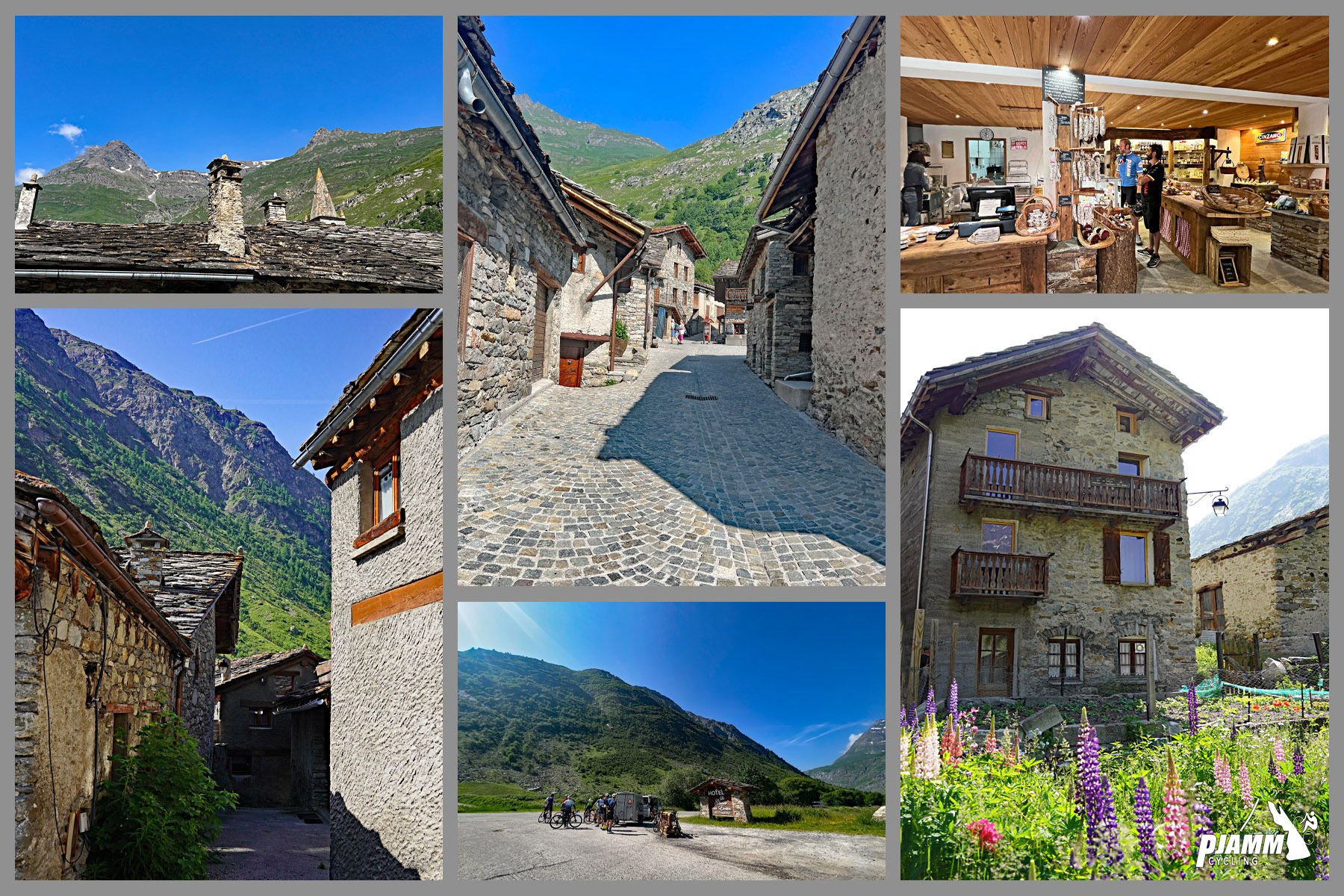
Bonneval-sur-Arc is one of the "Plus Beaux Villages de France," and it earns the title: a tight cluster of stone houses under heavy lauze-slate roofs, with farm buildings deliberately moved out to a separate agricultural zone to keep the old village intact. Give yourself time to wander it on foot before or after the ride.

A few kilometers up the valley, the hamlet of L'Écot - a filming location for the Belle et Sébastien films - is reachable by road or on foot and offers a glimpse of traditional mountain life at the edge of the Vanoise National Park. The Iseran's steep southern descent also enters the park, the oldest in France.

For a longer, grander day, start from Lanslebourg-Mont-Cenis and ride up the Haute Maurienne valley to Bonneval before the climb proper begins - our "Start of longer route" Street View below shows that start point. Descending the far side to Val-d'Isère opens up the Tarentaise's big climbs, making the Iseran a natural link on a multi-day Alpine trip.

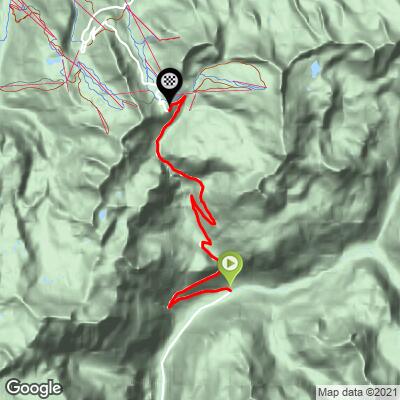
ROUTE MAP
MEMBER RATING

Not Yet Rated
-
Road
-
Traffic
-
Scenery

CURRENT WEATHER

PJAMM TRIPS ADVENTURE STARTER BUNDLES

Check out PJAMM Adventure's prepackaged (self-guided) cycling trips. They will help you plan, document and conquer your next adventure.
ALL TRIPS
Browse all of our prepackaged trips and find your next adventure!

NEARBY CLIMBS (0) RADIAL PROXIMITY

FROM
No Climbs Found

MEMBER REVIEWS & COMMENTS

Let us know what you thought of this climb. Signup for our FREE membership to write a review or post a comment.
Already have an account?
ROUTE MAP
PROFILE TOOL
Route Data
S.G. (%)
hide
Segment Data
hide
CLIMB SUMMARY

Climbing Col de L’Iseran from Bonneval-sur-Arc by bike; narrow road and cliff

Col de L'Iseran - one of the most spectacular cycling climbs in the world.

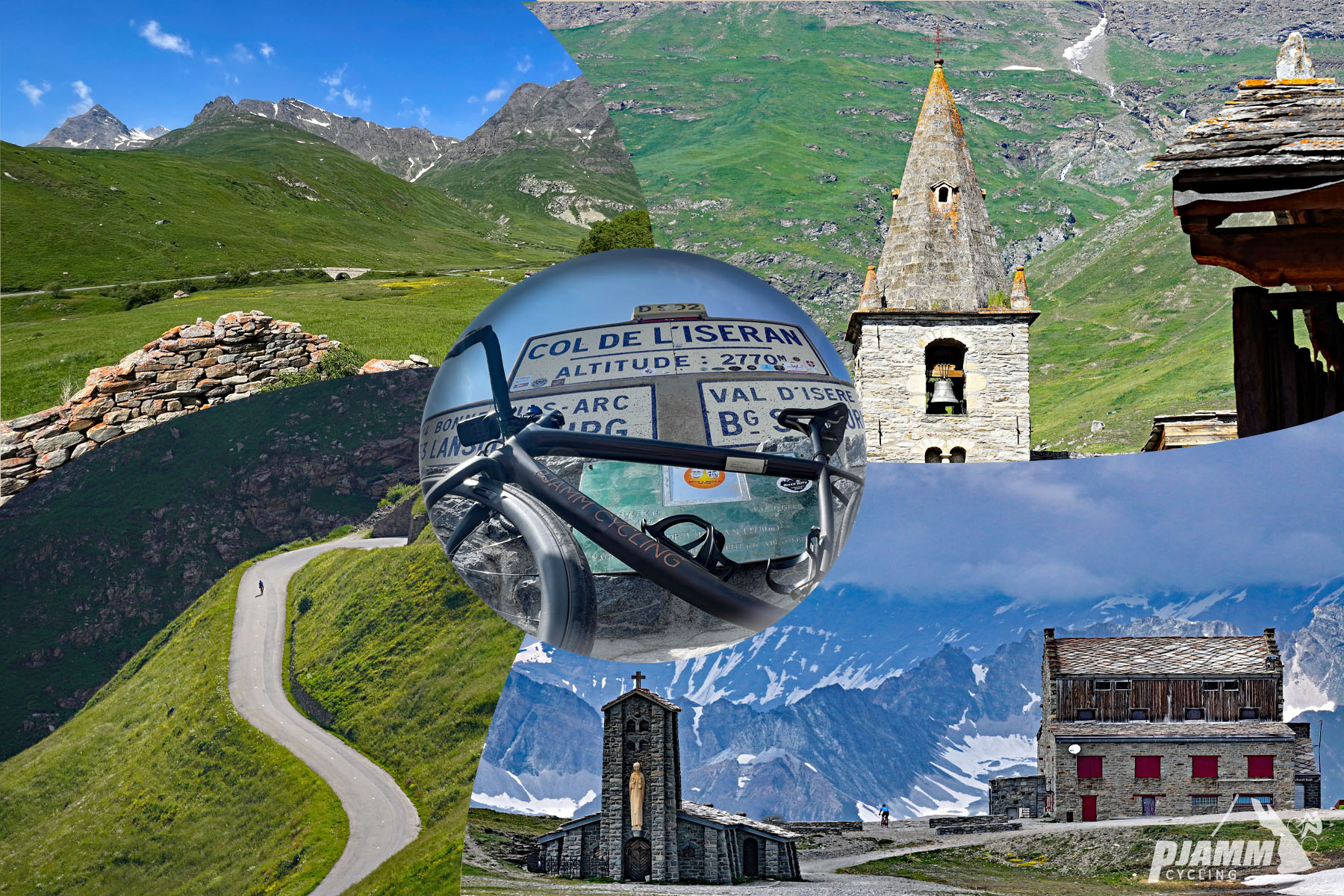
Cycling Col de L'Iseran from Bonneval-sur-Arc: photo collage shows bike parked next to street sign for Col de L'Iseran; green hillsides and stone fences; old stone church

Col d’L’Iseran is the highest paved pass in Europe and has been included eight  times in the Tour de France as of 2023.

Is Col de L'Iseran truly the highest paved pass in Europe?

Yes.  While Pico de Veleta, Spain, is the higher “road” at 3,357 m / 11,013’, it ends in a dead end so is not a pass.  Even though Cima de la Bonette (2,685 m / 3,809’) is technically a pass, it is just a through road to the peak and not the functional “pass.”  Thus, Col de L'Iseran, with its functional col/pass at 2,633 m / 8,638’ can truly claim “highest paved pass in Europe.”

START OF THE CLIMB

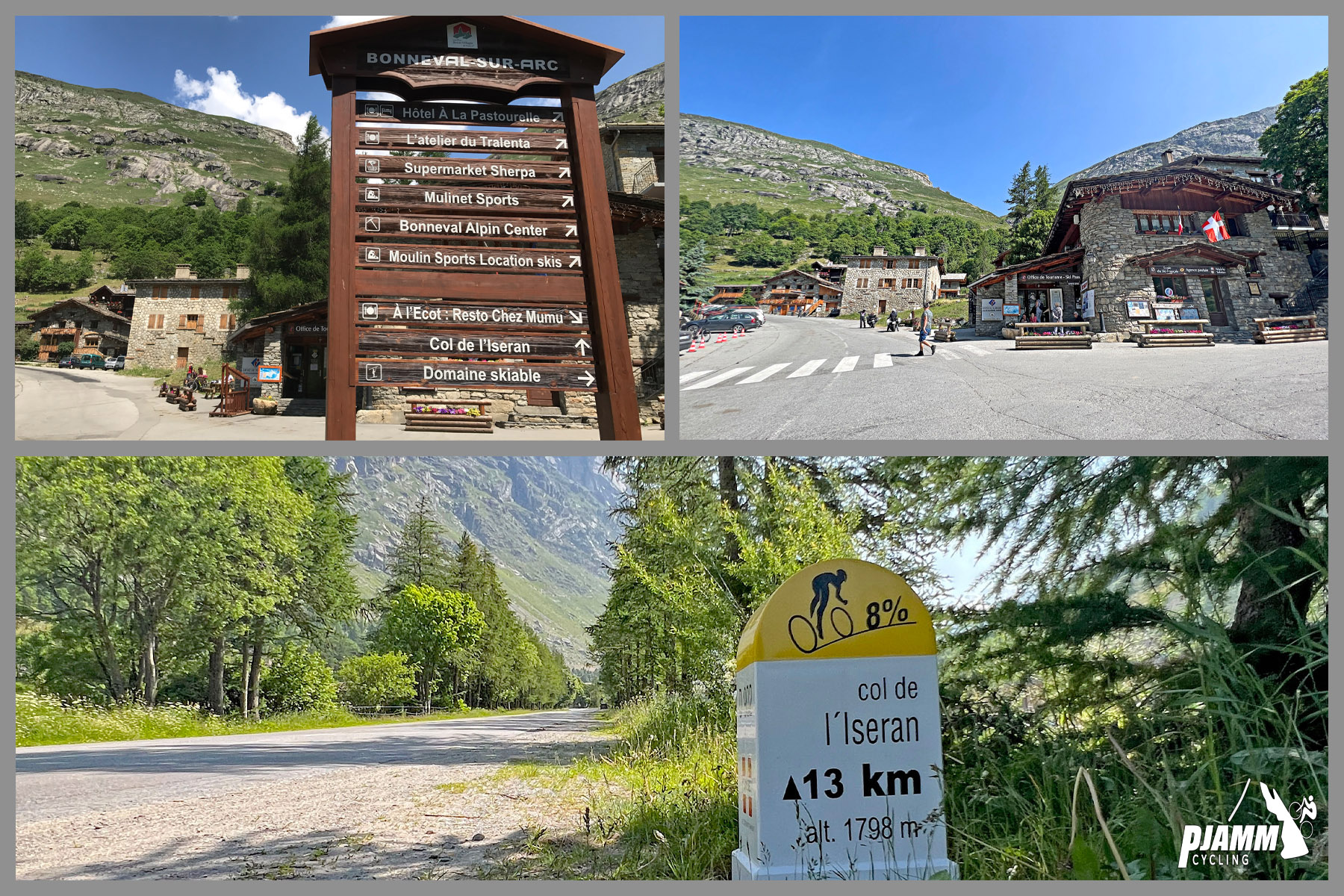
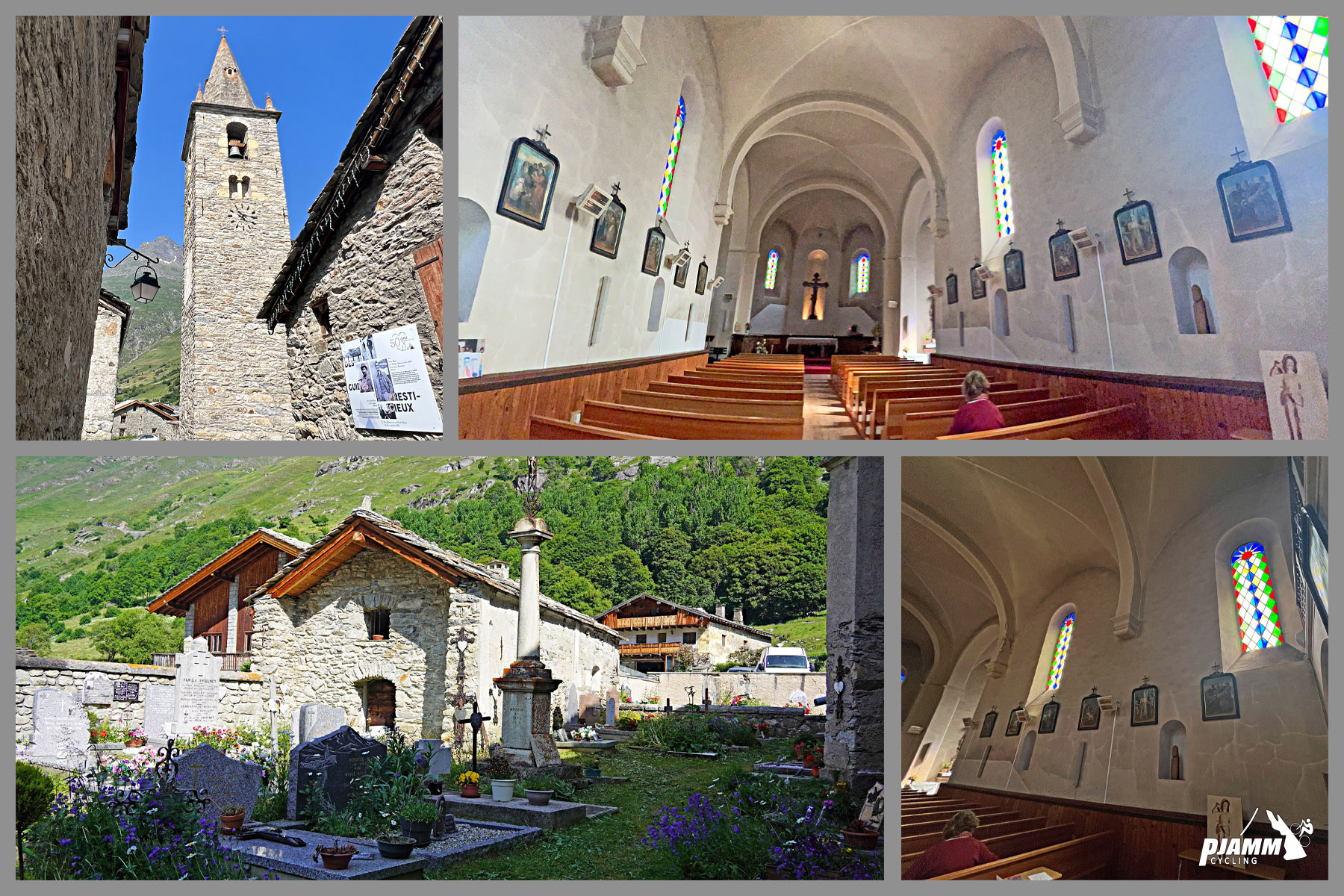
Col de L'Iseran from Bonneval-sur-Arc: climb start in Bonnev al-Sur-Arc; stone buildings in town, yellow and white kilometer marker

Start of climb at Bonneval-Sur-Arc.

The climb begins in the very quaint village of Bonneval-Sur-Arc, an alpine commune in the Savoie department (population 263).  

Col de L'Iseran from Bonneval-sur-Arc: view of shops and buildings in Bonneval-sur-Arc, cobblestone roads, bright flowers

Col de L'Iseran from Bonneval-sur-Arc: beautiful old stone cathedral in town, Église Notre-Dame-de-l'Assomption de Bonneval-sur-Arc

Église Notre-Dame-de-l'Assomption de Bonneval-sur-Arc

Consecrated in 1661.

SEGMENT ONE

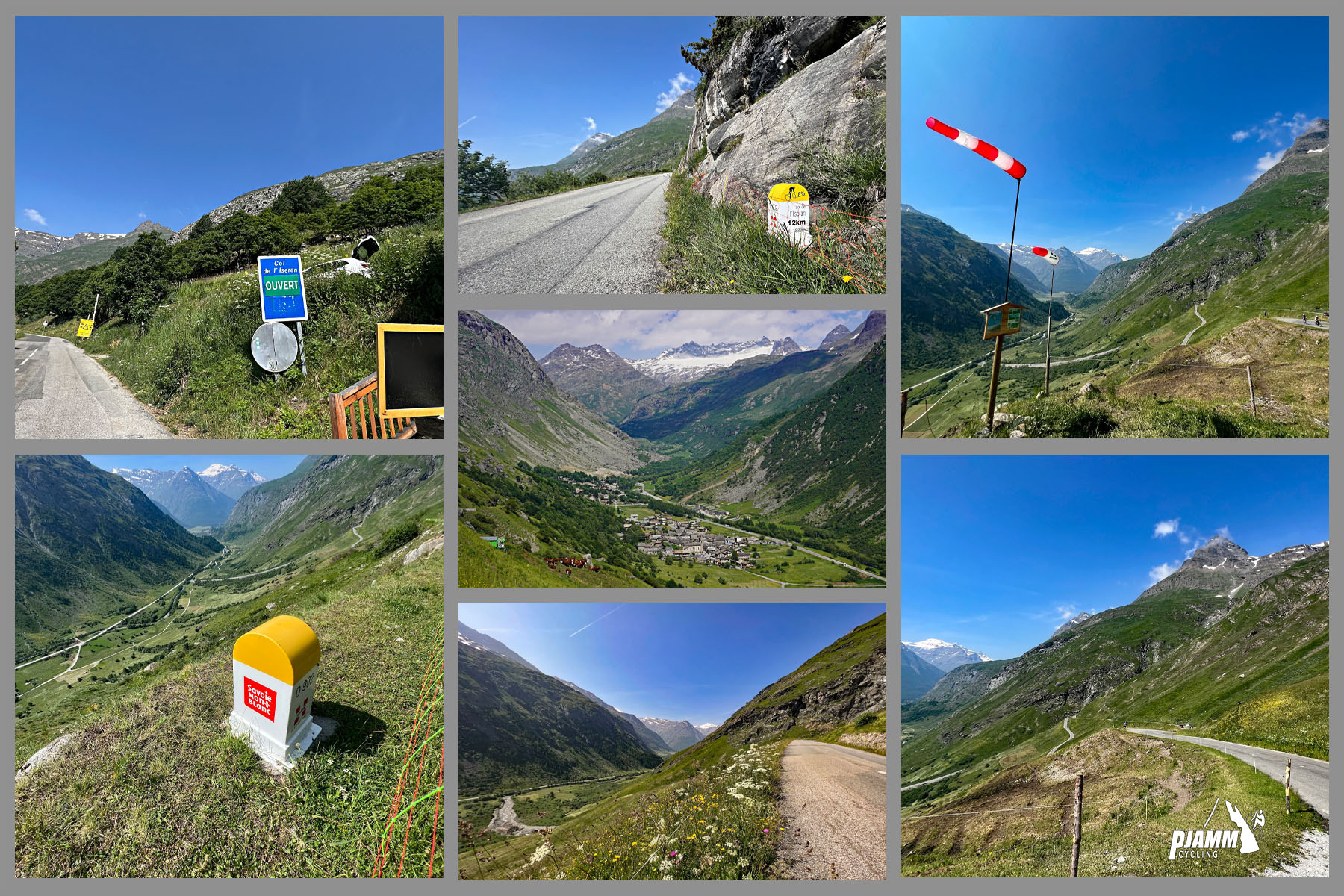
Col de L'Iseran from Bonneval-sur-Arc: photo collage shows vies along first segment of climb; green mountain landscapes, yellow and white kilometer markers

The first segment of the climb is four kilometers, beginning on a giant switchback that bends into a lovely meadow at kilometer four.

Col de L'Iseran from Bonneval-sur-Arc: green hillsides with yellow wildflowers, stone markers nestled into grass

SEGMENT TWO

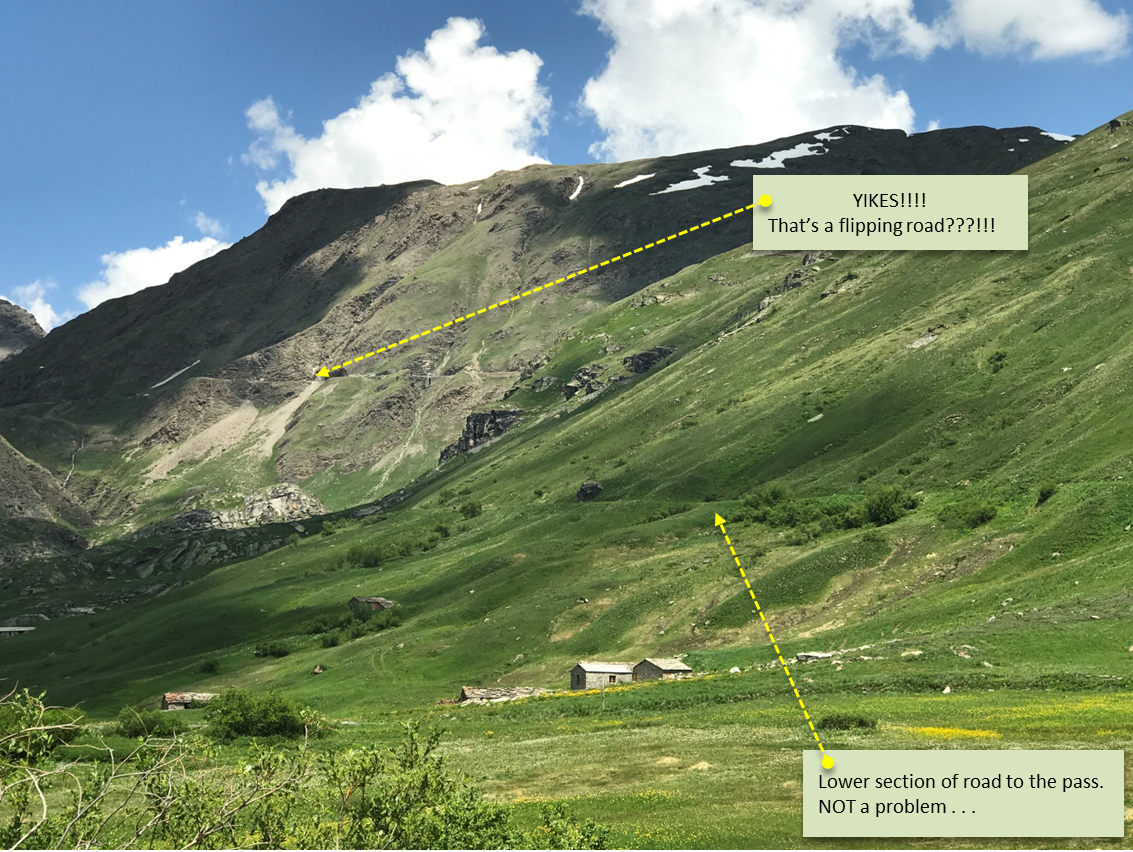
Cycling Col de L’Iseran from Bonneval-sur-Arc - meadow, farm houses, cut of road in mountain

Roadway is seen middle-left of picture.

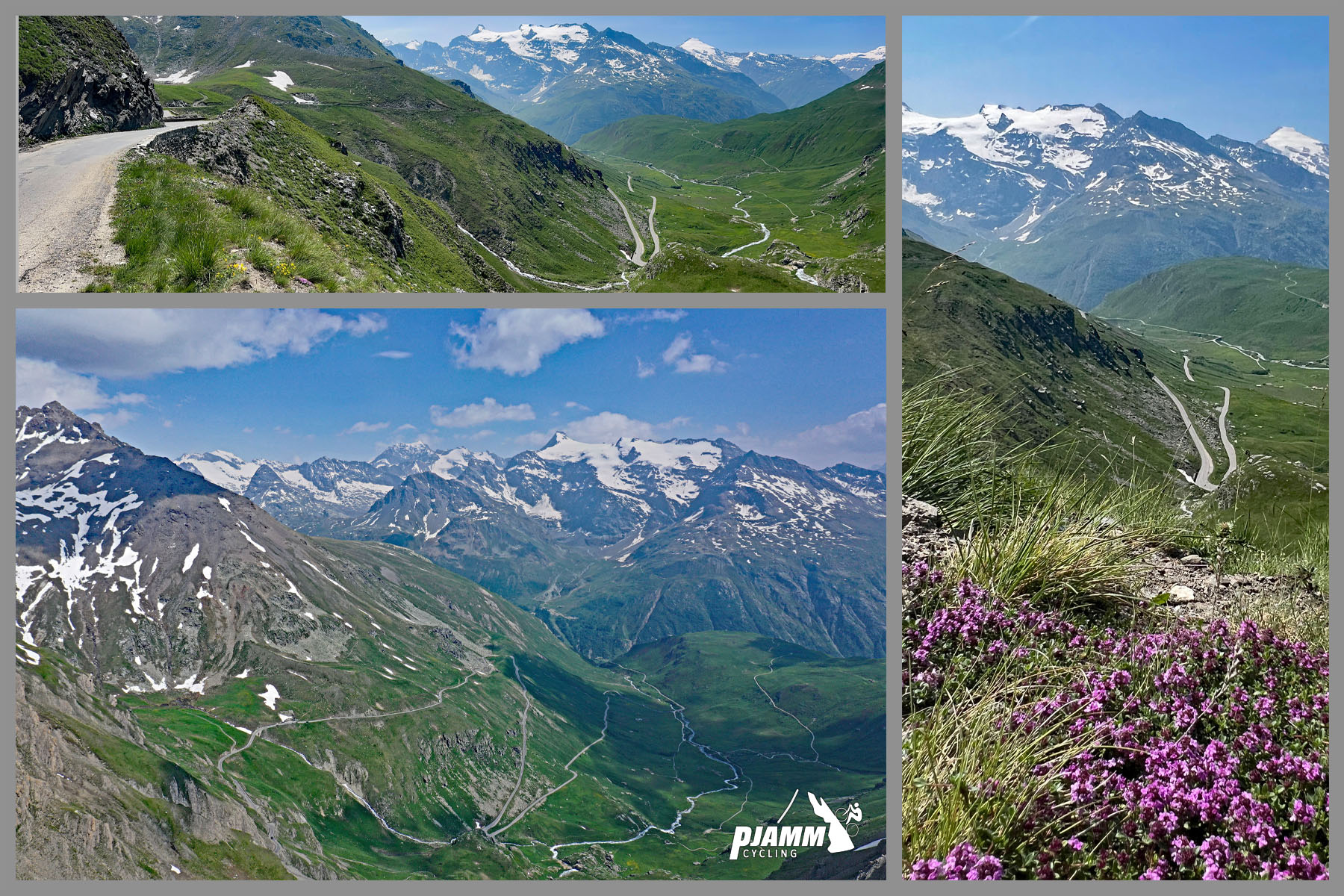
Segment two is about four kilometers at 8.3% and begins at the hairpin at kilometer 4.7 at the end of the meadow.  From there, we climb up through three hairpins with spectacular views of the meadow below and along a sheer cliff to our left.


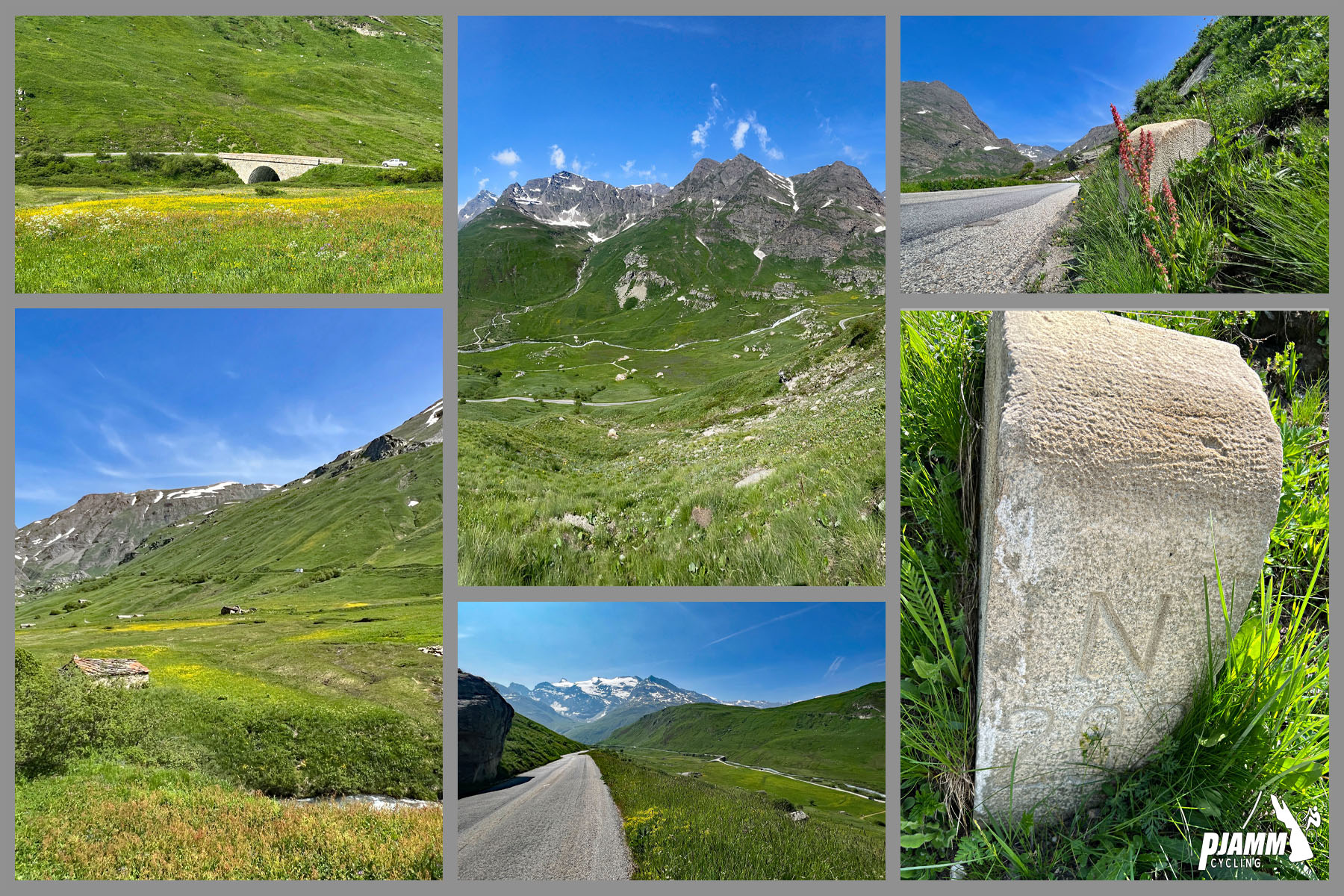
Col de L'Iseran from Bonneval-sur-Arc: photo collage shows gorgeous alpine views, green mountainsides with pink wildflowers

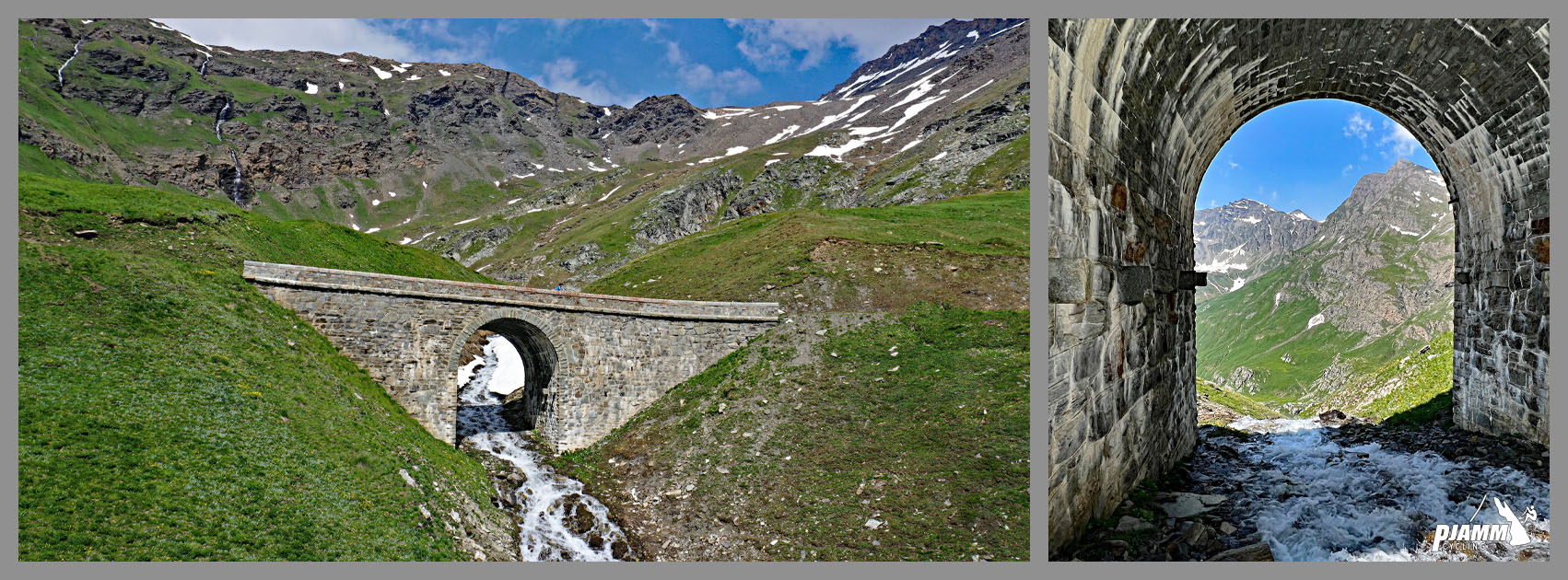
Col de L'Iseran from Bonneval-sur-Arc: stone bridge at kilometer 5.7

Bridge at kilometer 5.7.

SEGMENT THREE

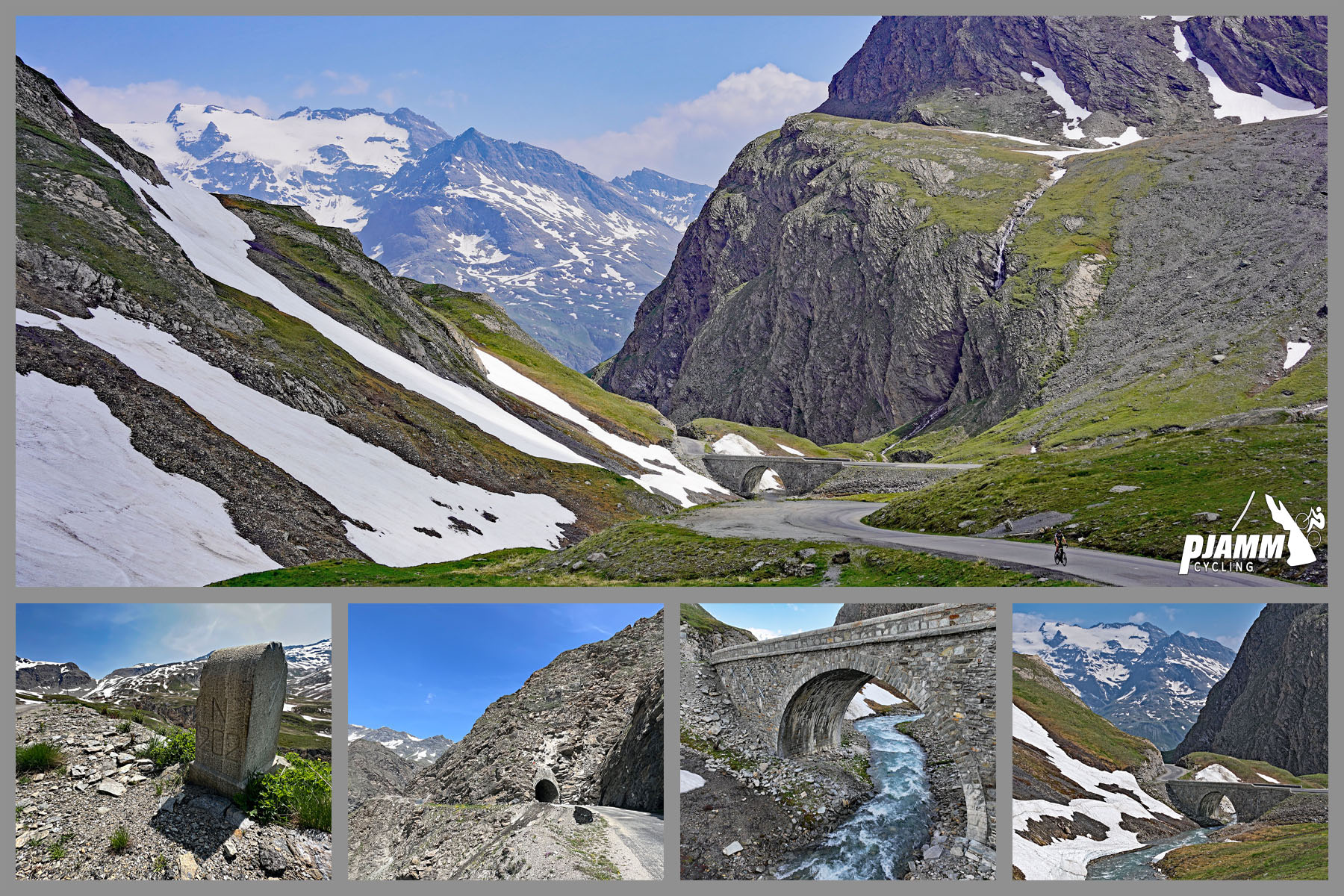
Col de L'Iseran from Bonneval-sur-Arc: photo collage shows stone bridge, stone markers, and snow-dotted mountainsides

The final segment begins after the short tunnel at kilometer 9.1 and is the final four kilometers at 7.1% to the finish.

Col de L'Iseran from Bonneval-sur-Arc: yellow and white Tour de France kilometer marker at the climb's finish

KM markers lead us up the mountain -- above is the last marker.

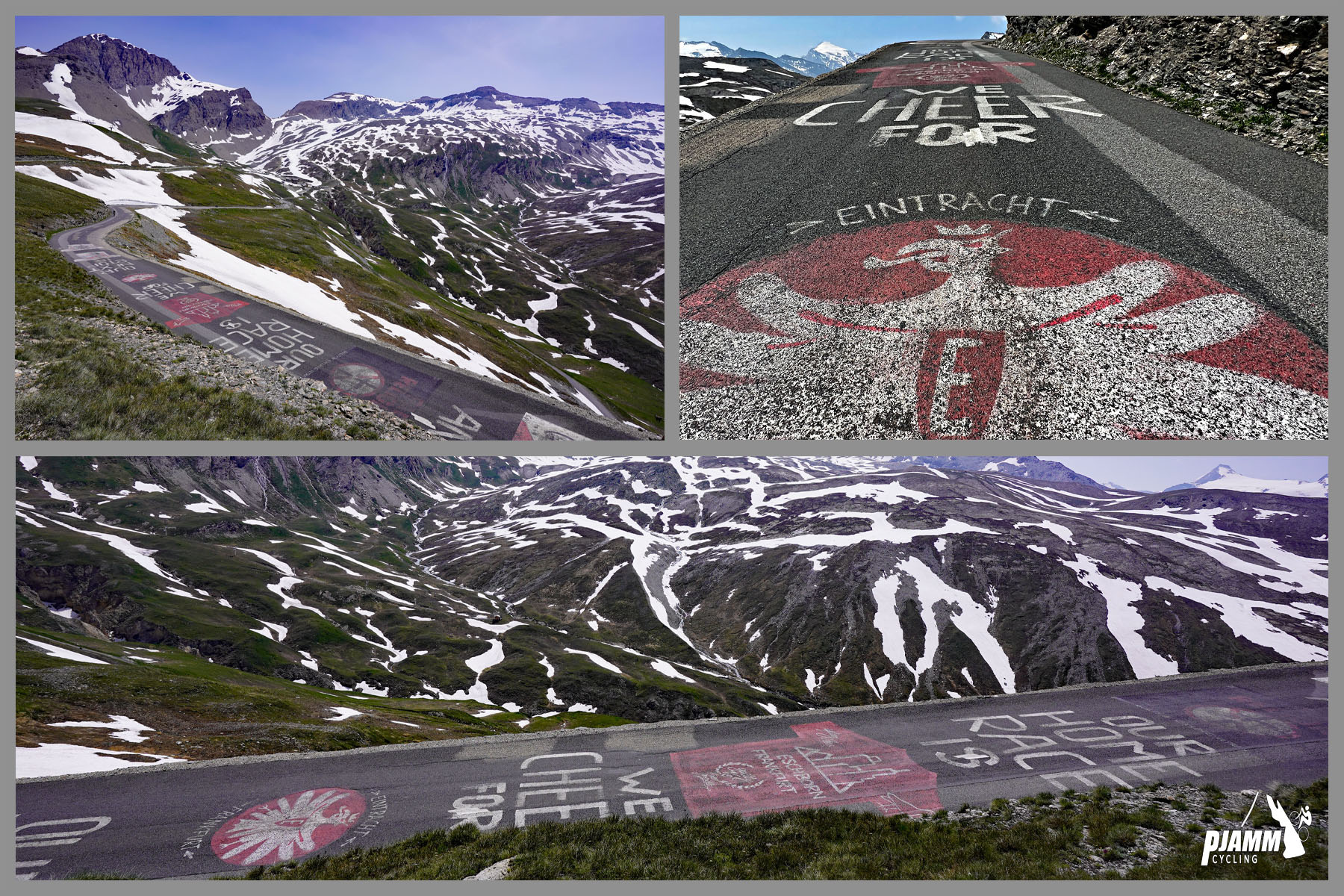
Col de L'Iseran from Bonneval-sur-Arc: roadway decorated with writing and painting at the last 50 meters of the climb

Final 50 meters to the finish.

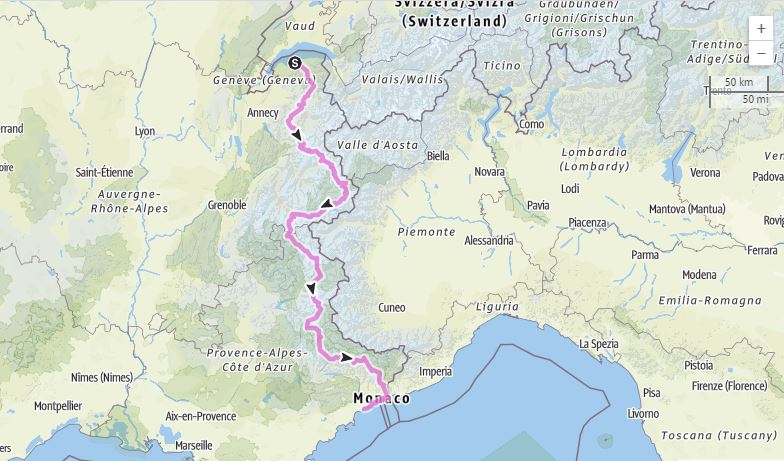
Col de L'Iseran is part of the Route des Grandes Alpes, a tourist itinerary that begins in Thonon-les-Bains and travels over many of the most spectacular passes in France and Europe, including Col de L'Iseran, Galibier, d’Izoard, and Bonette; alternate route includes Croix de Fer and Madeleine.

Cycling Cime Bonette from Jausiers, France - Route des Grands Alpes map

Route des Grandes Alpes.

THE TOP - COL DE L’ISERAN

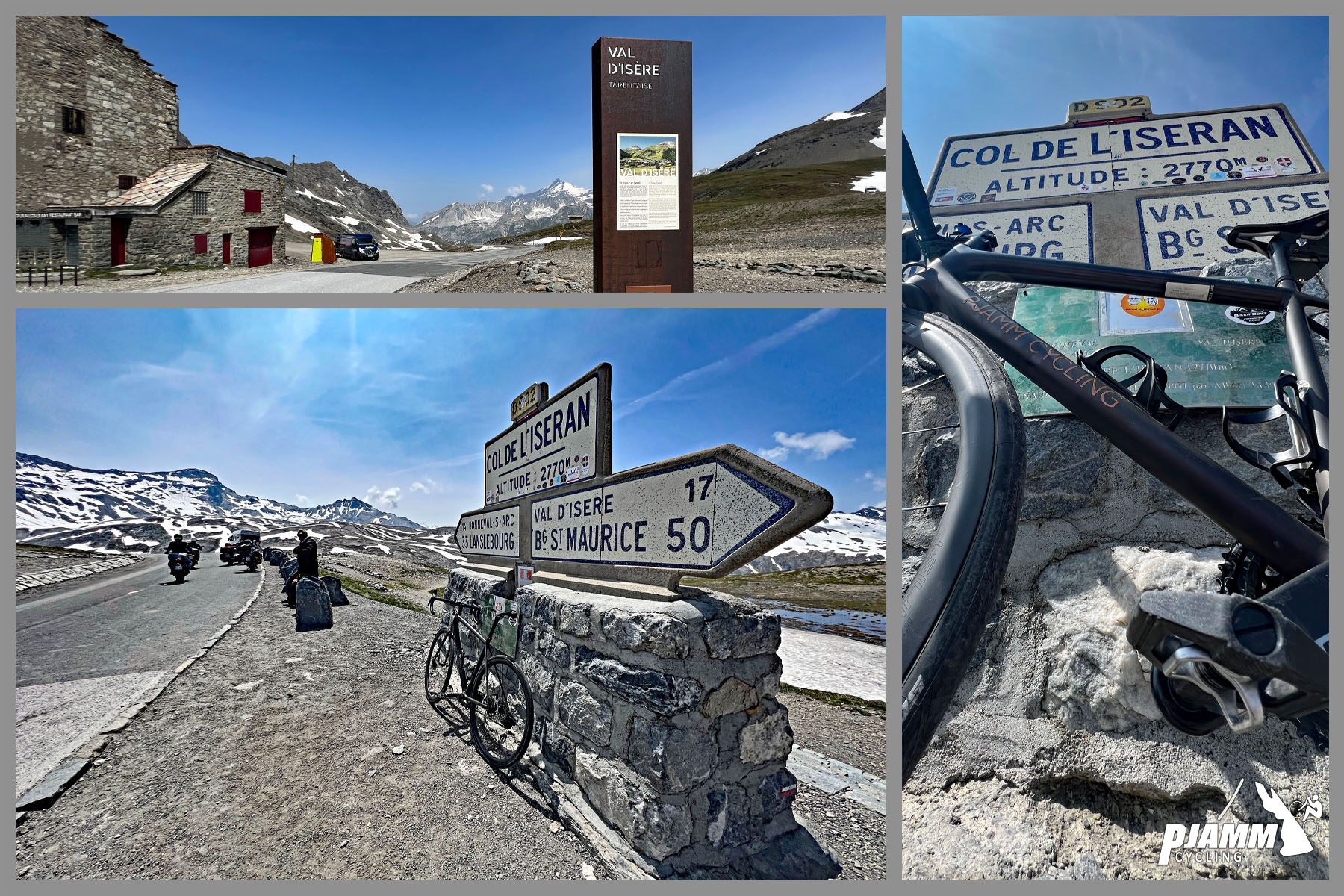
Col de L'Iseran from Bonneval-sur-Arc: photo collage shows street signs for Col de L'Iseran; climb finish

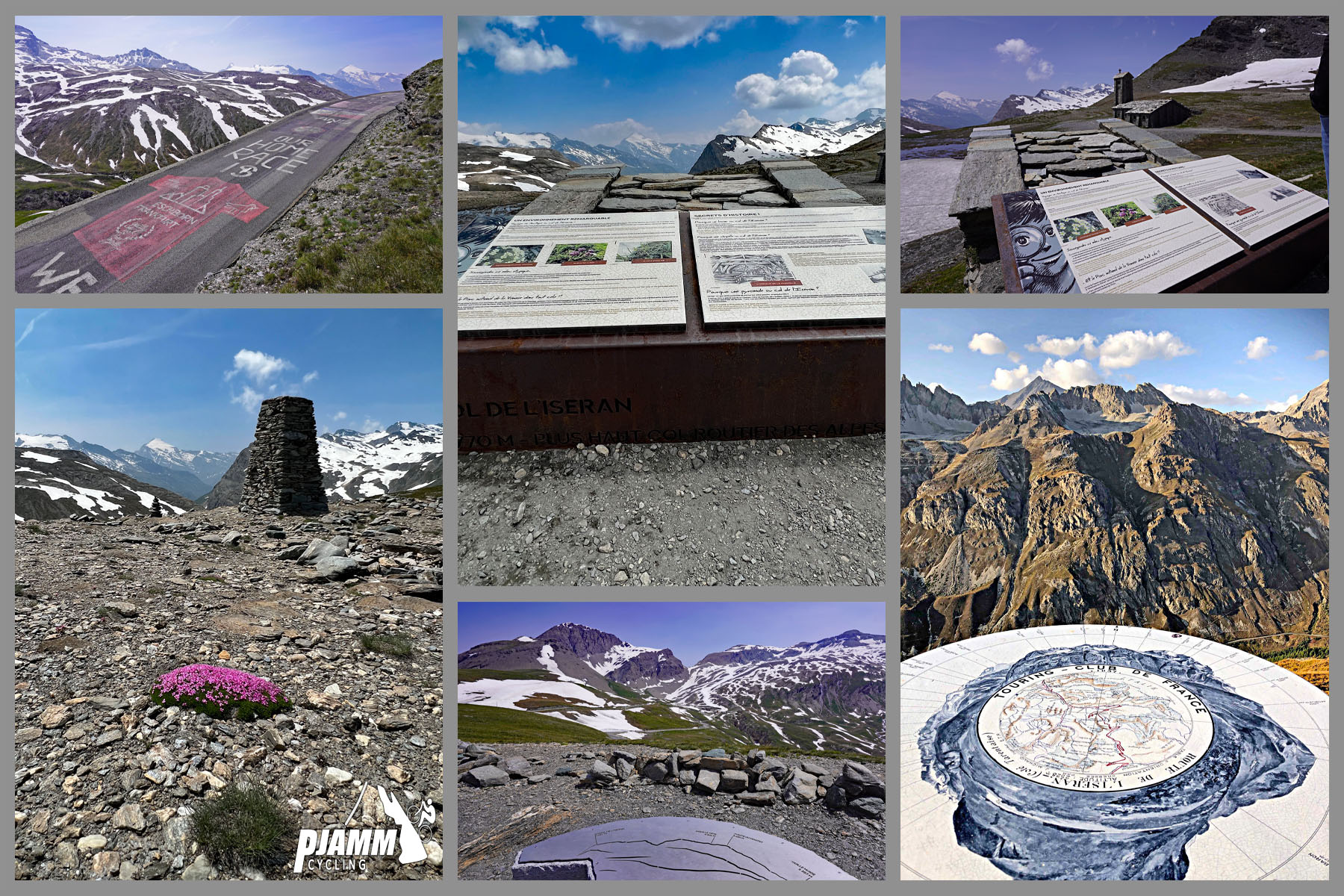
Col de L'Iseran from Bonneval-sur-Arc: photo collage shows informational signs and plaques at climb finish

Col de L'Iseran is #30 in Hugh Merrick’s book The Great Motor Highways of the Alps, in which he writes that “the impression that emerges, rather like the stunning vistas of the Chalanson and Albaron glaciers as one nears the summit from the southern side, is of a feat of road building that was also in part a vanity project.”

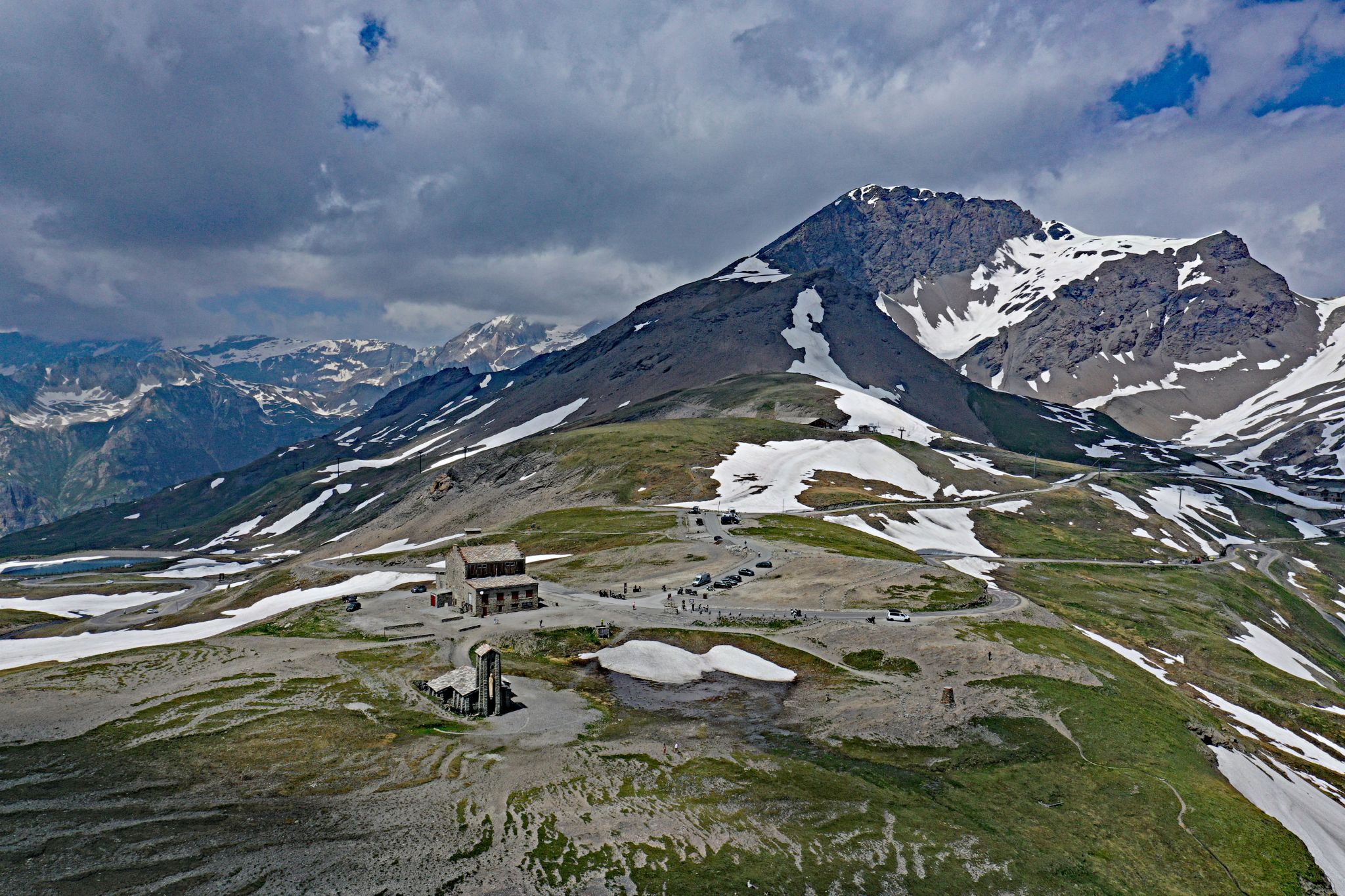
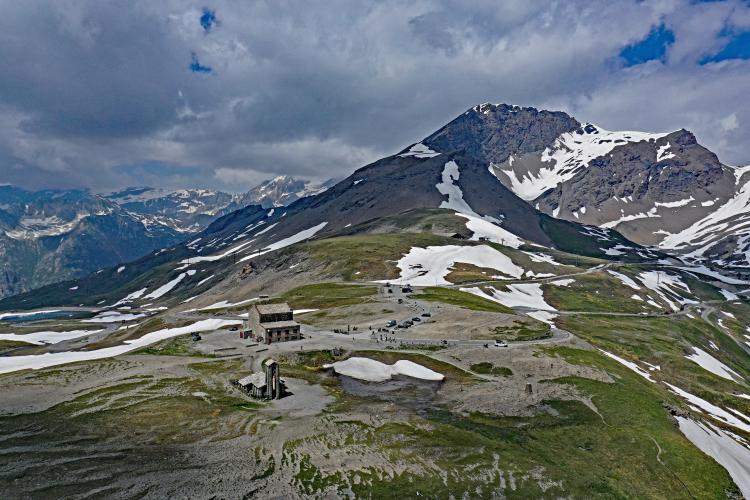
Col de L'Iseran from Bonneval-sur-Arc: aerial drone view of the top of Col de L'Iseran; snow-dotted mountain peak

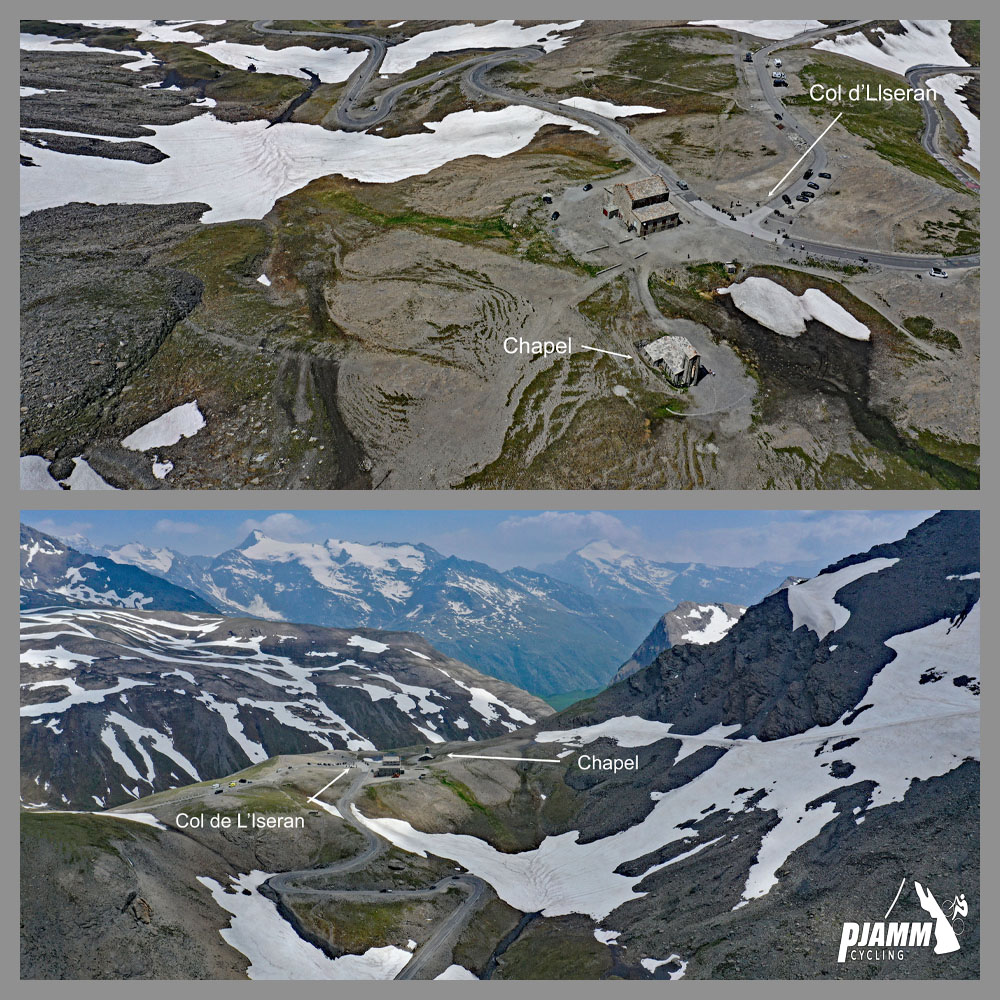
Aerial view of Col de L'Iseran

Approach from Bonneval-sur-Arc to right and from Val-d’Isere left.

CHAPEL NOTRE-DAME DE TOUTE PRUDENCE

Col de L'Iseran from Bonneval-sur-Arc: aerial drone view shows Chapel Notre-Dame de Toute Prudence nestled in peak of mountain, surrounded by patches of snow

Chapel Notre-Dame de Toute Prudence is located at the Col de L’Iseran.

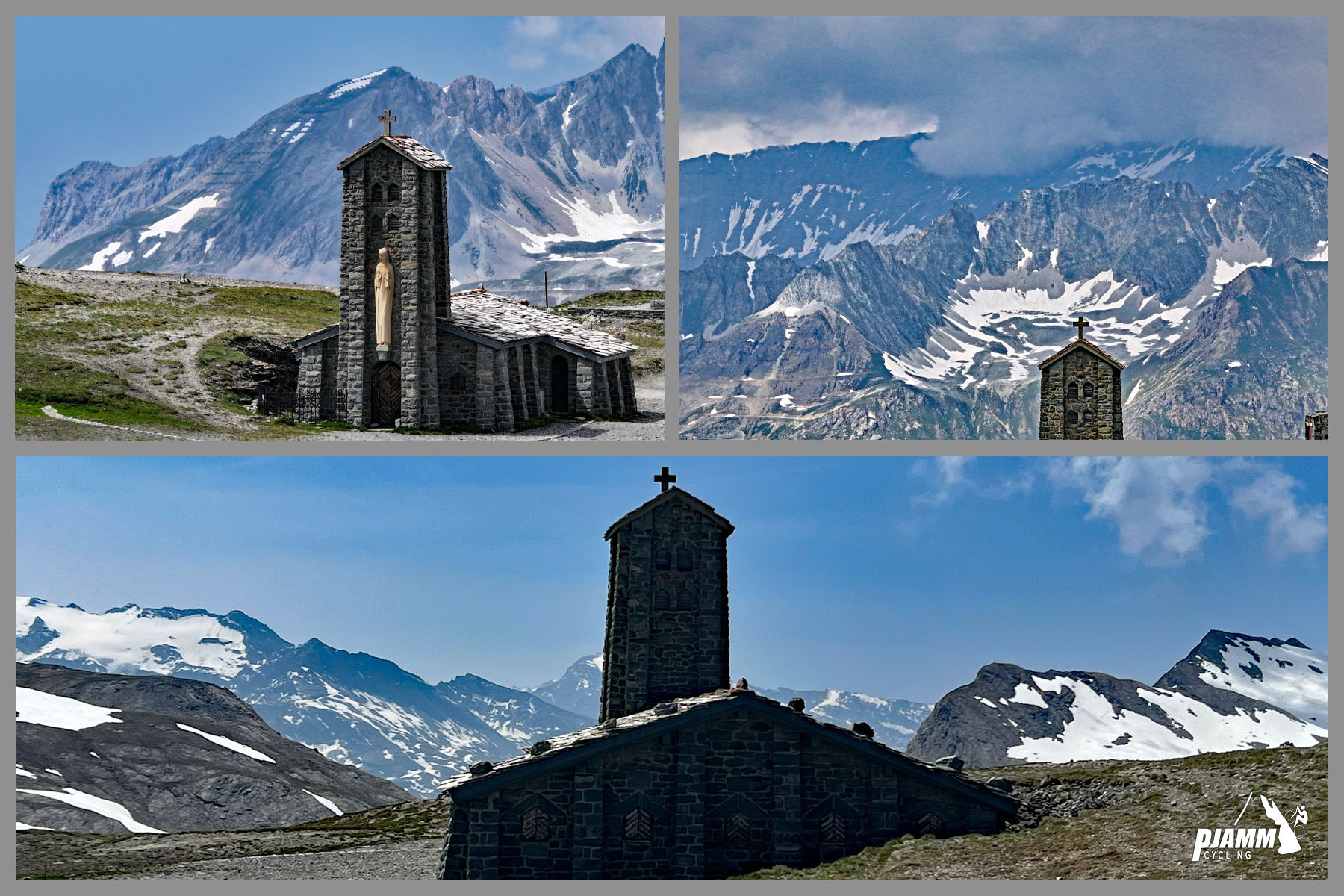
Col de L'Iseran from Bonneval-sur-Arc: views of Chapel Notre-Dame de Toute Prudence

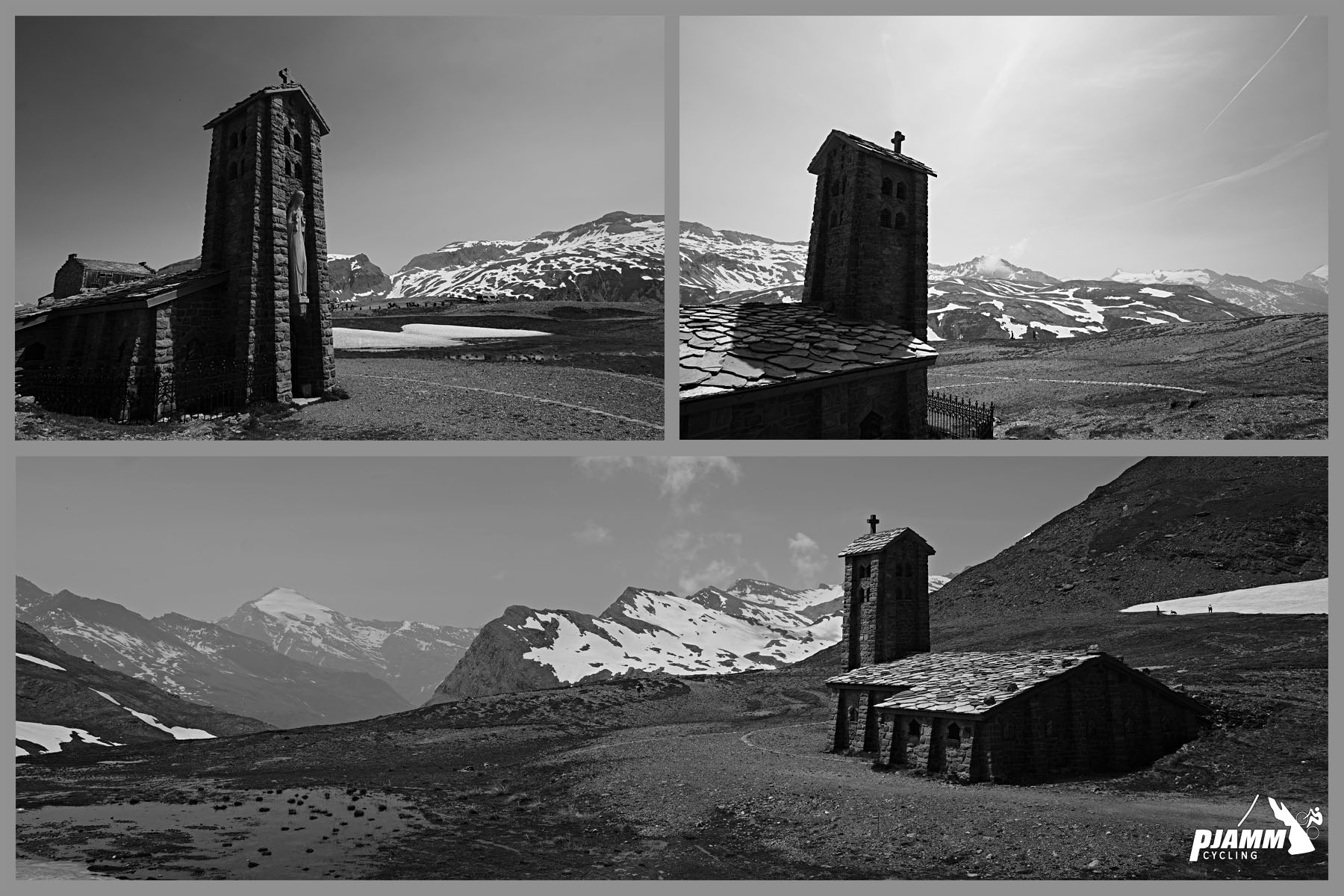
Construction of the chapel was completed in 1939 using local stone. The sculpture of the Virgin Mary was created by sculptor Edgar Delvaux.

Col de L'Iseran from Bonneval-sur-Arc: black and white views of Chapel Notre-Dame de Toute Prudence

TOUR DE FRANCE HISTORY

TOP 10 MOST FREQUENT CLIMBS OF THE TOUR DE FRANCE

AND 10 FAMOUS ONES AFTER THAT

Climb name

Mountain Range

Times Featured in Tour de France

Most recent

First included

Col du Tourmalet

Pyrenees

89

2023

1910

Col d'Aspin

Pyrenees

74

2023

1910

Col d'Aubisque

Pyrenees

73

2022

1910

Col de Peyresourde

Pyrenees

68

2021

1910

Col du Galibier

Alps

63

2022

1911

Col de Portet d'Aspet

Pyrenees

58

2021

1910

Col des Aravis

Alps

42

2023

1911

Col d'Izoard

Alps

36

2019

1922

Col de Vars

Alps

35

2019

1922

Col d'Allos

Alps

34

2015

1911

Alpe d'Huez

Alps

32

2022

1952

Col du Télégraphe

Alps

31

2022

1911

Col de la Madeleine

Alps

29

2020

1969

Col de la Croix de Fer

Alps

21

2022

1947

Mont Ventoux

Alps

18

1921

1951

Col du Soulor

Pyrenees

16

2019

1912

Col du Glandon

Alps

14

2015

1947

Puy de Dome

Massif Central

14

2023

1952

Luz Ardiden

Pyrenees

9

2021

1985

Col de l'Iseran

Alps

8

2019

1938

As of 2023 Col de L’Iseran has been featured eight times in the TdF.

Each time it has been featured, it has also been the highest point in that year’s TdF.

©  PJAMMCycing.com

© Climb name

Elevation (meters)

Times highest point of TdF (as of 2022)

Mountain Range

Times Featured in Tour de France

Most recent

First included

Cime de la Bonette

2,802m

4

Alps

4

2008

1962

Col de l'Iseran

2,770m

8

Alps

8

2019

1938

Col Agnel

2,744m

1

Alps

2

2011

2008

Col du Galibier

2,642m

50

Alps

63

2022

1911

Col du Granon

2,413m

0

Alps

2

2022

1986

Col de L’lseran has been the highest point in the TdF eight times.

Also see Top 10 Highest Points of the TdF.

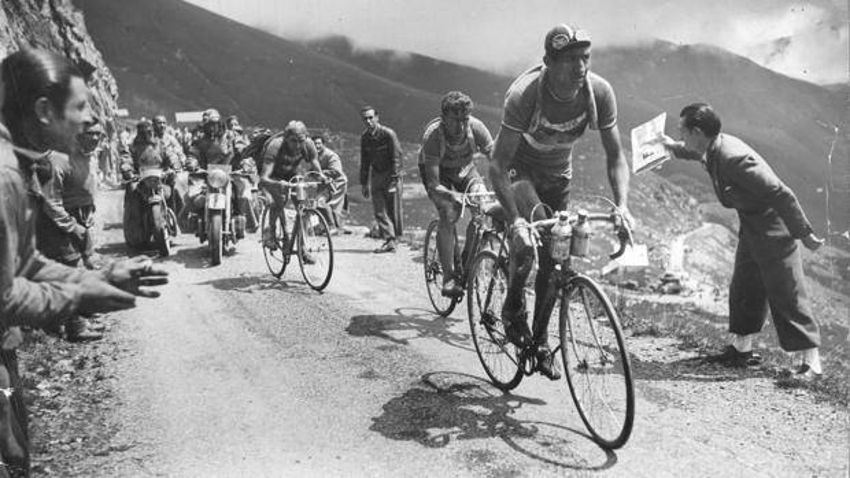
Col de L'Iseran has only been included in the Tour de France eight times in the 85 years between 1938 and 2023.  The Tour takes what is otherwise a somewhat eerie and desolate -- although quite scenic -- place, and turns it into a tourist attraction with a carnival atmosphere.  First included in the Tour in 1938, Gino Bartali exclaimed that he won the race on his descent of Col de Vars, but saved it on the descent off the L'Iseran.  

Gino Partali, Tour de France 1938

Gino Bartali, winner 1938 Tour de France

Bartali crossed L'Iseran in Stage 14

Down 00:01:05 at the beginning of the stage, after a heroic descent of L'Iseran he finished up 00:05:18.

Photo:  LearningHistory.com

Bartali (along with Federico Bahamontes) has more Grand Tour wins (9) than anyone in history and the TdF (1938, 1948), Giro (1936, 1937, 1946; mountain classification a record seven times, three more than anyone in history, Giro wasn’t held five years from 1941-1945), Milan-San Remo (4) and Giro di Lombardia (3).

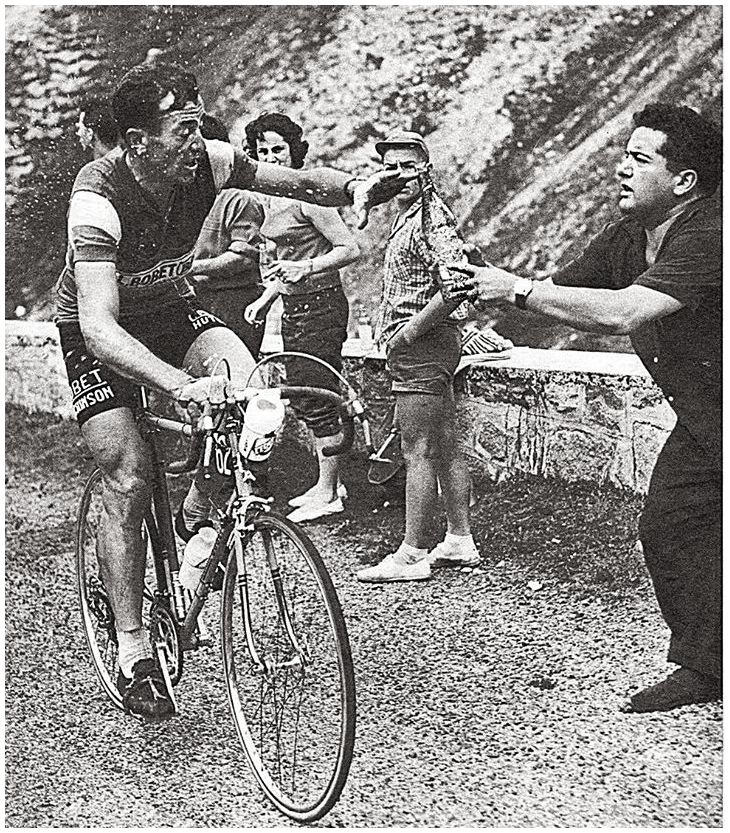
It was on Col de L'Iseran that legendary cyclist Louison Bobet’s career ended.  Bobet retired at the summit of L'Iseran on July 14, 1959, having been victorious in the TdF three years running from 1953-55. Bobet was the first rider to win the Tour de France in three consecutive years.

Louison Bobet, 1959 Tour de France

Louison Bobet on Col de L'Iseran 1959 Tour de France

Bobet retired on L'Iseran July 14, 1959 after three TdF victories.

Photo: Walter Vermeulen flicker

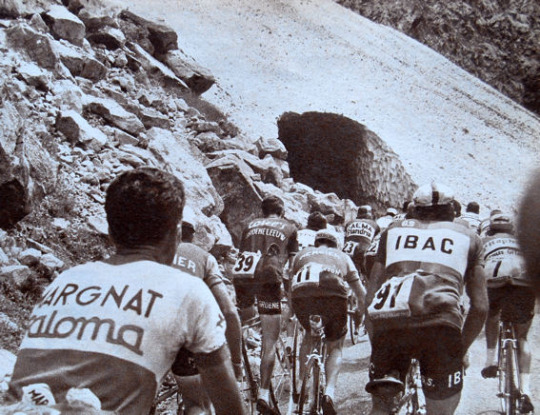
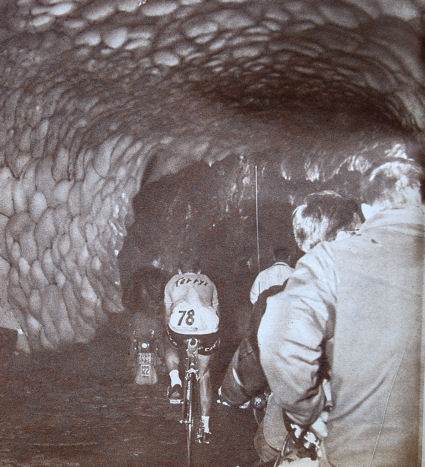
July 9, 1963 is notable more for the brutal conditions on the L'Iseran than for the race stage itself (won by undisputed King of the Mountains Fernando Manzaneque -- winner mountain classification TdF six times, Giro d’Italia once, and Vuelta de Espana twice).  Due to impassable snow pack at the top of Col de L'Iseran, the tour came within a whisker of a tedious and long reroute around Albertville and Bourg Saint Maurice of the 202 km stage from Grenoble to the scheduled finish in Val d'Isère.  However, the tour organizers, having more consideration for their business and schedule than the riders’ safety, maintained the original route which led the tour over the high pass along icy roads and a snow tunnel.

1963 Tour de France

Col de L'Iseran -- Stage 16, Tour de France July 9, 1963.

Photo:  innrng.com

Tour de France cyclists ride through tunnel in 1963

Near the summit of L'Iseran TdF 1963

Photo:  innrng.com

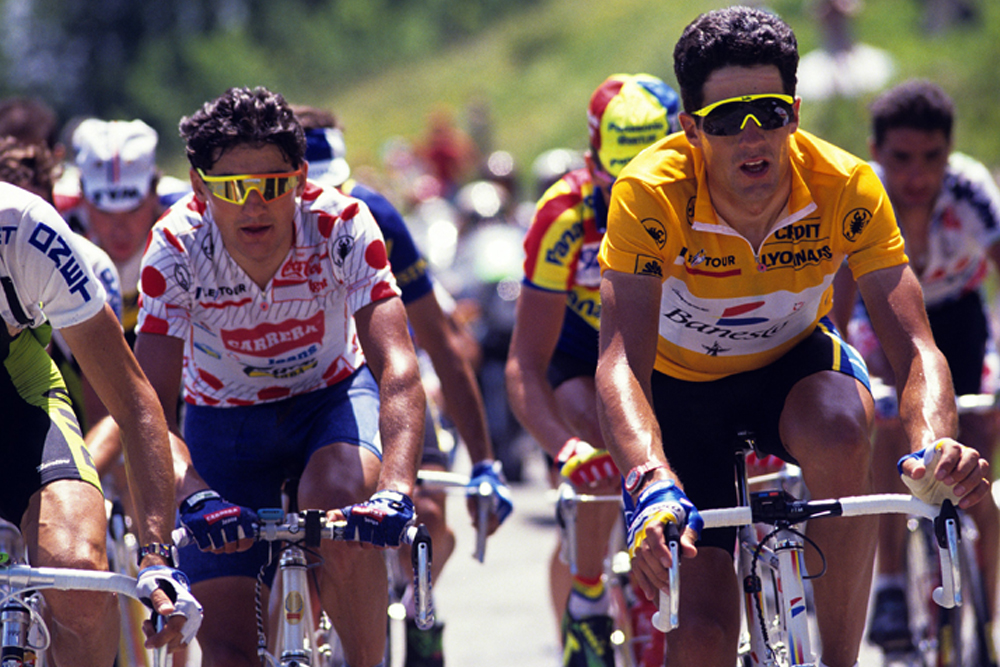
Likely the most famous of the eight crossings of the L'Iseran during the Tour de France involved the amazing solo 100 kilometer breakaway by Italy’s Claudio Chiapucci, a true Mountain King.  Chiapucci has legendary mountain classification credentials -- one of only four men to win the TdF and Giro mountain classification in the same year (putting him in the enviable company of Fausto Coppi, Charly Gaul and Lucien Van Impe), and tied with Gino Bartali with the most Giro mountain classification wins (7).  With 100 kilometers to go on July 18, 1992’s TdF Stage 13, Chiapucci did one of his signature (though sometimes ill-advised) breakaways.  However, on this day the peloton mistakenly ignored Chiapucci who burned over seven cols, including the highest of them all, L'Iseran, on his way to a 00:01:34 stage win.  Chiapuccu was second in that year’s Tour to Miguel Induran who won his second of an unbelievable five straight Tours de France.

Claudio Chiapucci (KOM jersey) and Miguel Indurain (leader’s jersey)

Claudio Chiapucci (KOM jersey) and Miguel Indurain (leader’s jersey).  Indurain is the 1991 & 1992 TdF

mountain classification winner.

Photo:  cyclingweekly.com