![]()
2026 Tour de France: July 4 to July 26, 2026
The 113th running of the Tour de France is shaping up to be another blockbuster edition, with cycling’s biggest stars once again set to collide over three demanding weeks. The rivalry between Tadej Pogačar and Jonas Vingegaard remains the defining storyline of the modern Tour, but the field chasing yellow continues to deepen, with Remco Evenepoel firmly established as a legitimate Grand Tour threat and a growing wave of younger contenders ready to animate the race. But as it has been for the past 5 years, the real question is still: can anyone really beat Pogačar?
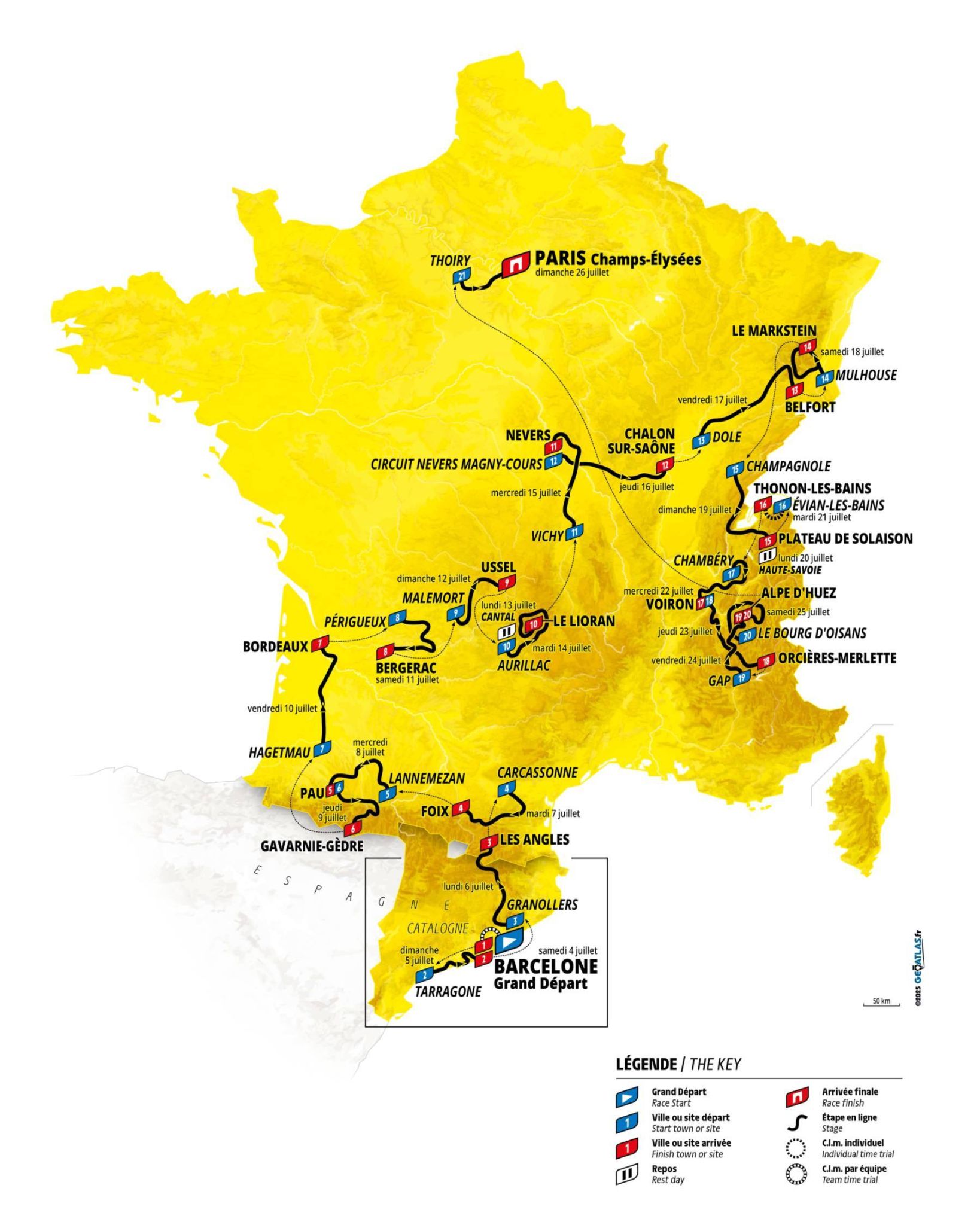
The 2026 Tour opens outside France, with a Grand Départ in Spain that should shape the race from day one. The Team Time Trial returns for the first time since 2019, which should make for a fun opening stage. But GC contenders won’t have the luxury of settling in slowly - rather than a gentle rollout, this year practically begins in the Pyrenees, where significant time gaps can open early. A transfer north into France will likely usher in a transition phase of flatter and rolling stages, where sprint teams take control, but we expect GC teams to be as aggressive as they were last year on the flats, pushing the pace to the max.
The second half of the 2026 Tour is where the race is designed to truly come apart both physically and tactically. After the first rest day and the initial mountain block, the course transitions into longer, more selective climbing stages with significantly higher cumulative elevation gain and fewer opportunities to recover. By this point, domestique depth and roster health becomes a decisive factor in who can reach the podium. Teams that burned riders early protecting position or chasing stages may struggle to control the race, opening the door for long-range attacks and opportunistic moves from riders sitting just outside podium contention, or someone who has their eye on the white or polka dot jerseys.
The final week will have some classic climbs - including Ballon d’Alsace, the first climb ever completed in the Tour de France in 1905, making its 29th appearance. Next, the Alpe d’Huez is climbed on back to back days - the finish of both Stage 19 and 20. Stage 20 includes possibly the most climbing ever in a single stage (at least the most in our records) an absolutely staggering 18,700ft climbed!
Take a deeper dive into each of the mountain stages below:
Stage 3 (Pyrenees; Les Angles)
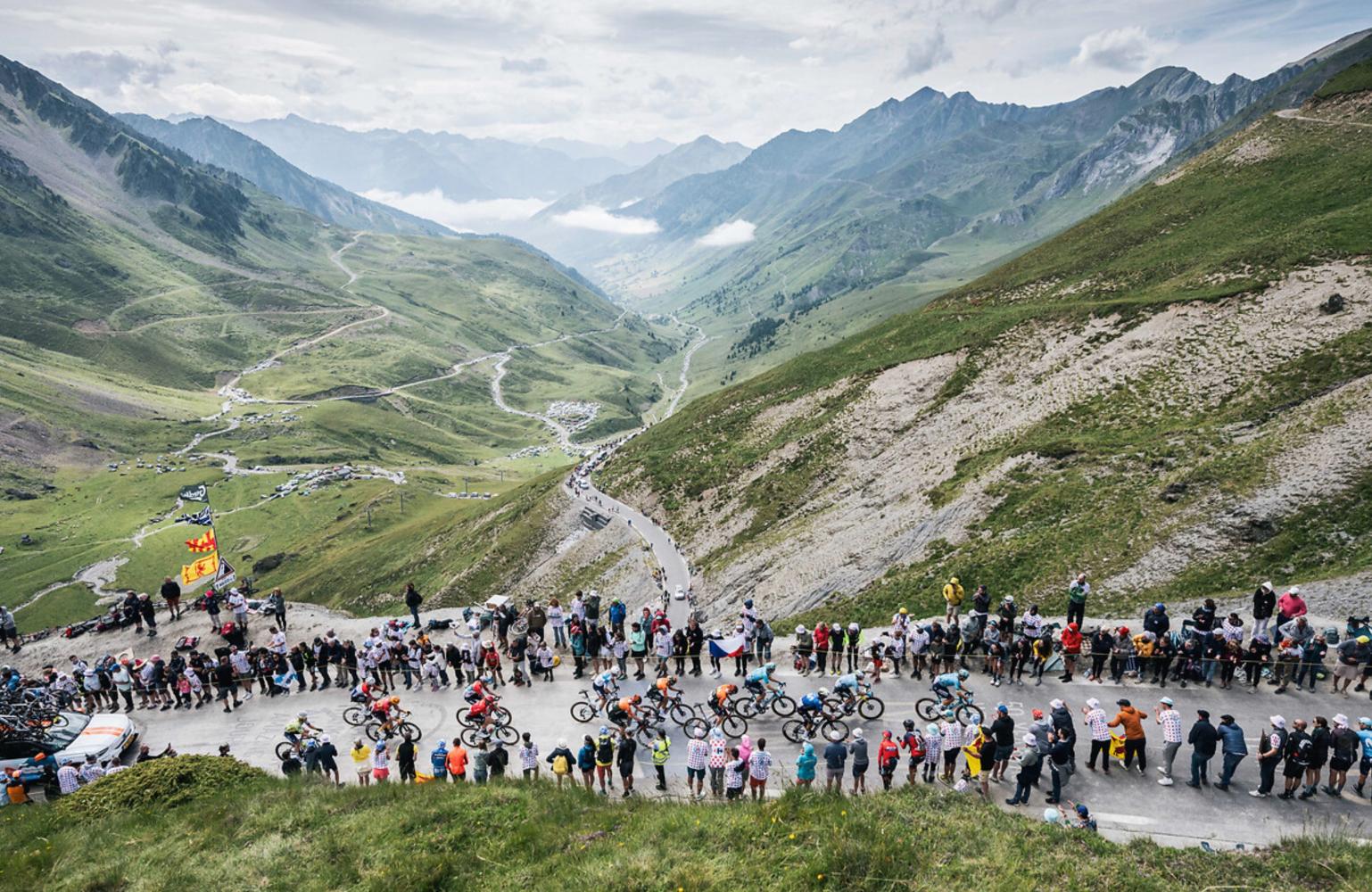
Stage 6 (Pyrenees; Aspin, Tourmalet)
Stage 10 (Massif Central; Pas de Peyrol)
Stage 14 (Jura; Grand Ballon, Ballon d’Alsace)
Stage 15 (Alps; Plateau de Solaison)
Stage 18 (Alps; Orcieres-Merlette)
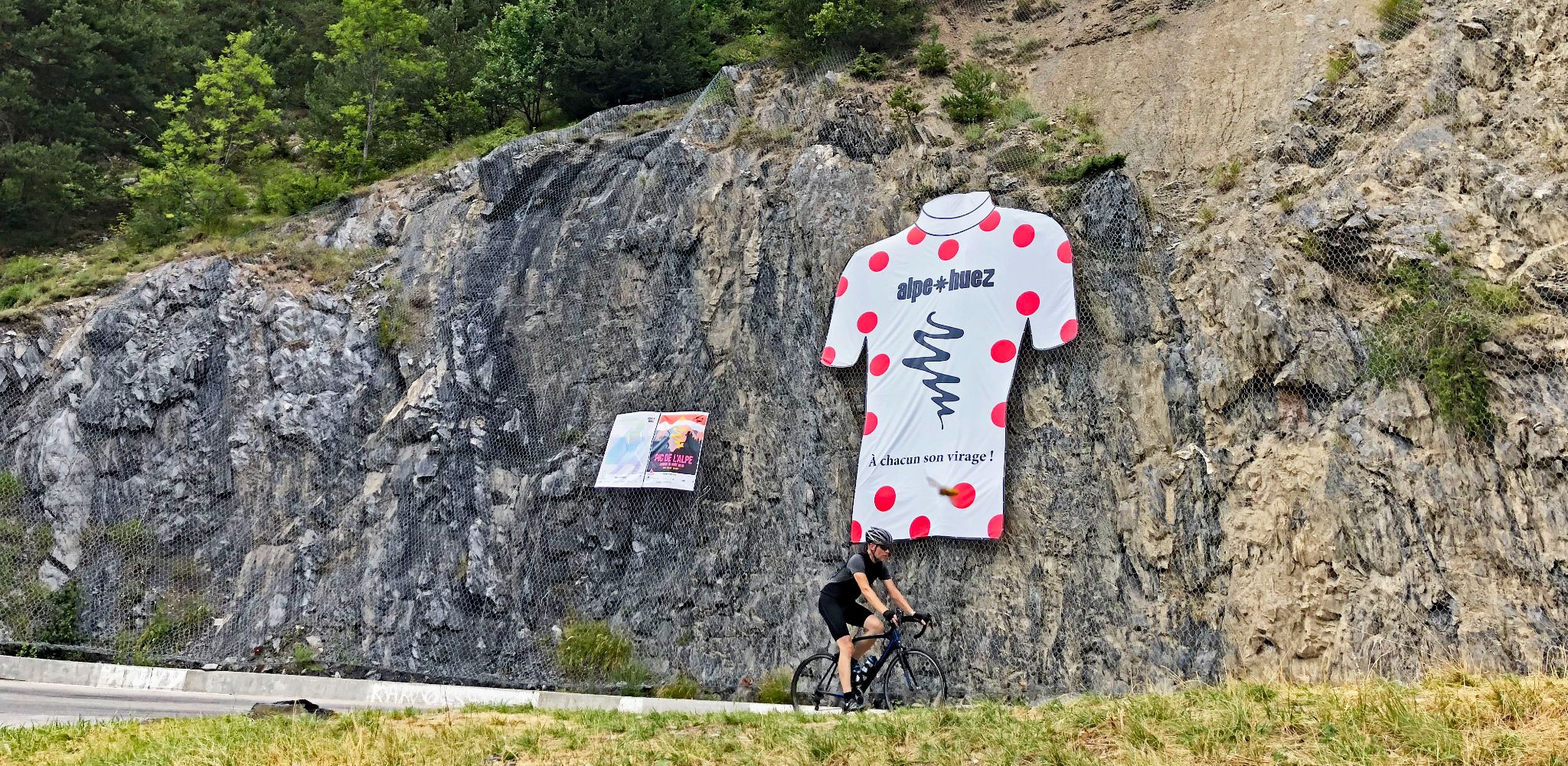
Stage 19 (Alps; Alpe d’Huez)
Stage 20 (Alps; Col du Galibier, Alpe d’Huez)
Also visit our:
The PJAMM Cycling Archive of Climbs in the Tour de France
A list containing EVERY single climb ever included in any edition of the Tour de France from its inception, and how many times it was climbed. Work in Progress.
2026 TOUR DE FRANCE INFORMATION AND CLIMB DETAILS
![]()
https://www.letour.fr/en/overall-route
2026 TDF Stage Statistics
Stage | Date | Distance (kilometers) | Distance (miles) | Elevation Gained (meters) | Elevaton Gained (feet) | Stage Difficulty Rating (PDI) | Type of Stage |
1 | Saturday 7/4/26 | 20 | 12.2 | 214 | 702 | 1.9 | Team Time Trial |
2 | Sunday 7/5/26 | 179 | 111.2 | 2,425 | 7,957 | 18.3 | Hilly |
3 | Monday 7/6/26 | 187 | 116.4 | 3,904 | 12,808 | 36 | Mountain |
4 | Tuesday 7/7/26 | 185 | 114.9 | 3,420 | 11,221 | 27.2 | Hilly |
5 | Wednesday 7/8/26 | 164 | 102 | 3,348 | 10,983 | 25.7 | Flat |
6 | Thursday 7/9/26 | 164 | 102 | 3,348 | 10,983 | 25.7 | Mountain |
7 | Friday 7/10/26 | 175 | 108.7 | 1,192 | 3,911 | 10.3 | Flat |
8 | Saturday 7/11/26 | 182 | 113.2 | 1,326 | 4,351 | 11.2 | Flat |
9 | Sunday 7/12/26 | 185 | 115 | 3,317 | 10,881 | 26.1 | Hilly |
Rest Day | Monday 7/13/26 |
|
|
|
|
|
|
10 | Tuesday 7/14/26 | 167 | 103.9 | 1,514 | 4,966 | 32.7 | Mountain |
11 | Wednesday 7/15/26 | 161 | 100 | 1,542 | 5,060 | 11.8 | Flat |
12 | Thursday 7/16/26 | 181 | 112.4 | 2,545 | 8,351 | 12.4 | Flat |
13 | Friday 7/17/26 | 205 | 127.3 | 3,953 | 12,968 | 19.8 | Time-TrialHilly |
14 | Saturday 7/18/26 | 156 | 96.8 | 4,253 | 13,953 | 35.1 | Mountain |
15 | Sunday 7/19/26 | 184 | 114.4 | 470 | 1,543 | 36.9 | Mountain |
Rest Day | Monday 7/20/26 |
|
|
|
|
|
|
16 | Tuesday 7/21/26 | 26 | 16.2 | 3,951 | 12,964 | 3.5 | Time-Trial |
17 | Wednesday 7/22/26 | 181 | 112.2 | 3,661 | 12,012 | 18.4 | Flat |
18 | Thursday 7/23/26 | 185 | 115.2 | 5,695 | 18,685 | 36.6 | Mountain |
19 | Friday 7/24/26 | 129 | 80.3 | 879 | 2,885 | 34.8 | Mountain |
20 | Saturday 7/25/26 | 173 | 107.2 | 2,838 | 9,311 | 58.8 | Mountain |
21 | Sunday 7/26/26 | 120 | 74.6 | 883 | 2,898 | 7.3 | Flat |
|
|
|
|
|
|
|
|
|
| Total distance (km) | Total distance (miles) | Elevation gained (meters) | Elevation gained (feet) |
|
|
Totals |
| 3,309 | 2,056 | 54,679 | 179,393 |
|
|

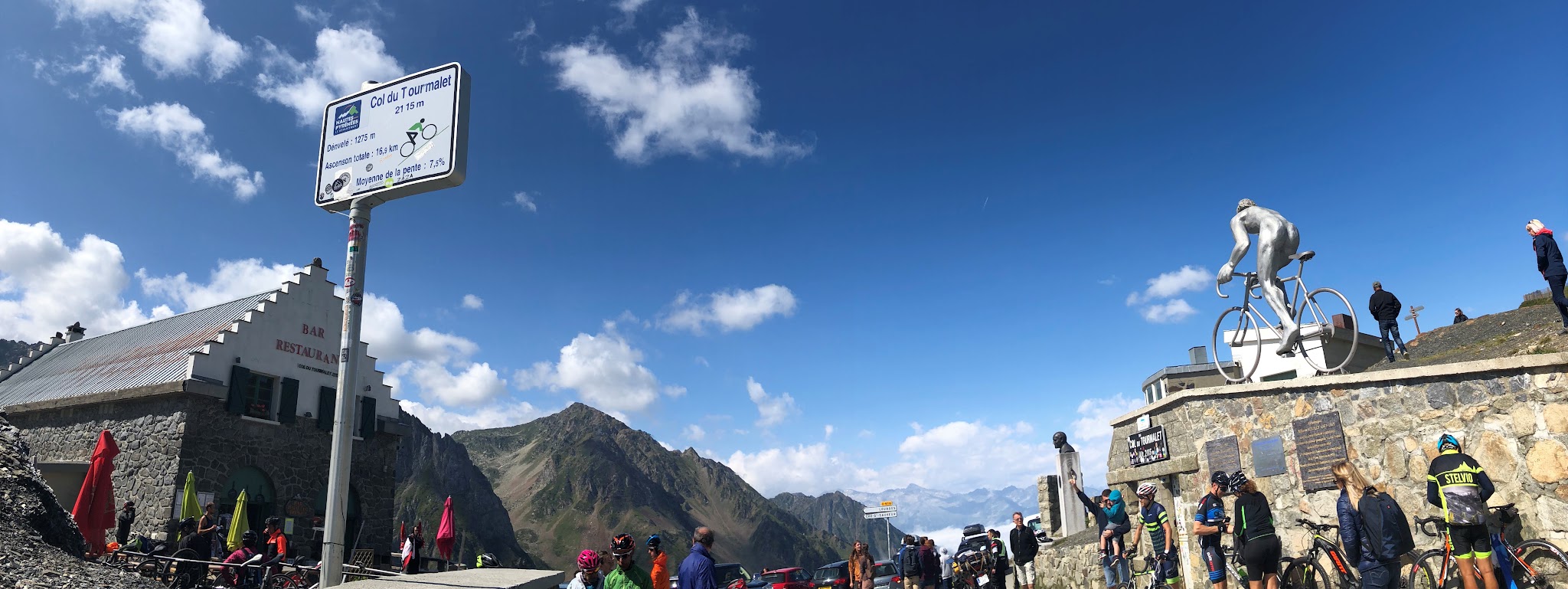
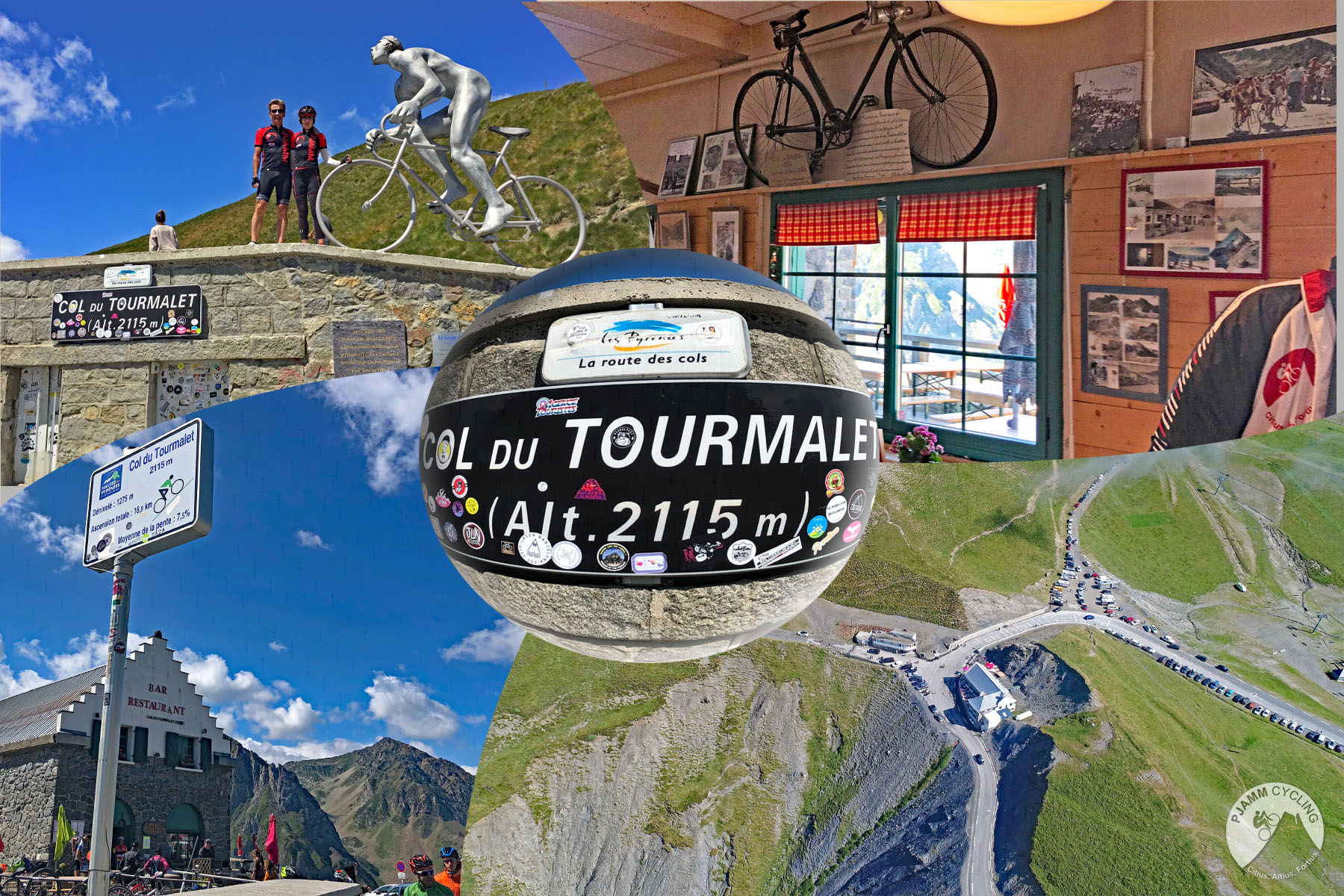
Col du Tourmalet -- Stage 6: July 6, 2026
Since 1910 - 92 appearances in the TdF - more than any other climb.
TOP 10 MOST FREQUENT CLIMBS OF THE TOUR DE FRANCE
(AND 10 FAMOUS ONES AFTER THAT)
©PJAMMCycing.com
- Start: Lille, France on Saturday, July 5, 2025 — first Grand Départ from Lille since 1994.
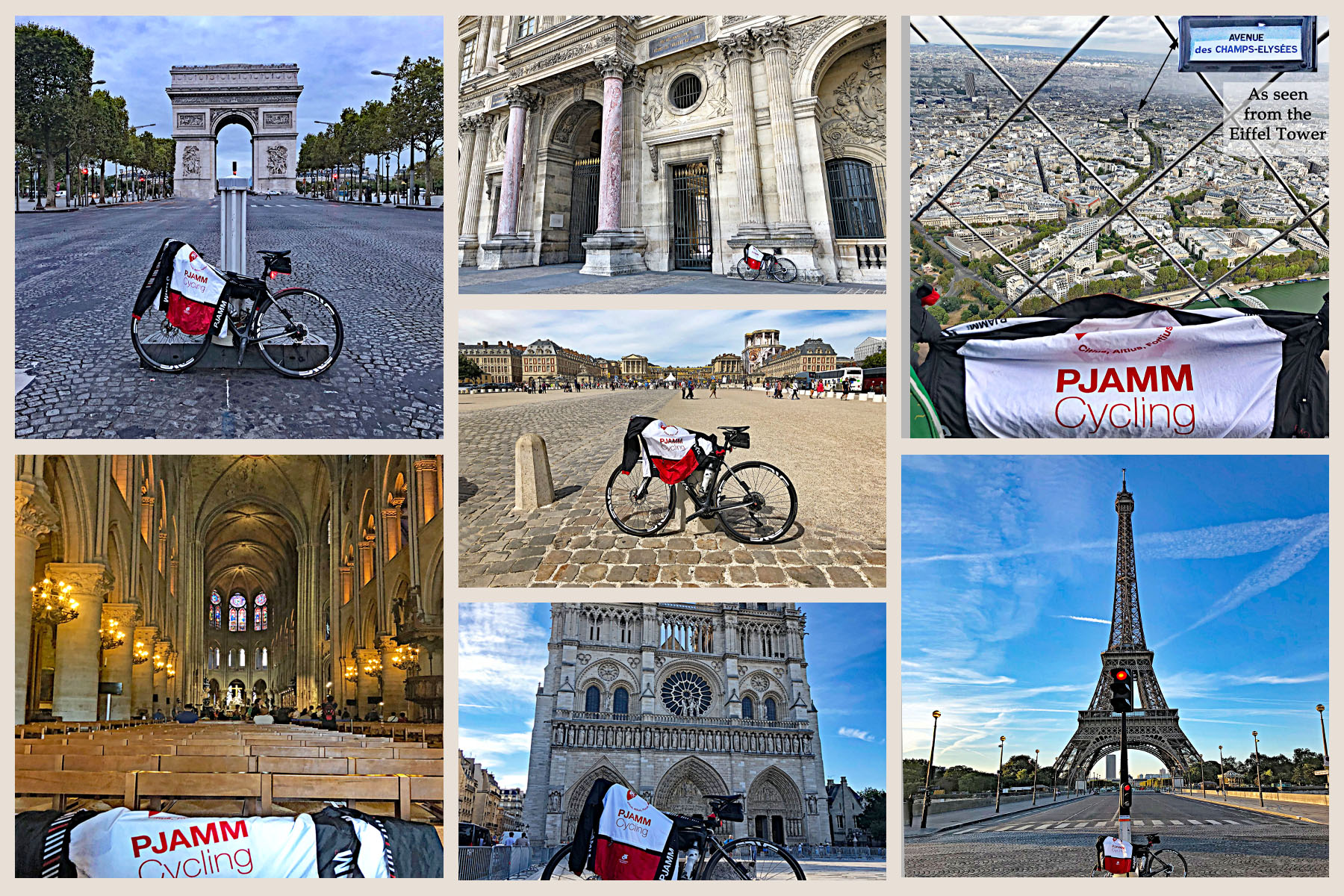
- Finish: Paris, France on Sunday, July 27, 2025 — the Tour returns to a traditional Champs-Élysées finish after 2024’s detour to Nice.
- Why Paris Return: No Olympics in Paris, so the 2025 TdF is back to finishing under the Arc de Triomphe.
- 22 Teams, 8 riders each = 176 total riders starting in Lille.
- Countries visited: France only — no international stages in 2025. 100% French.
- Mountain Ranges Featured:
- Vosges
- Jura
- Alps
- Pyrenees
Massif Central
- Categorized climbs: Full list released (key climbs below).
- Iconic Climbs Featured:
- Col du Galibier (65th appearance)
- Col du Tourmalet (91st appearance)
- Col d'Aubisque
- Col de la Loze
- Total Distance: 3,471 kilometers (2,157 miles) — close to average in recent Tours.
- Longest Stage: Stage 6 — Troyes to Nevers: 221 km (137 miles).
- Total Elevation Gain: About 54,500 meters (~178,800 feet) — slightly more climbing than 2024, but less than the super-brutal 2023 route.
- Most Elevation Gain on a Stage:
- Stage 17 (Alps) with over 4,800 meters climbed — includes Col de la Loze and Col du Galibier.
- Col de la Loze (2,304 meters / 7,559 feet).
- Steepest Key Climbs:
Col de la Loze: Topping out at 20% grades in parts.
- This is the 112th Tour de France (since the first in 1903).
- No Tours during WWI (1915-1918) and WWII (1940-1946).
- COVID delayed the 2020 edition, but didn’t cancel it.
Stage Design:
- 6 mountain stages (4 summit finishes)
- 5 hilly stages
- 7 flat stages
- 2 individual time trials (ITT) — early and late in the Tour.
- 2 rest days (after Stage 9 and Stage 15)
Prize Money:
- Total Prize Pool: Around €2.5 million (~$2.7 million USD)
- Winner's Prize: €500,000 (~$530,000 USD)
Time Bonuses:
- 10 seconds for stage win
- 6 seconds for second place
- 4 seconds for third
- Intermediate bonus sprints and bonus seconds on selected climbs.
HC Climbs | Stage | Tour Appearances (including 2025) | Mountain Range | Distance | Average Climb Grade | Peak | Elevation Gain |
Hautacam | 12 | 7 | Pyrenees | 8.5 mi | 7.8% | 5,000’ | 3,540’ |
Col du Tourmalet | 14 | 91 | Pyrenees | 11.6 mi | 7.1% | 6,650’ | 4,340’ |
Superbagneres | 14 | 7 | Pyrenees | 8.9 mi | 6.9% | 5,850’ | 3,280’ |
Mont Ventoux | 16 | 19 | Provence Prealps | 13.2 mi | 7.5% | 6,200’ | 5,210’ |
Col du Glandon | 18 | 16 | Alps | 18 mi | 5.6% | 6,260’ | 4,470’ |
Col de la Madeleine | 18 | 28 | Alps | 11.7 mi | 7.9% | 6,415’ | 4,840’ |
Col de la Loze | 18 | 3 | Alps | 16 mi | 6.7% | 7,300’ | 5,330’ |
Col du Pre | 19 | 3 | Alps | 8.1 mi | 7.5% | 5,600’ | 3,220’ |
La Plagne | 19 | 5 | Alps | 11 mi | 7.4% | 6,860’ | 4,270’ |
Historical Tour de France Facts of Interest
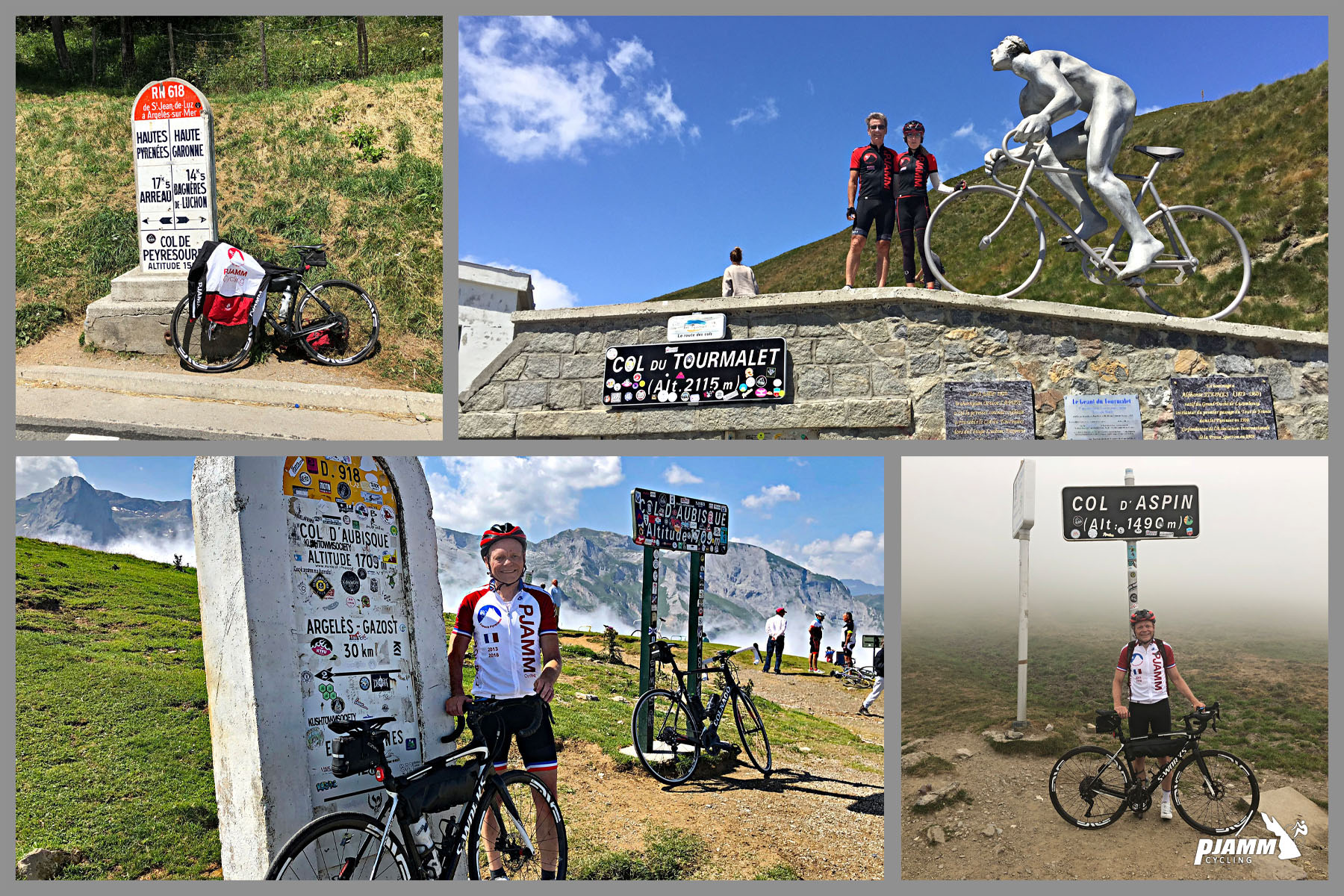
- Climb most often featured in the Tour: Tourmalet - 91 times as of 2025 with Col d’Aspin second as of 74.

From Campan: 16.9 km gaining 1267m at 7.5% average grade.
From Luz Saint Sauveur: 18.7 km gaining 1319m at 7.1%.
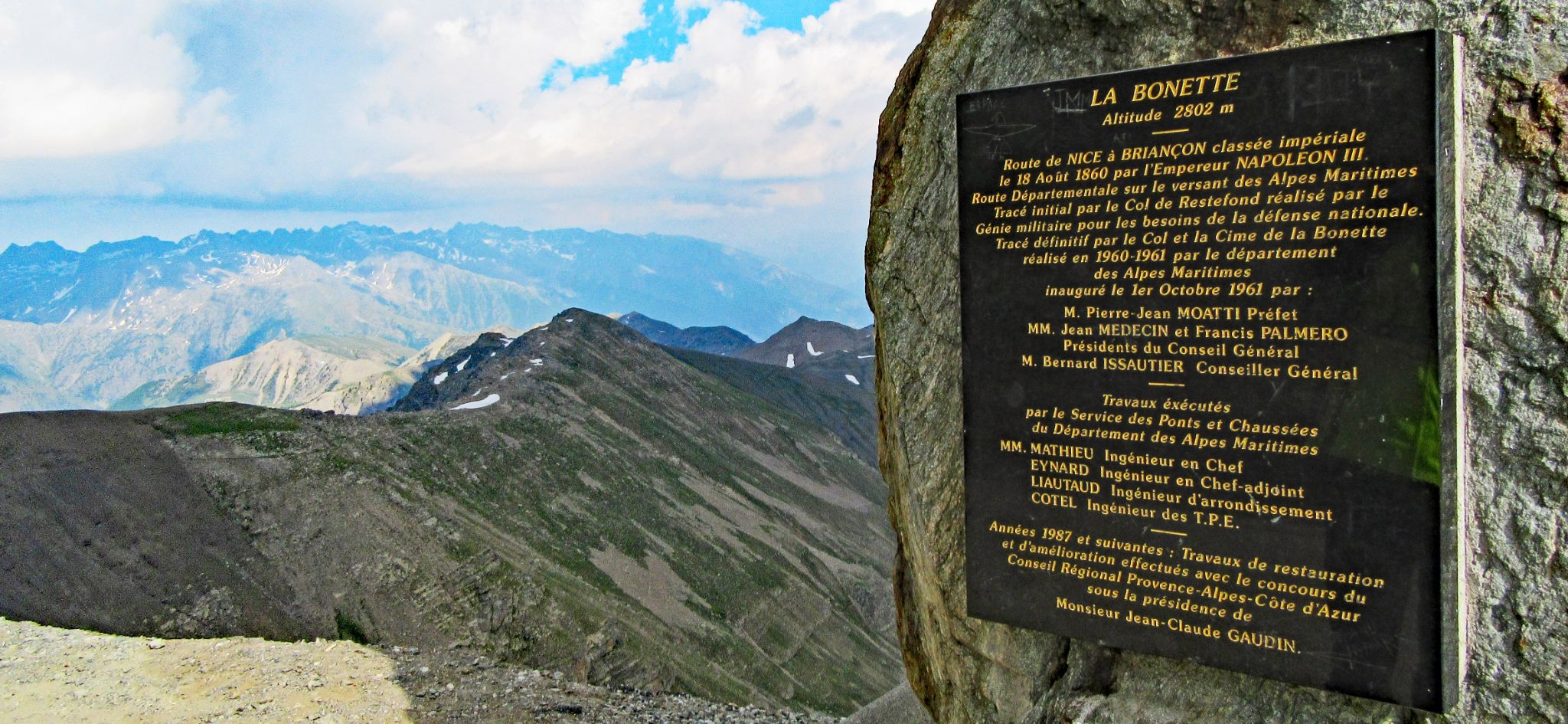
- Highest point ever reached in the Tour de France: Cime de la Bonette, at 2,802 meters

Cime de la Bonette is the highest point ever reached by the Tour de France.
2,802 meters - Stage 18 1962 (passed again in 1964, 1993, 2008, 2024).
© Climb name | Elevation (meters) | Times highest point of TdF (as of 2022) | Mountain Range | Times Featured in Tour de France | Most recent | First included |
Cime de la Bonette | 2,802m | 5 | Alps | 4 | 2024 | 1962 |
Col de l'Iseran | 2,770m | 8 | Alps | 8 | 2019 | 1938 |
Col Agnel | 2,744m | 1 | Alps | 2 | 2011 | 2008 |
Col du Galibier | 2,642m | 50 | Alps | 63 | 2024 | 1911 |
Col du Granon | 2,413m | 0 | Alps | 2 | 2022 | 1986 |
Five highest points the Tour de France has ever reached.
Also see Top 10 Highest Points of the TdF
- Highest point of first (1903) TdF: Col de la République (1,161m).
- Yellow Jersey - overall winner:
- Merckx has the most Grand Tour wins of anyone (11 - 5 TdF, 5 Giro, 1 Vuelta)
- Has the second most Grand Tour wins (10 - 5 TdF, 3 Giro, 2 Vuelta)
- Polka Dot (King of the Mountains - since 1933):
- Green Jersey (most points; since 1953)
- Most days wearing the yellow jersey:
- 111 Eddy Merckx
- 79 Bernard Hinault
- 60 Miguel Indurain
- Most days wearing yellow jersey in a single TdF:
- 21: Jacques Anquetil 1961 - held the yellow jersey from day one.
- Most stage wins in a single tour:
- Most times atop the podium (top three TdF finish):
- First mountain stage and climbs in the Tour:
- Stage 10 July 21, 1910: Luchon to Bayonne
- 326 kilometers
- Circle of Death: Col de Peyresourde, Col d’Aspin, Col du Tourmalet, and Col d’Aubisque
- On arriving at the top of Col d’Aubisque Octave Lapize (TdF 1910 winner) yelled to tour organizers what is variously reported as: “murderers,” “assassins,” or “criminals.” He also said he would quit the tour after descending to Laruns, but he rallied to complete the stage and go on to win the 1910 Tour de France.

Circle of Death
Tourmalet was the highest point the tour had ever reached as of 1910 (2115m)
Previous high point had been Col de Porte (1326m).
- First mountain-top stage finish: Alpe d’Huez (Dutch Mountain/The Alpe) was the first mountain-top finish in the history of the Tour de France in 1952, Stage 10.
- Country wearing the yellow jersey most:
- France (709)
- Belgium (434)

Frenchmen have been in the maillot jaune (yellow jersey) far more than any other country.
- Winning TdF in first appearance:
- Youngest winner of the Tour:
- Henri Cornet: France, age 19 (1904)
- Tadej Pogačar: Slovenia, age 21 (2020)
- Firmin Lambot: Belgium, age 36 (1922)
- King of the Mountains: Mountain Classification victories (first recognized in 1933; jersey introduced 1975)

letour.fr
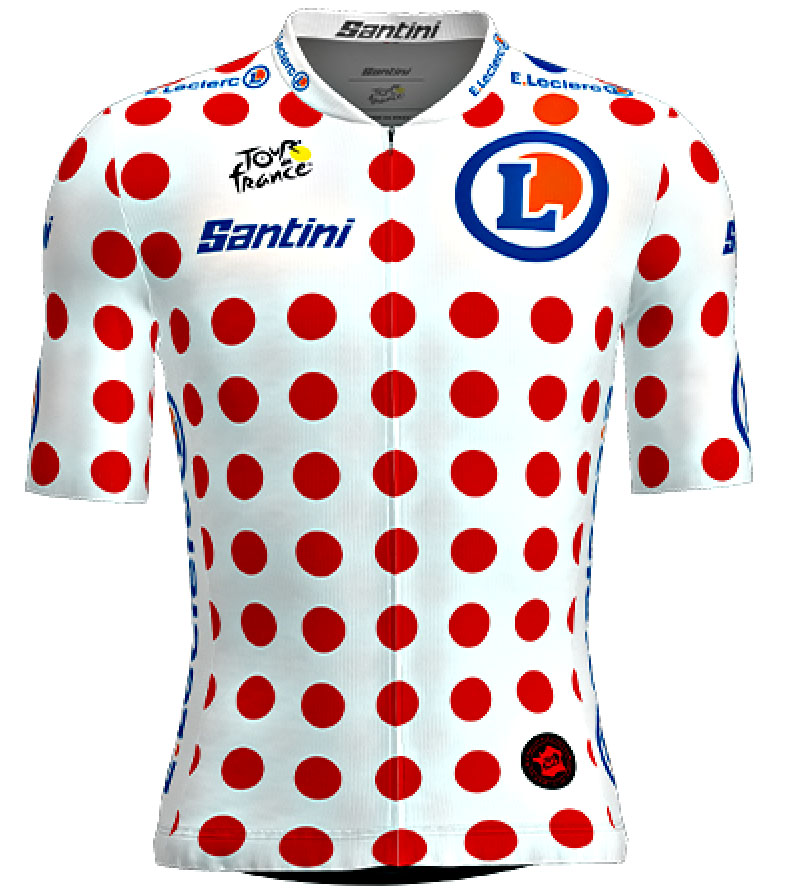
“Symbol of the mountains, of a rider pushing beyond their limits and of courage, the red polka dot jersey, which is sponsored by Carrefour, is awarded to the Tour de France’s leader of the best climber classification. Although this classification was introduced in 1933, its symbol, the polka dot jersey, appeared in 1975, which was also the year the Tour first finished on the Champs-Élysées and was won by Bernard Thévenet. It owes its appearance to track racing specialist Henri Lemoine, who competed between the 1930s and 1950s, and that Félix Lévitan, co-director of the Tour with Jacques Goddetwhich, had particularly noticed. While Belgium’s Lucien Van Impe was its first winner and claimed the mountains classification six times, just like his illustrious predecessor, Spain’s Federico Bahamontes, the so-called “Eagle of Toledo”, Frenchman Richard Virenque holds the record for victories with seven titles” (Tour de France, Polka Dot Jersey).

King of the Mountains is designated by the red polka dot jersey.
- Most green jerseys (total points):
- Most white jerseys (best young rider):
- Shortest margin of victory:
- 8 seconds: Greg Lemond over Laurent Fignon in 1989. Lemond overcame 50 seconds in the final time trial using aero bars for the first time in the TdF.
- Greatest margin of victory:
- France (36)
- Belgium (18)
- Spain (12)
- Italy (10)
- Britain (6)
- Luxembourg (5)
- USA and Denmark (3)
- Hardest climb ever in the Tour de France: Col de la Loze (Meribel).
EXPLANATION OF KING OF MOUNTAIN, KOM POINTS, AND BONUS POINTS
FOR THE 2025 TOUR DE FRANCE
KOM DEFINED: Climb-related points are accumulated during the race. The rider with the most accumulated points at the beginning of the stage wears the red polka dot jersey that day, and the rider with the most points at the end of the race is crowned that year’s Tour de France King of the Mountains.
“Category”: When the mountain classification (King of the Mountains) was introduced in 1933, there were points given to the first 10 riders over the summit (10 for first, 1 for tenth). In 1947, the Tour introduced two climb “categories” with a certain amount of points for the second category and twice as many as for the first category. Over the years “categories” were added, in addition to an “Above” category (Hors or HC) and since 1979 there have been a HC (hardest), Category 1 (second hardest) on down to Category 4 (least difficult climb).
The category of the climb is significant for two reasons:
- The points awarded for the TdF KOM for each climb is based upon the category of climb - thus, “category” is the basis for the points that are used to determine each year’s King of the Mountains.
- Most cycling fans, particularly Grand Tour fans, are very interested in the climb “category” because that tells them how hard each climb on a stage is, where the riders will struggle more, and the point in a stage where that day, or even the entire tour, will be won or lost.
KOM HISTORY:
- King of the Mountains: Mountain Classification victories (first recognized in 1933; jersey introduced 1975)
POINTS: KOM points are awarded in three ways on the Tour de France:
- To riders first over the summit of categorized climbs (in descending order HC, 1-4).
- The higher the category the more riders receive points (HC points are awarded to eight riders, while CAT 4 points are awarded to only one rider).
- Bonus point (see below).
- Points for altitude finishes.
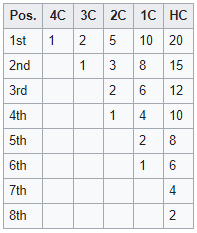
TDF POINTS FORMULA: Wikipedia has the best summary and graph we’ve seen for TdF KOM points distribution:
The points gained by consecutive riders reaching a mountain top are distributed according to the following classification:
![]()
Wikipedia - Mountains Classification - Tour de France
BONUS POINTS: These points go towards the King of the Mountain designation and are awarded to the first (8 points), second (5 points), and third (2 points) riders reaching designated summits in the race.
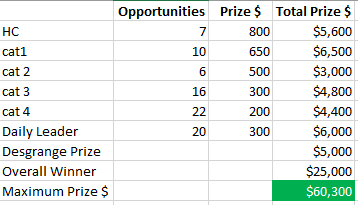
MONEY PRIZES FOR KING OF THE MOUNTAINS
- Prize for first to eighth place:
- Winner = €25,000
- 2nd = €15,000
- 3rd = €10,000
- 4th = €4,000
- 5th = €3,500
- 6th = €3,000
- 7th = €2,500
- 8th = €2,000
- Daily prize for wearing the Polka Dot jersey = €6,000
- Per category climb:
- 1st = €800
- 2nd = €450
- 3rd = €300
- 1st = €650
- 2nd = €400
- 3rd = €150
- Souvenir Henri Desgrange €5000 first to Col du Galibier pass Stage 11.
The maximum amount the KOM winner could earn if he won every stage and wore the jersey from Stage 2 to the finish is $60,300 Euros (62,773 USD)
![]()